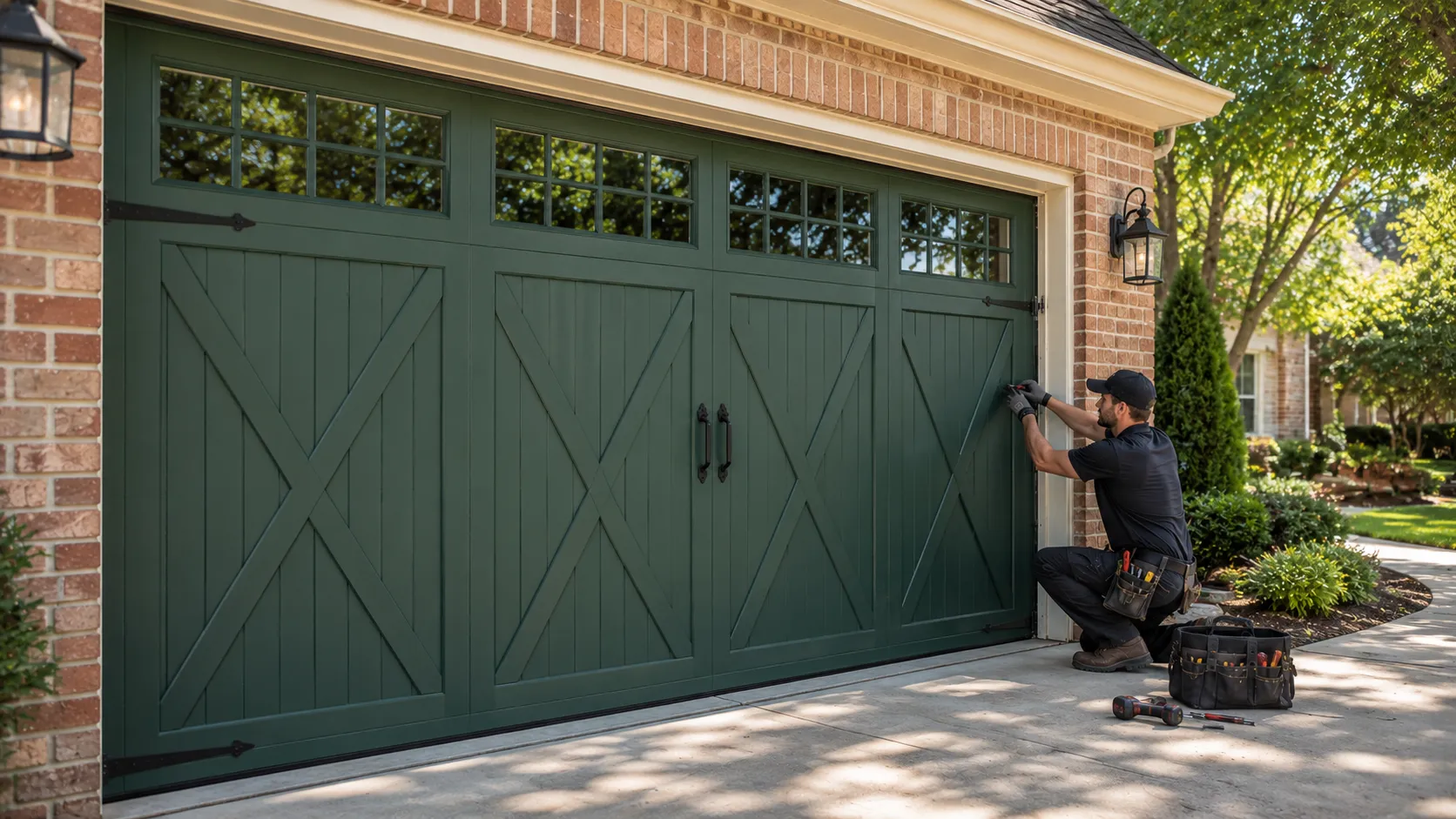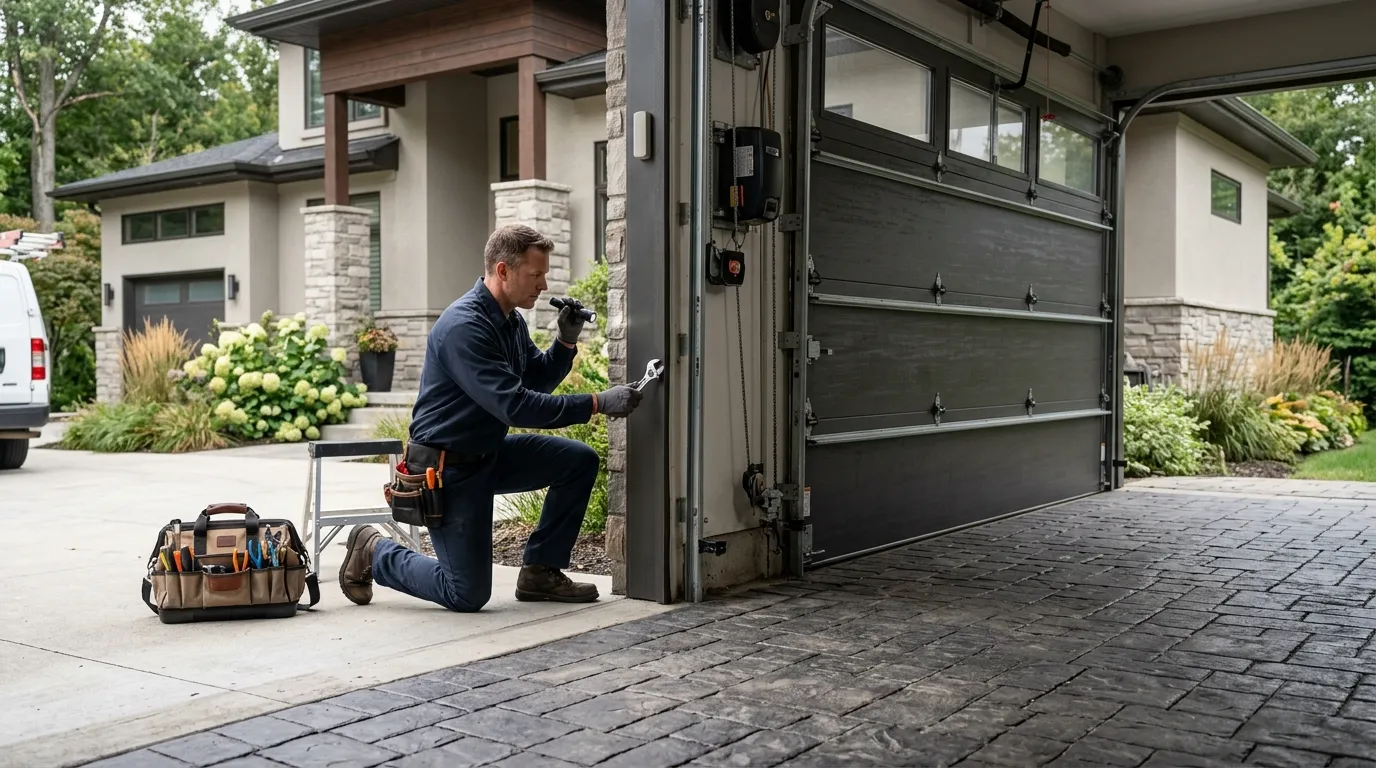
Why This Fails Locally
Housing across this service area was built mostly between 1956 and 2010, with the median sitting at 1979 and the heaviest concentration going up through the 1960s and 70s across the ten communities we cover. That matters for garage doors because a door and its hardware are only rated for so many open-close cycles before the torsion spring loses tension and the cable starts to fray at the drum.
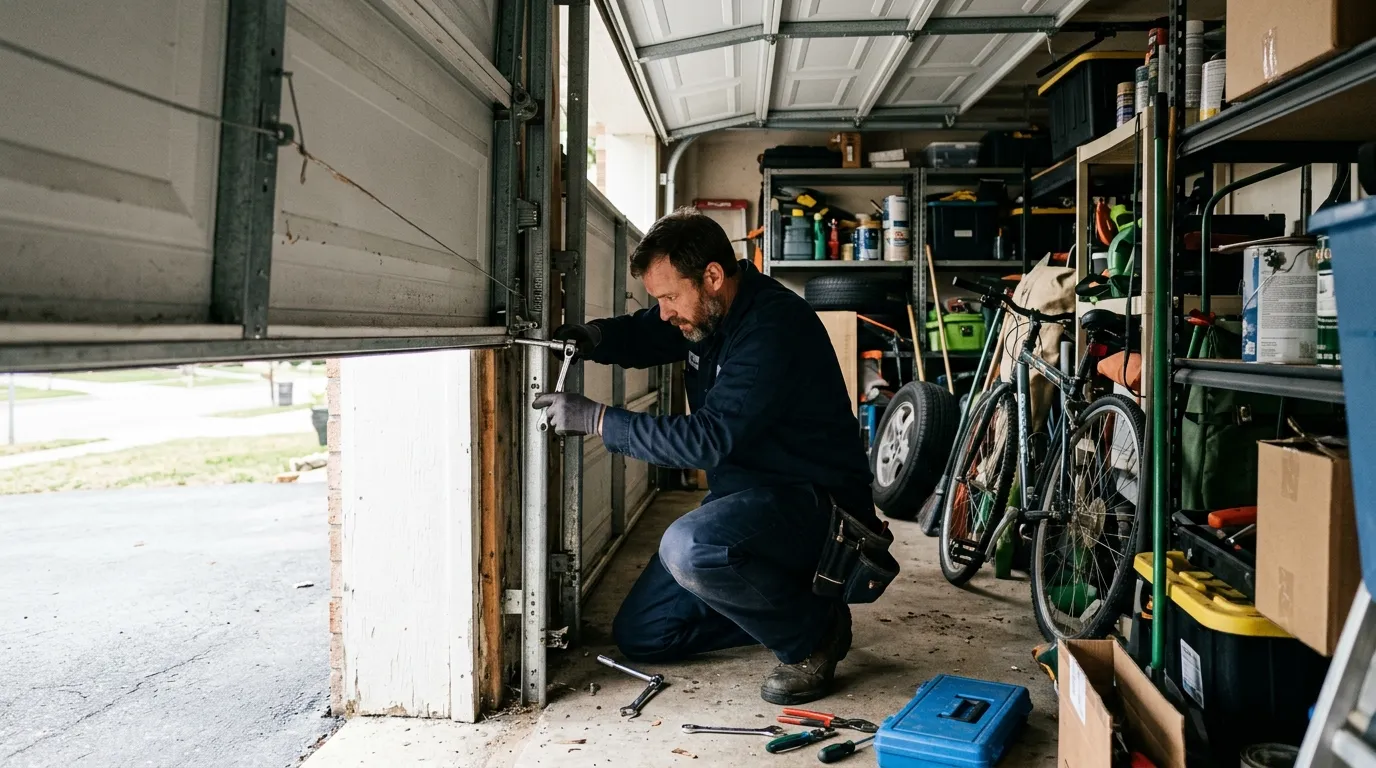
A door installed when a house was built in, say, 1975 has had roughly fifty years of cycles on the original-spec spring if nobody's touched it. Add in the moderate heat this region sits in - not the kind of extreme swings that crack concrete, but steady warm stretches that dry out lubricant on rollers and hinges faster than a cooler climate would - and you get the two failure modes we see most: a spring that lets go without warning, and a track that's stiff enough to bind a cable off its drum.
This isn't a defect in any one door. It's what happens when a lot of the stock in this area is hitting the same age window at once, on hardware that was never meant to last forever in the first place.
Doing It Yourself
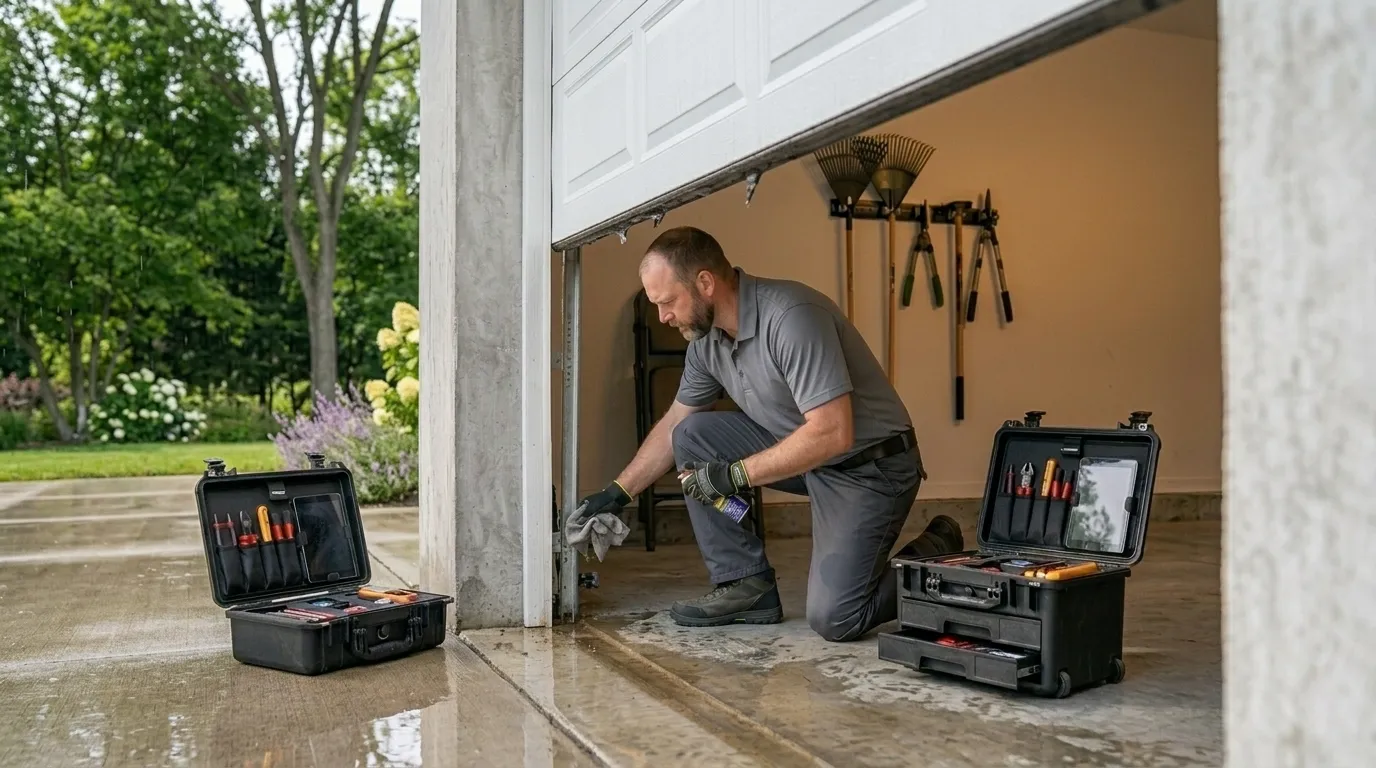
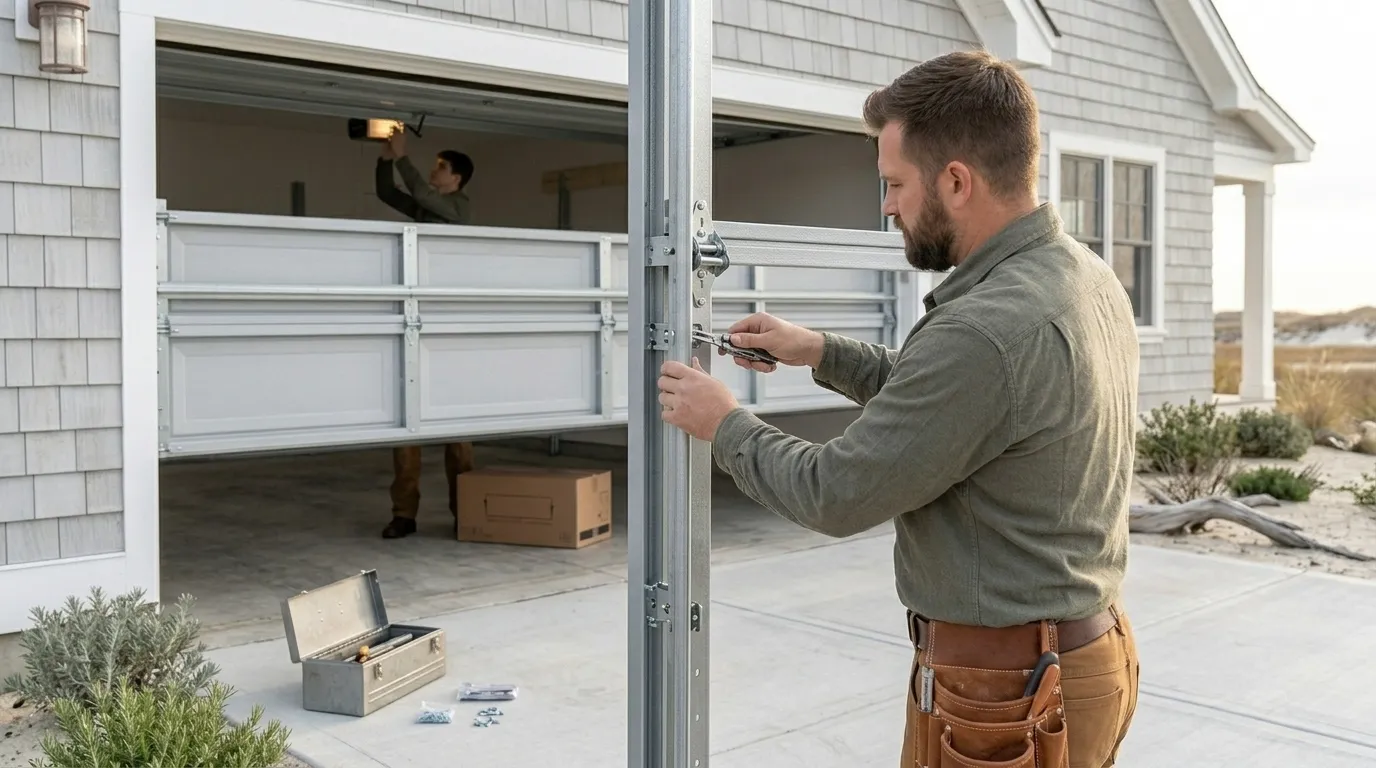
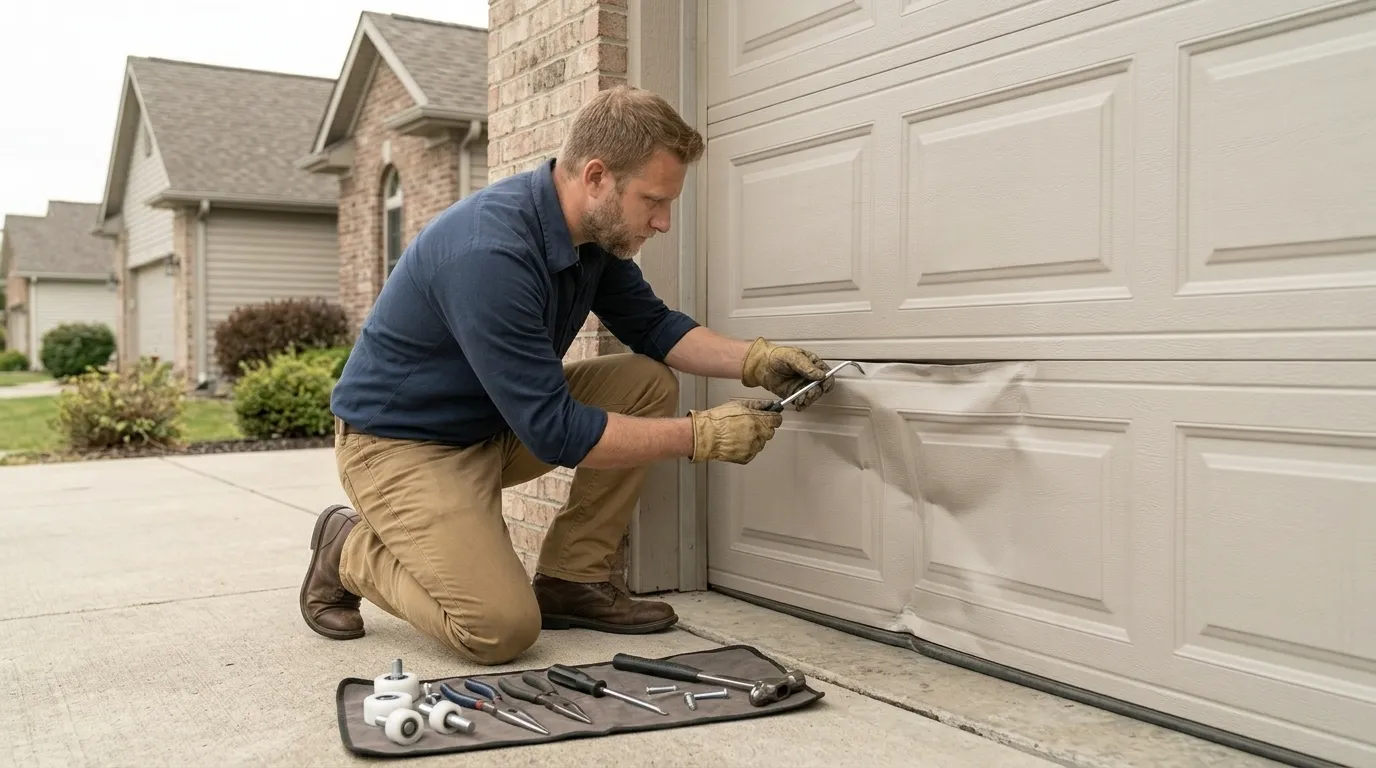
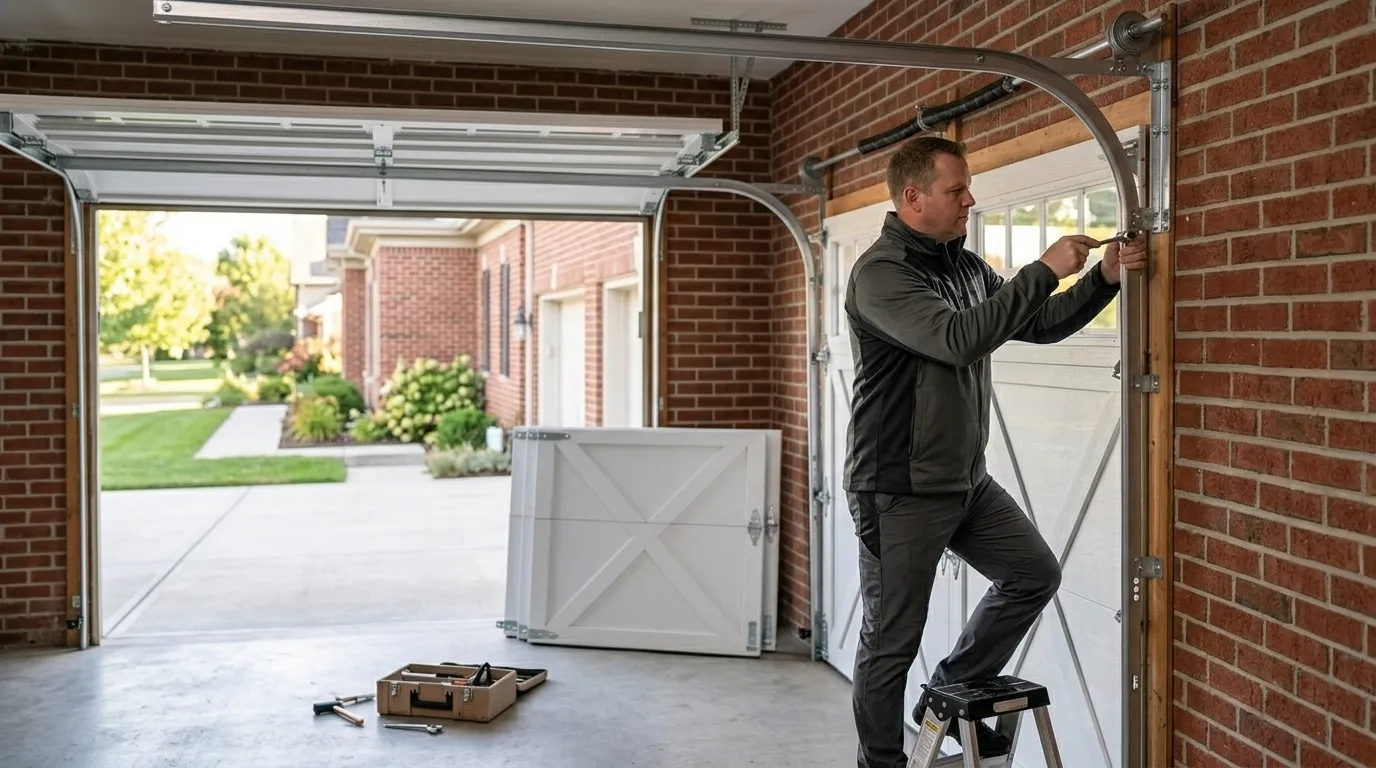
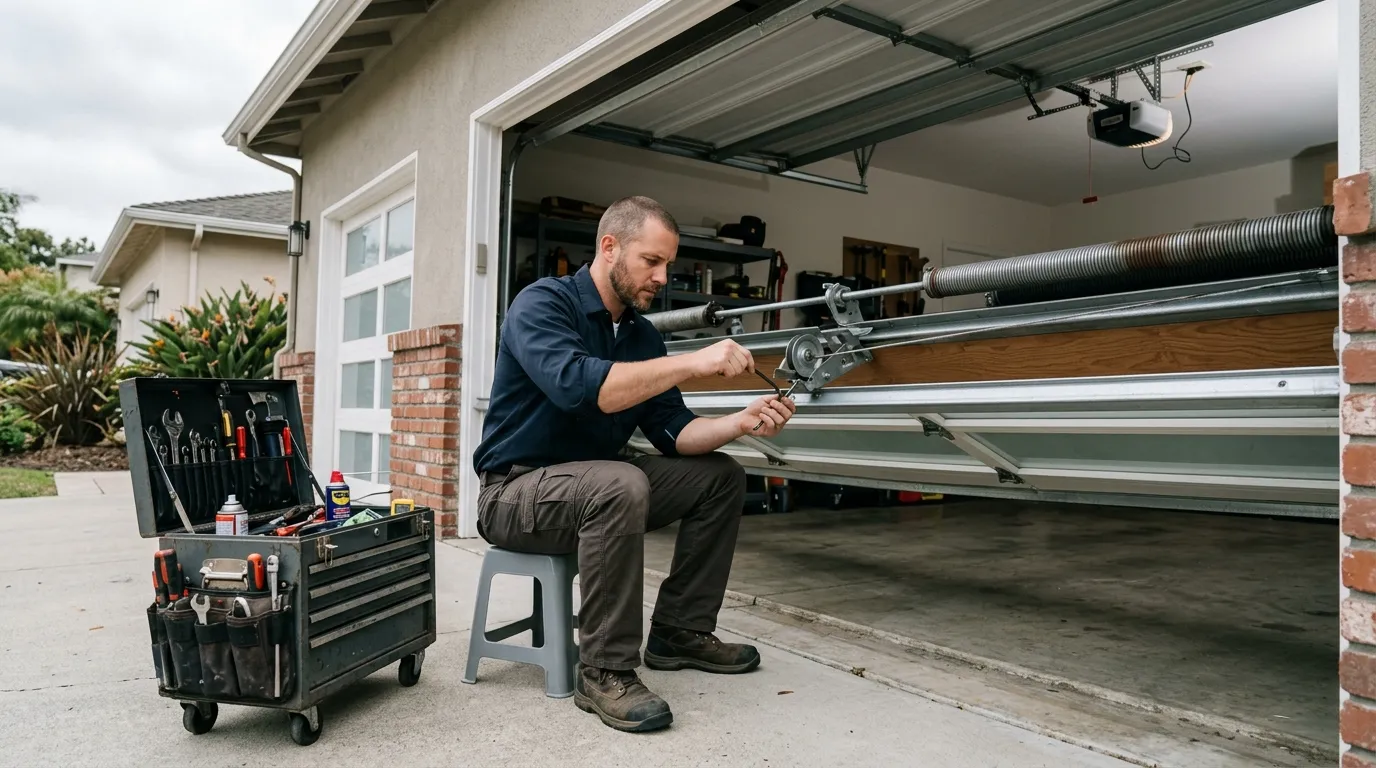
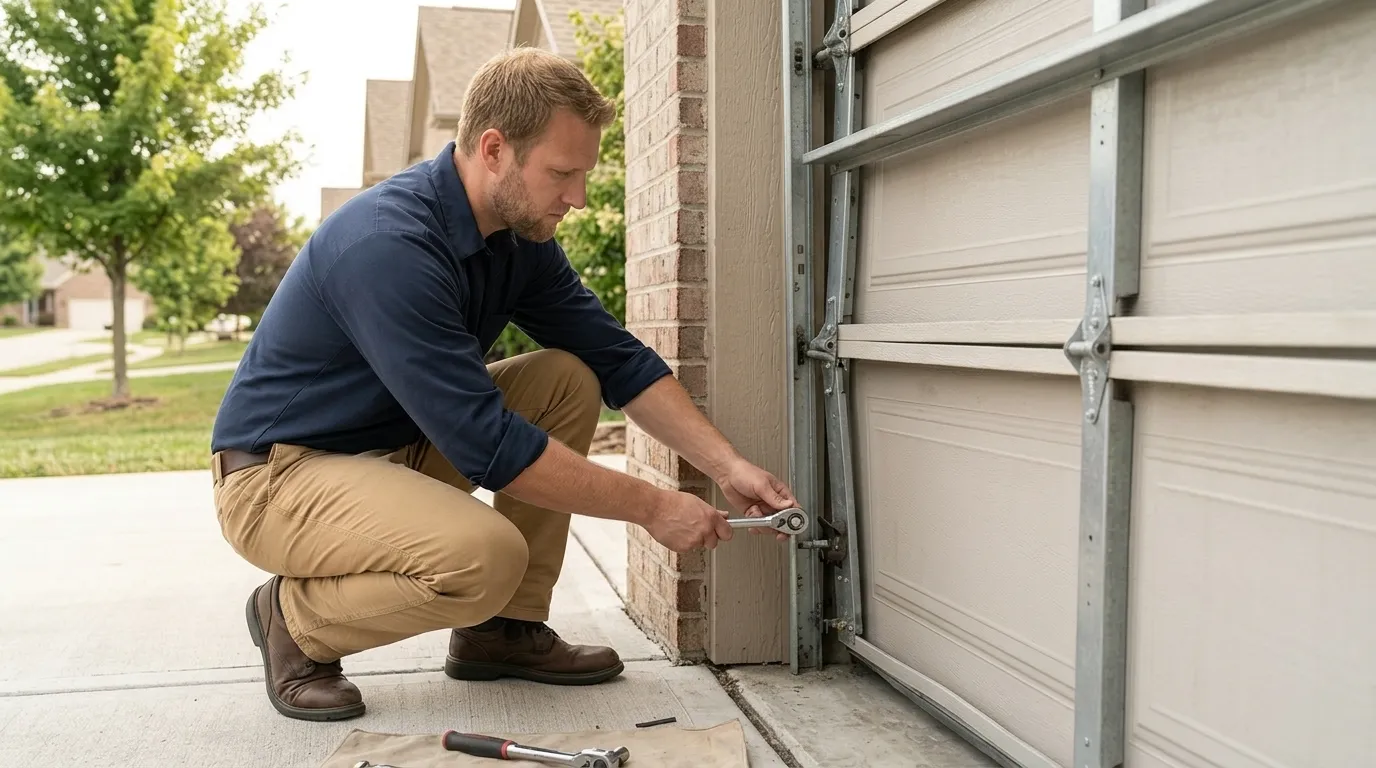
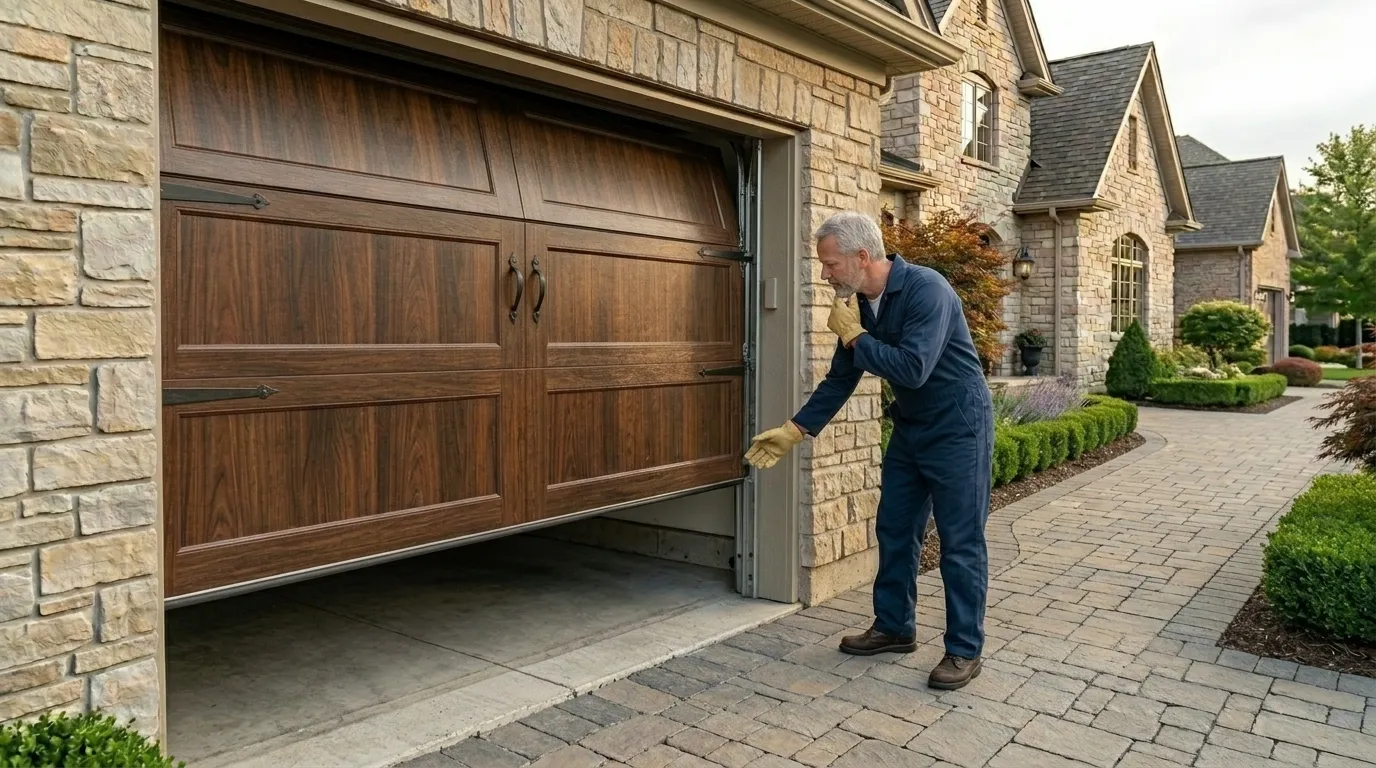
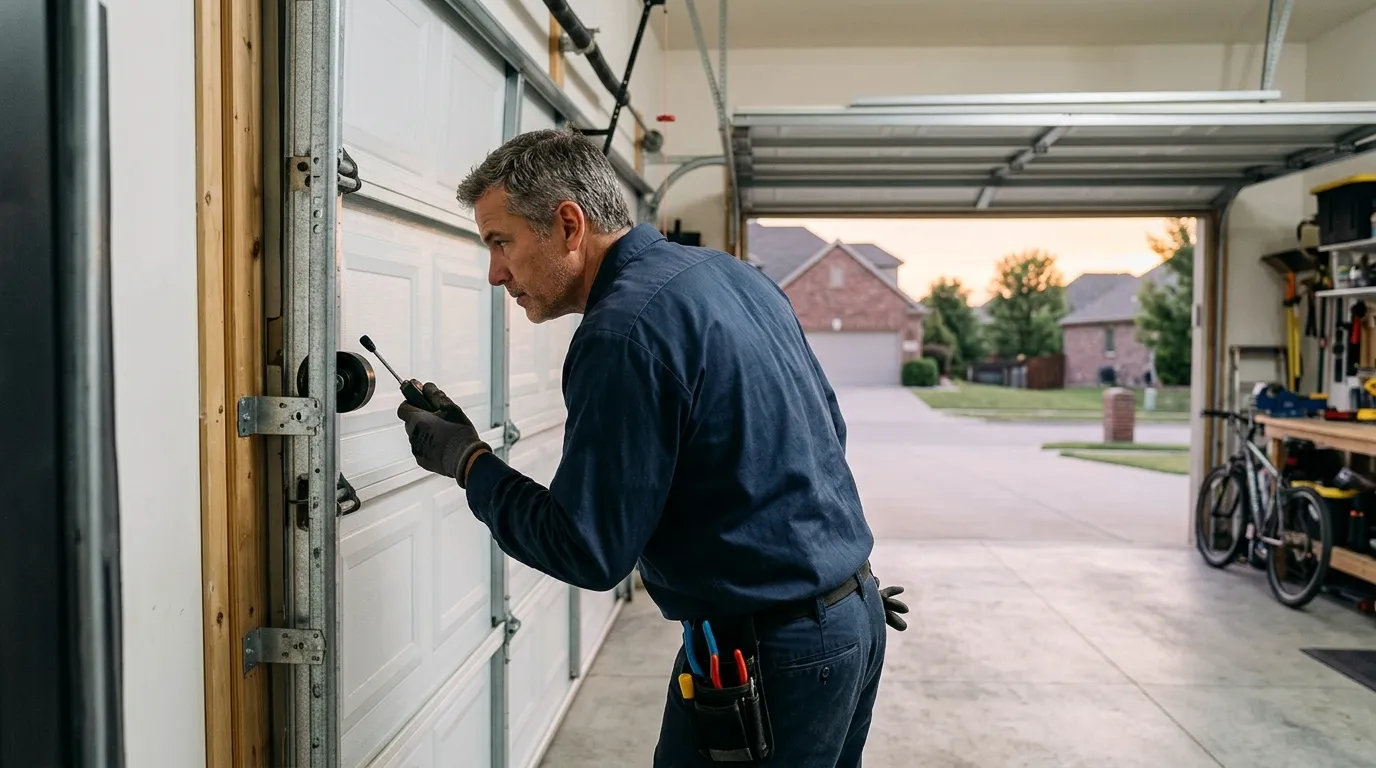
There's real DIY territory in garage doors - tightening a loose track bracket, clearing a sensor eye, lubricating hinges. A snapped torsion spring or a cable off the drum isn't in that territory. A torsion spring holds enough stored tension to break a bone or worse if it lets go while you're working near it, and there's no safe way to eyeball that risk without the right bars and a winding cone.
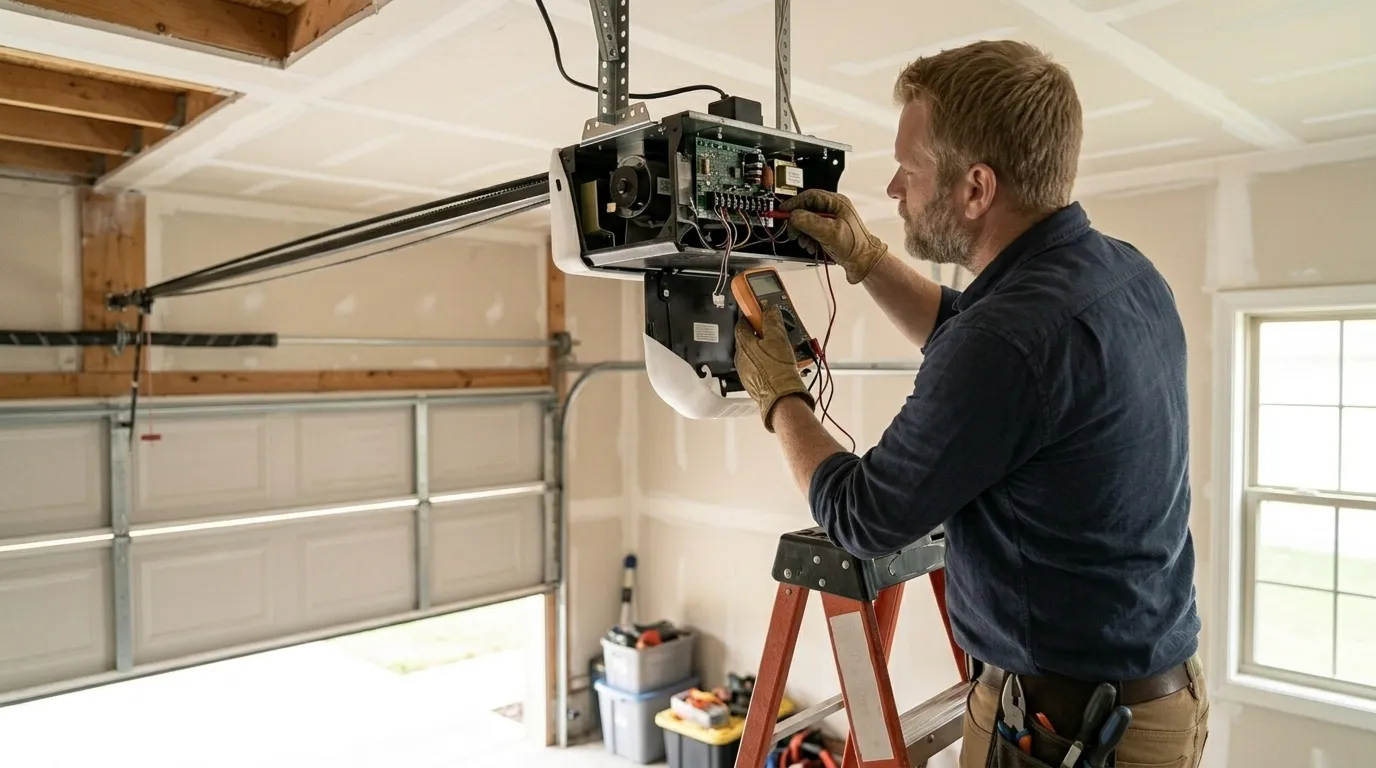
If your door has just gone quiet - the opener hums but the door doesn't move, or it moves and then reverses - check the obvious things first: the sensor eyes aren't blocked or misaligned, the manual release cord hasn't been pulled by accident, and the opener isn't unplugged. Half of the calls that turn out to be a two-minute fix start there.
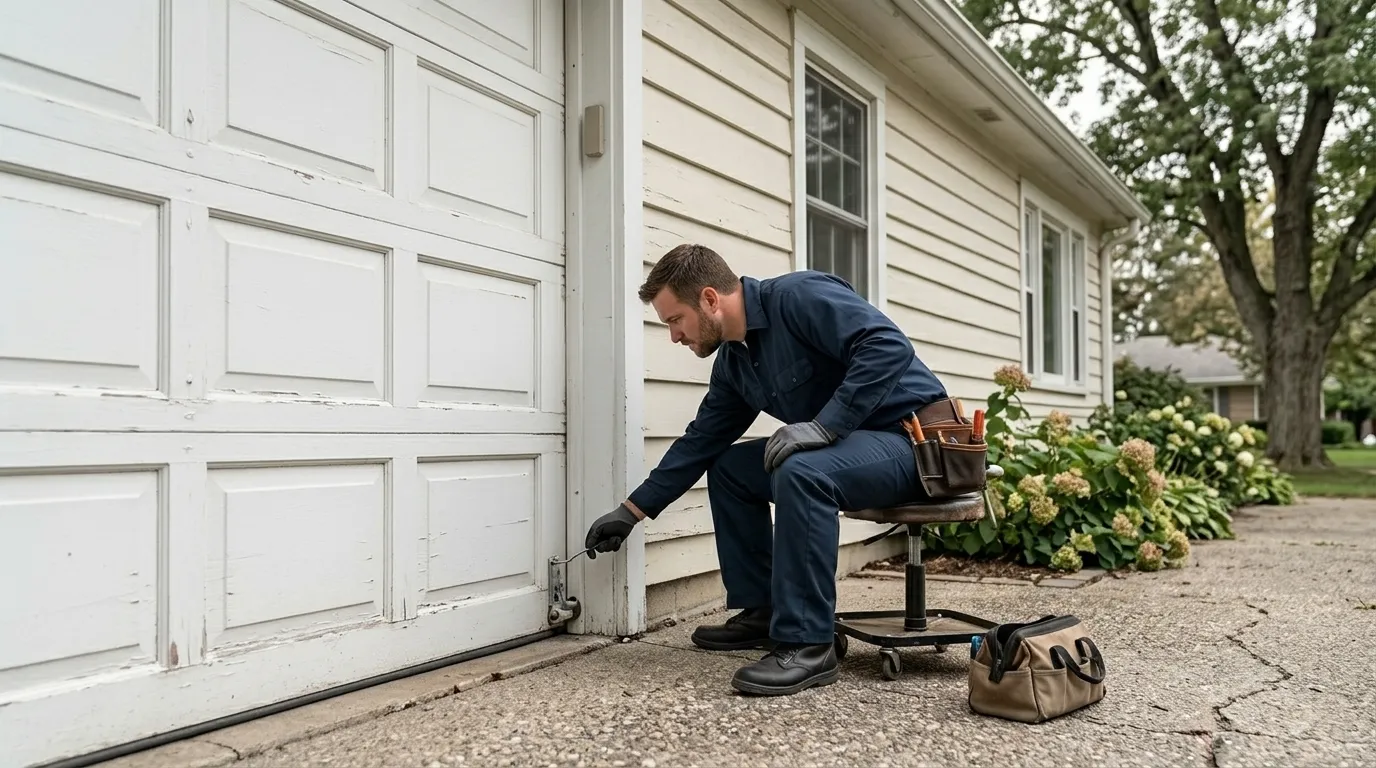
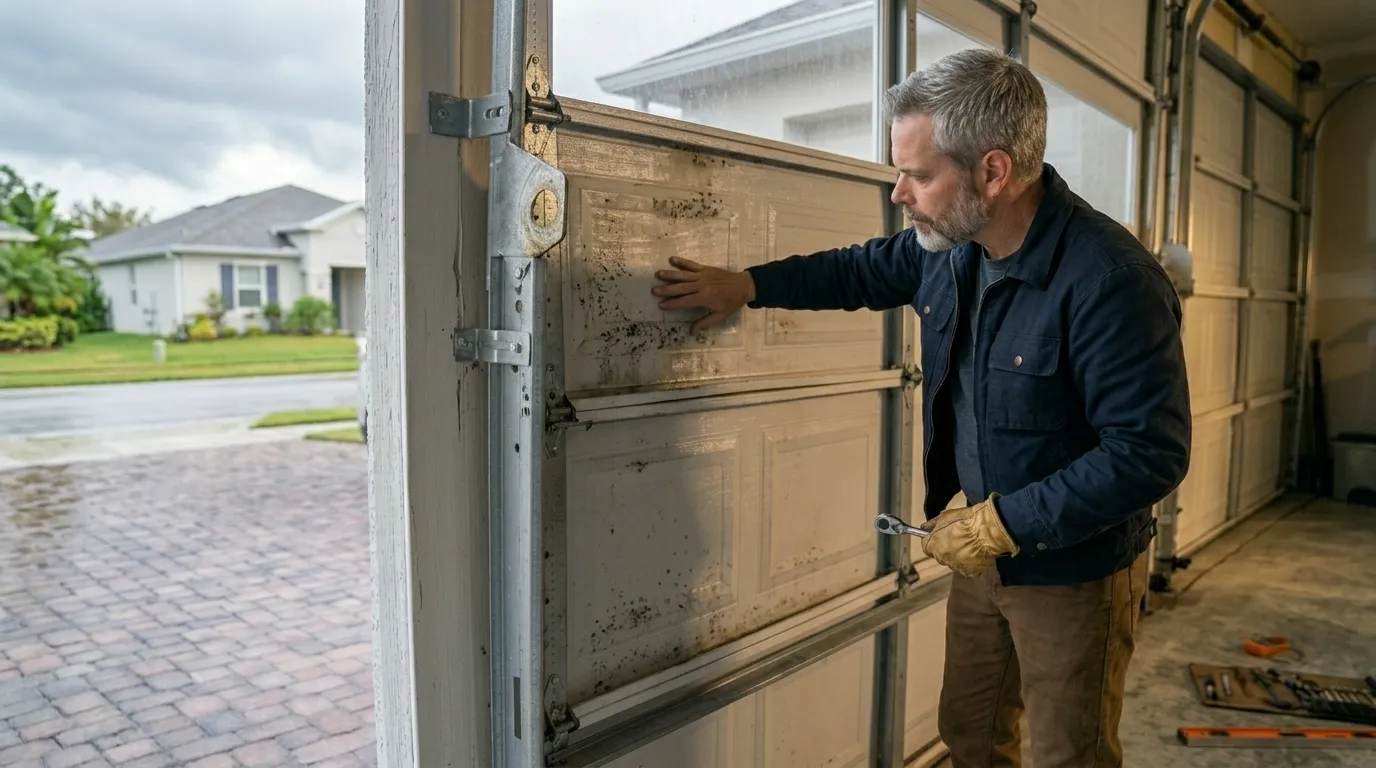
One honest limit: if the door is original to a house from the 1960s or 70s and the track, hinges, and rollers are all original too, sometimes the right answer isn't a repair at all. Patching one worn part on hardware that age usually just moves the next failure a few months down the road. We'll tell you straight when that's the case instead of running up a repair bill on a door that's due for replacement anyway.