Why This Fails Locally
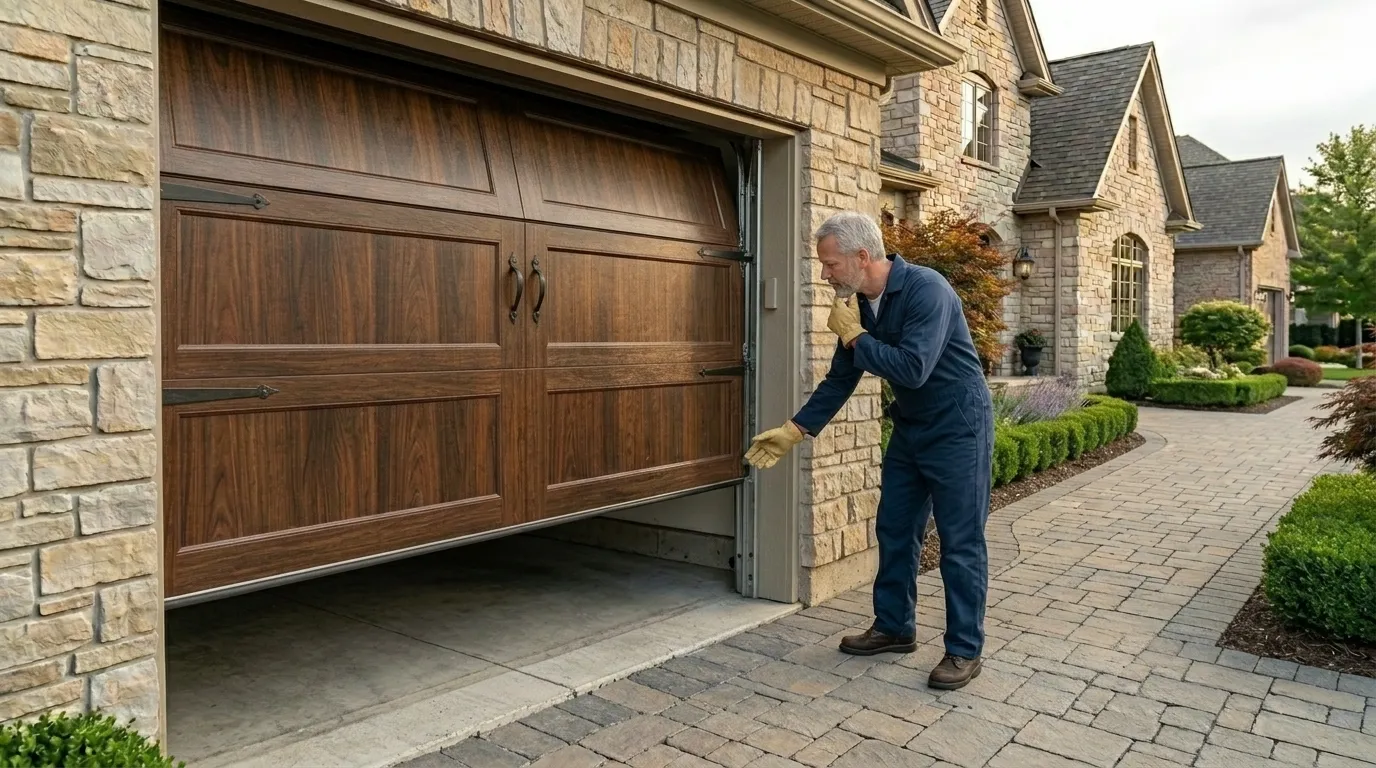
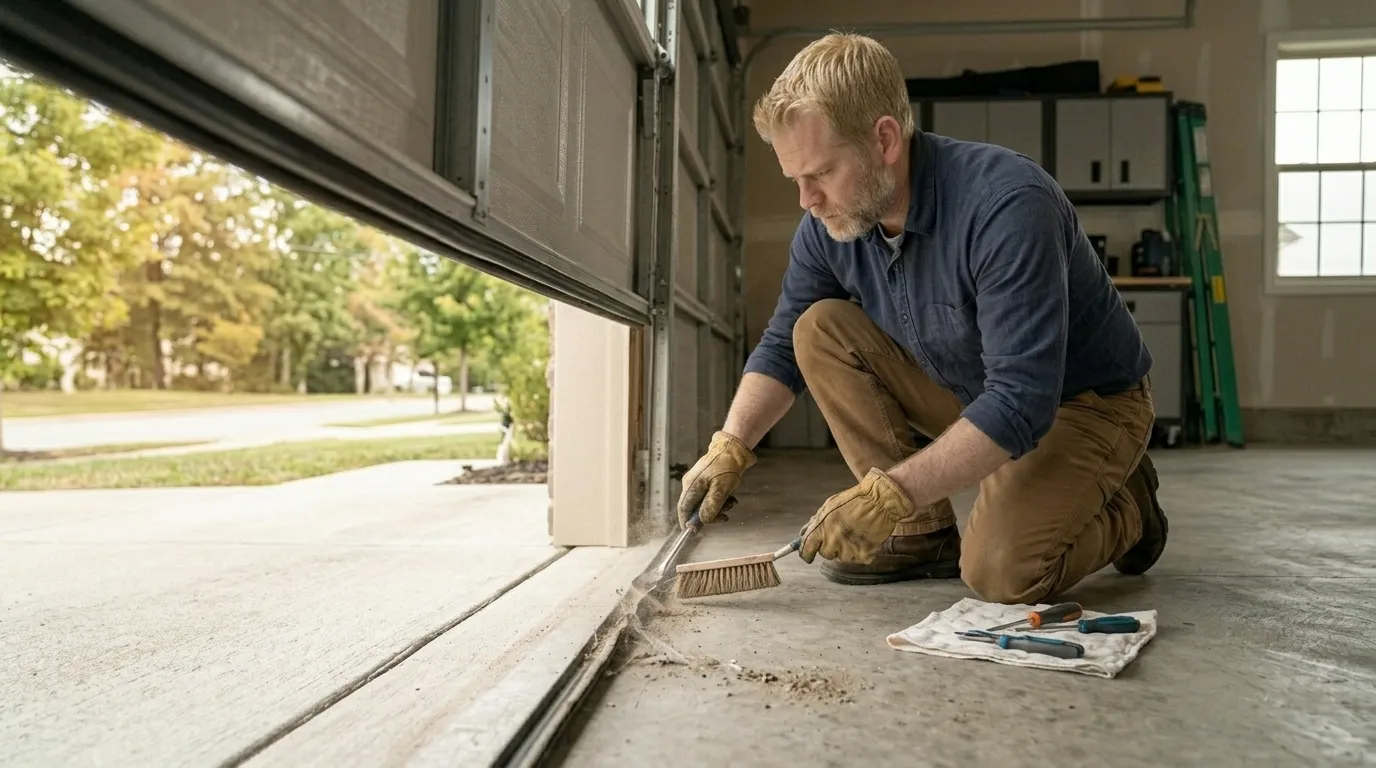
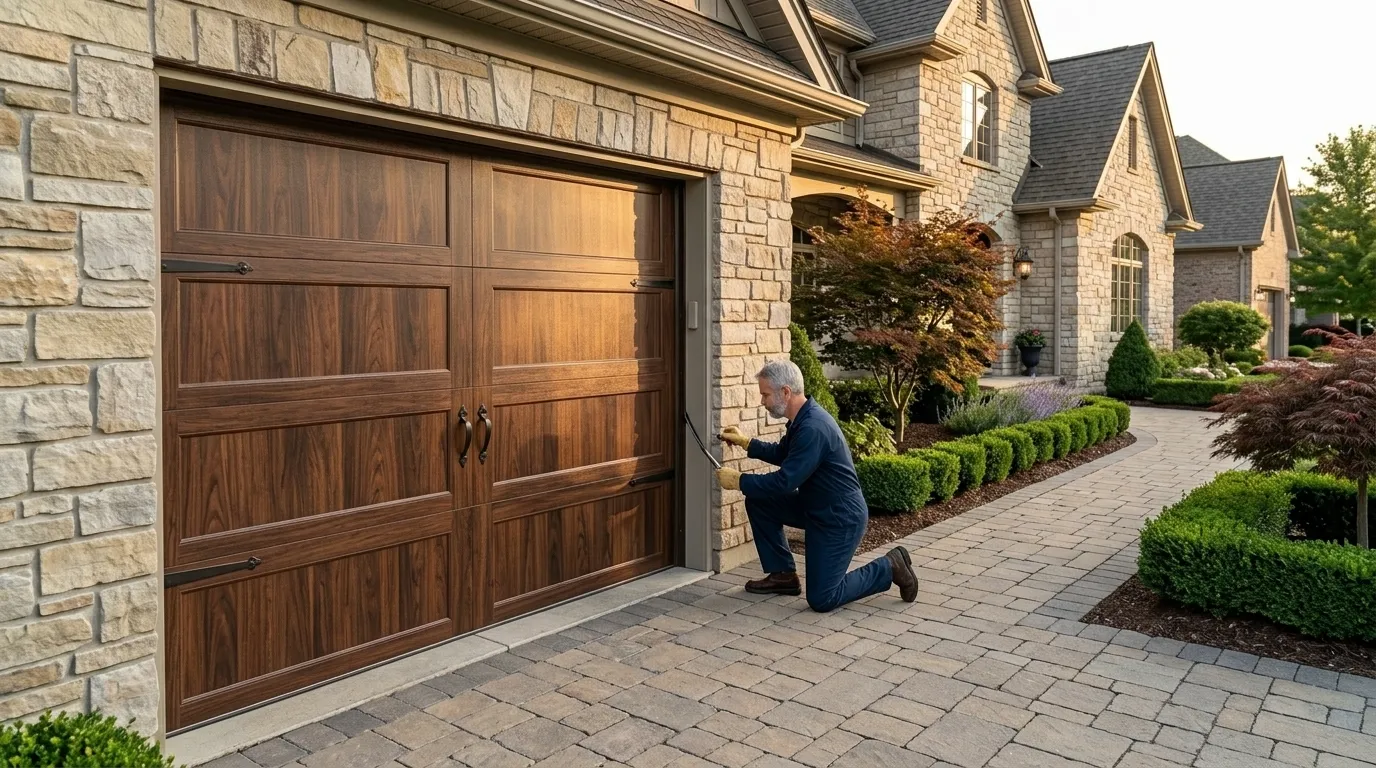
Tracy sits in a moderate-heat climate band, and the daily swing between a hot afternoon and a cool night is what warps aluminum panels over enough years. It's not one heat wave - it's thousands of expansion-contraction cycles on the same seams, hinges, and rivets. On the 1960s and 70s stock that makes up so much of the area's housing, that cycling has had decades to work. Steel panels from that era rust at the bottom seam where irrigation overspray or sprinkler runoff sits against the metal; aluminum panels from the same years bow slightly at the center where the sun hits hardest, just enough that the roller starts binding in the track. Newer doors, built after the mid-1980s with better galvanizing and thicker gauge steel, hold up better against the same climate. That's the pattern we see on service calls: age of the door and hours of direct sun matter more than the specific street. A panel that's cracked at a hinge point or bowed at mid-span on an older door isn't a manufacturing defect - it's thirty-plus years of Central Valley heat doing exactly what it does to that generation of hardware.
Doing It Yourself
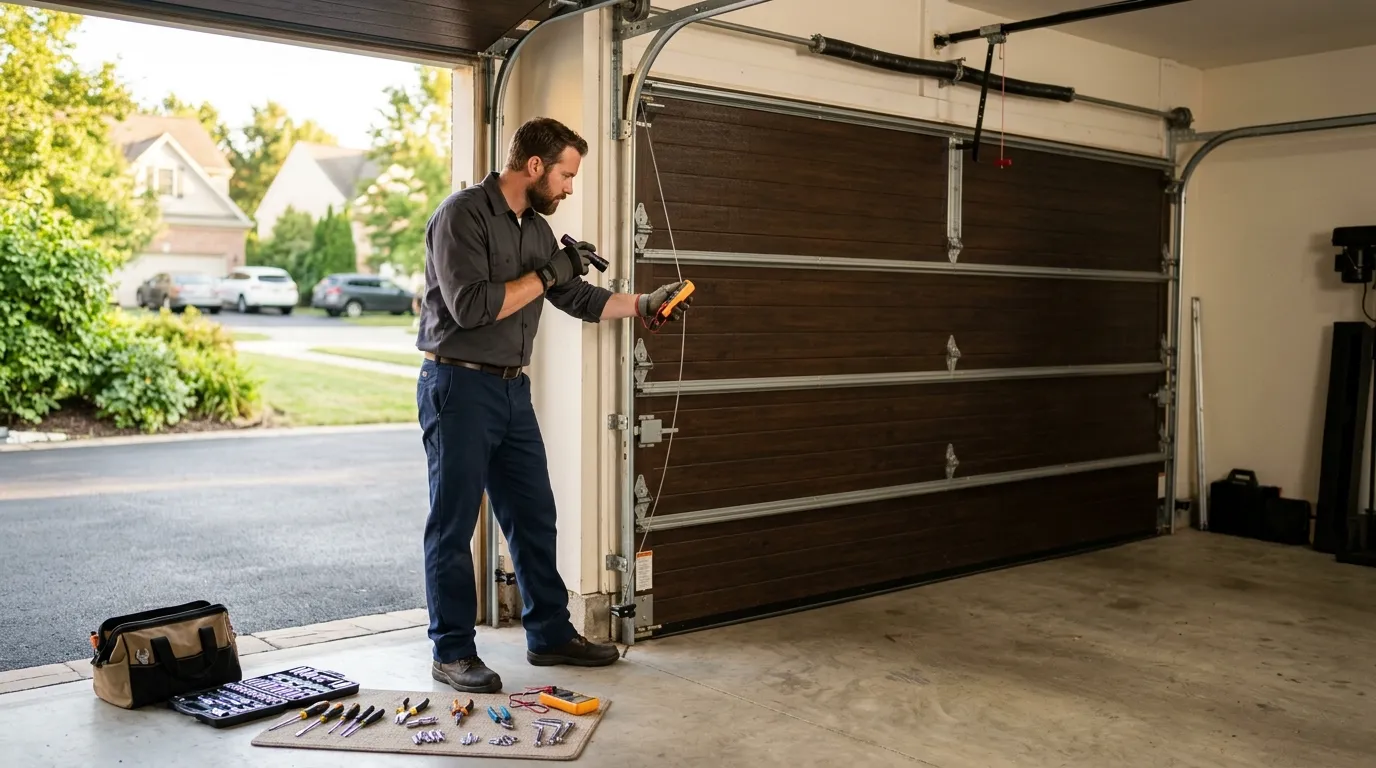
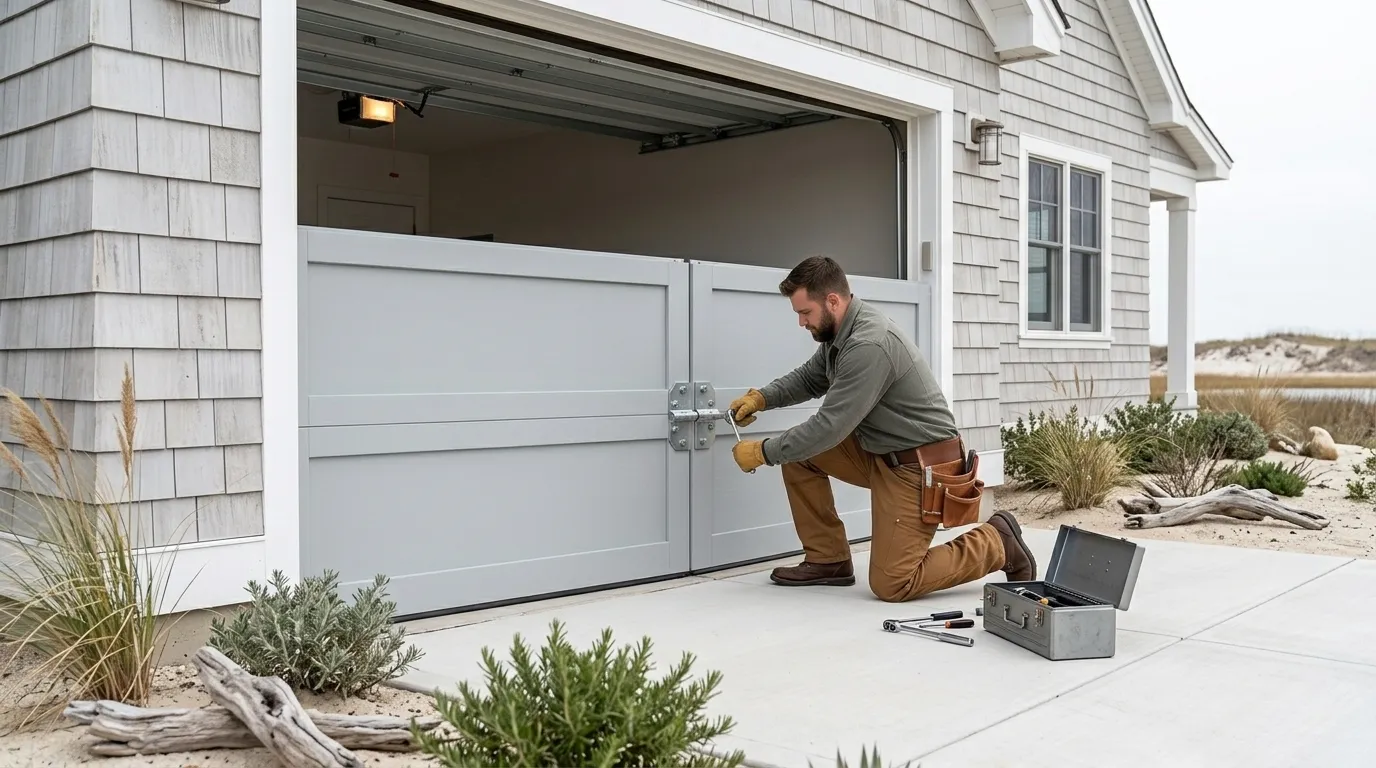
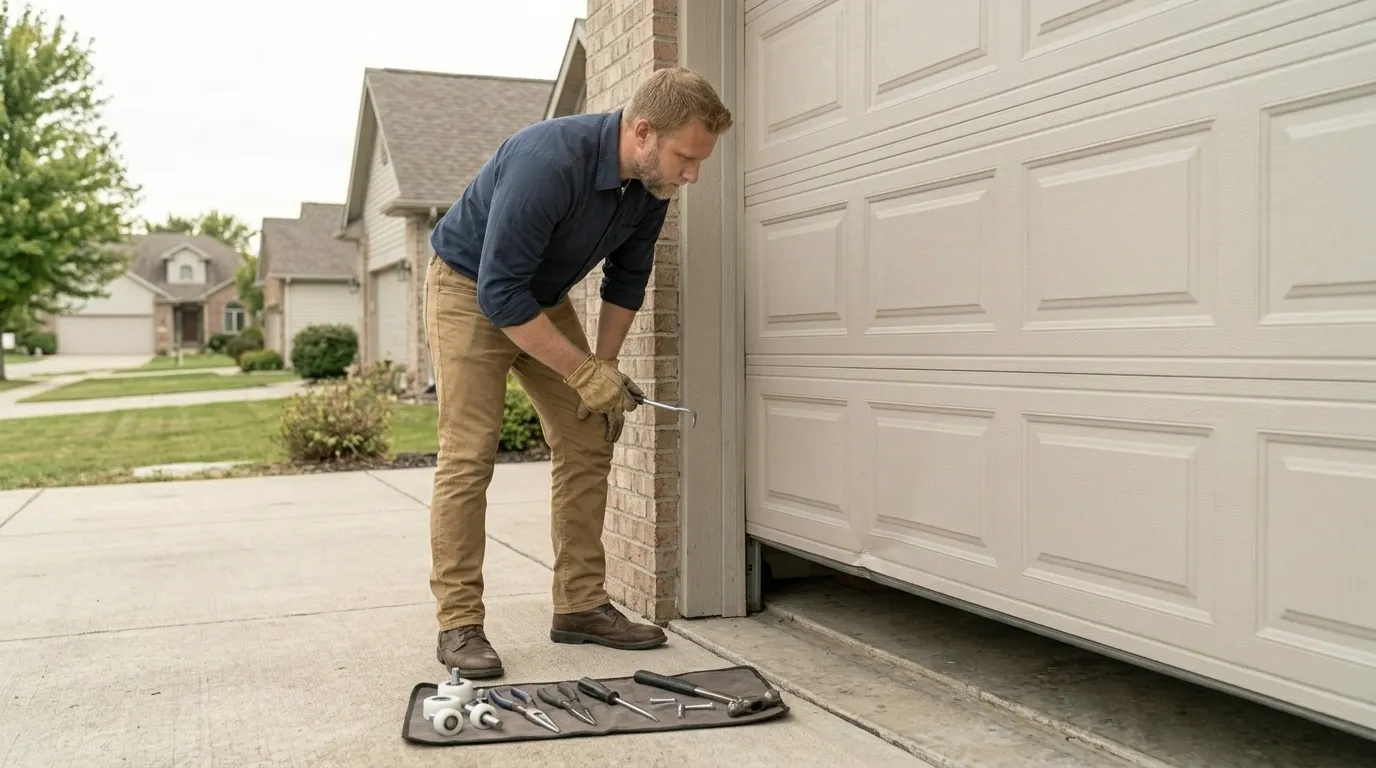
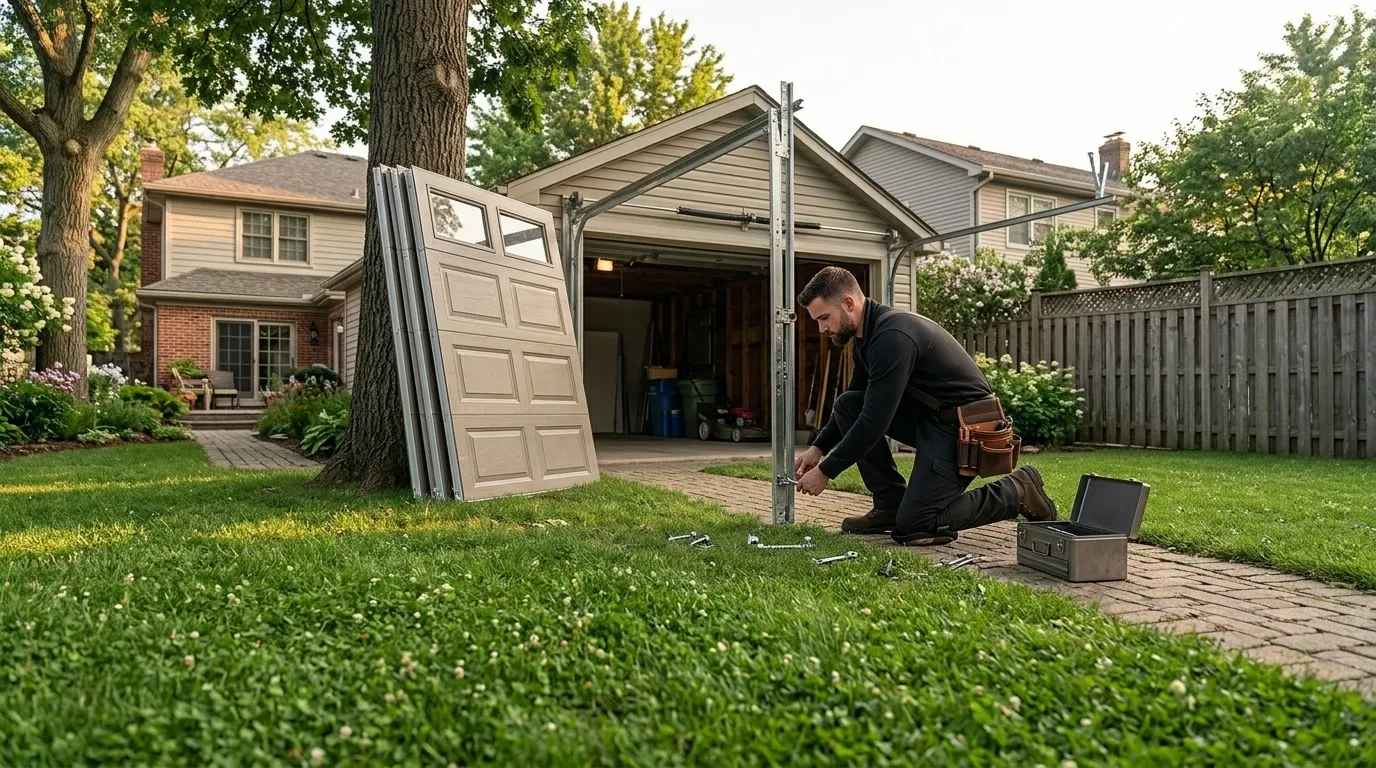
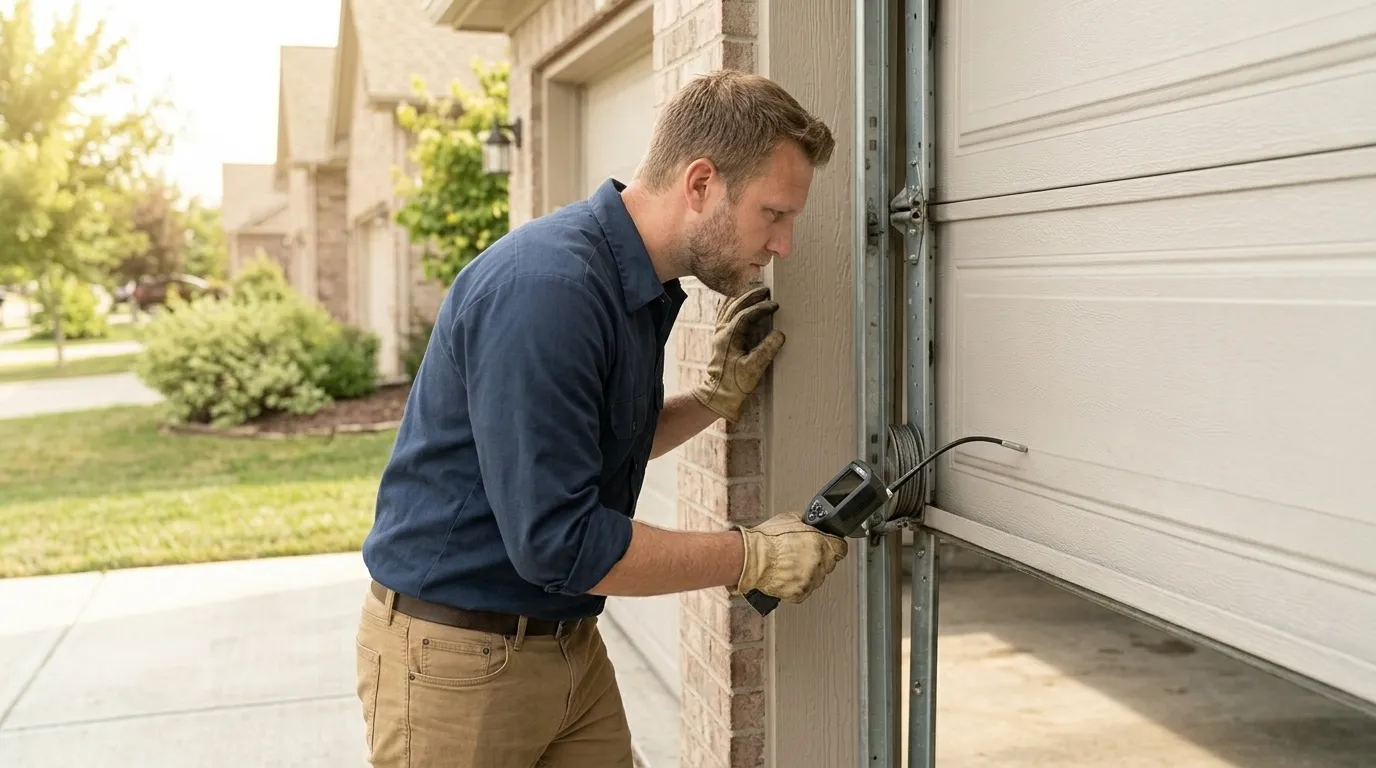
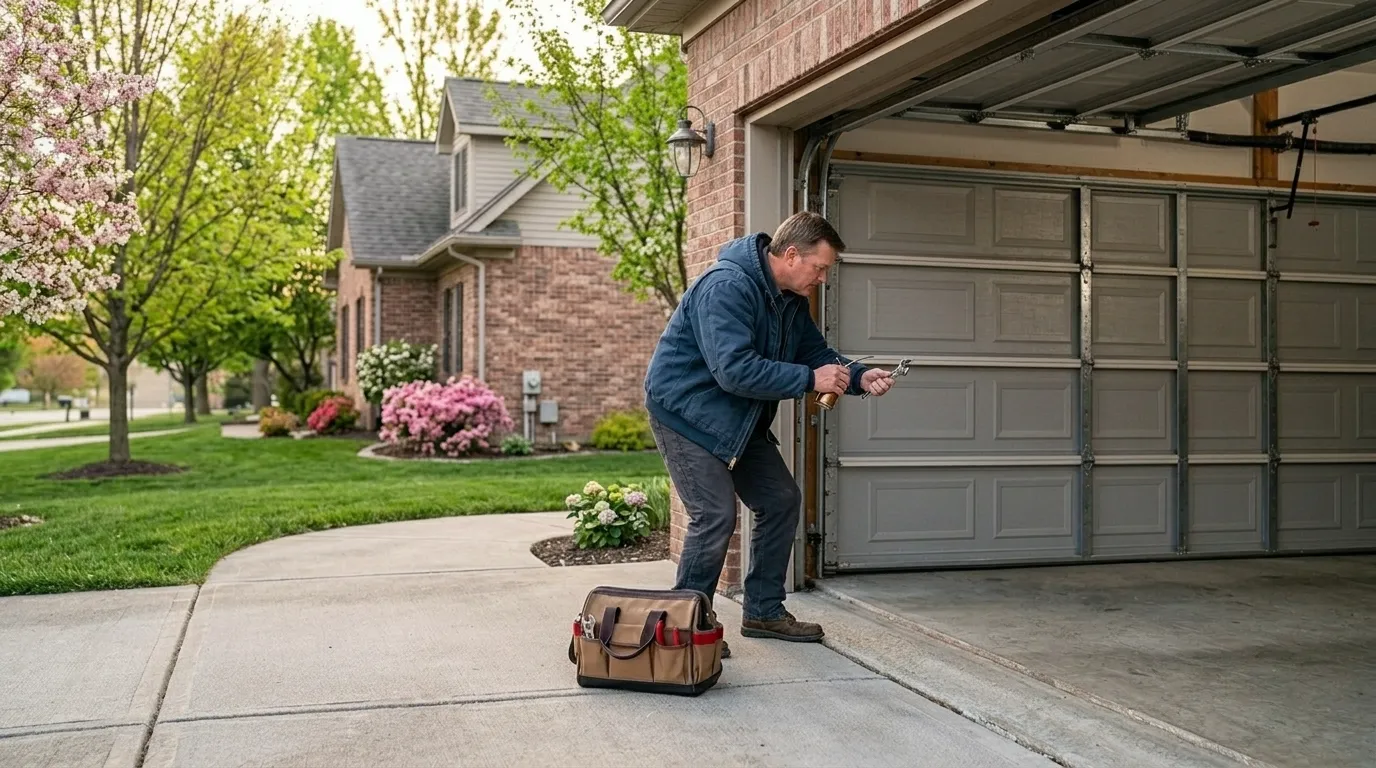
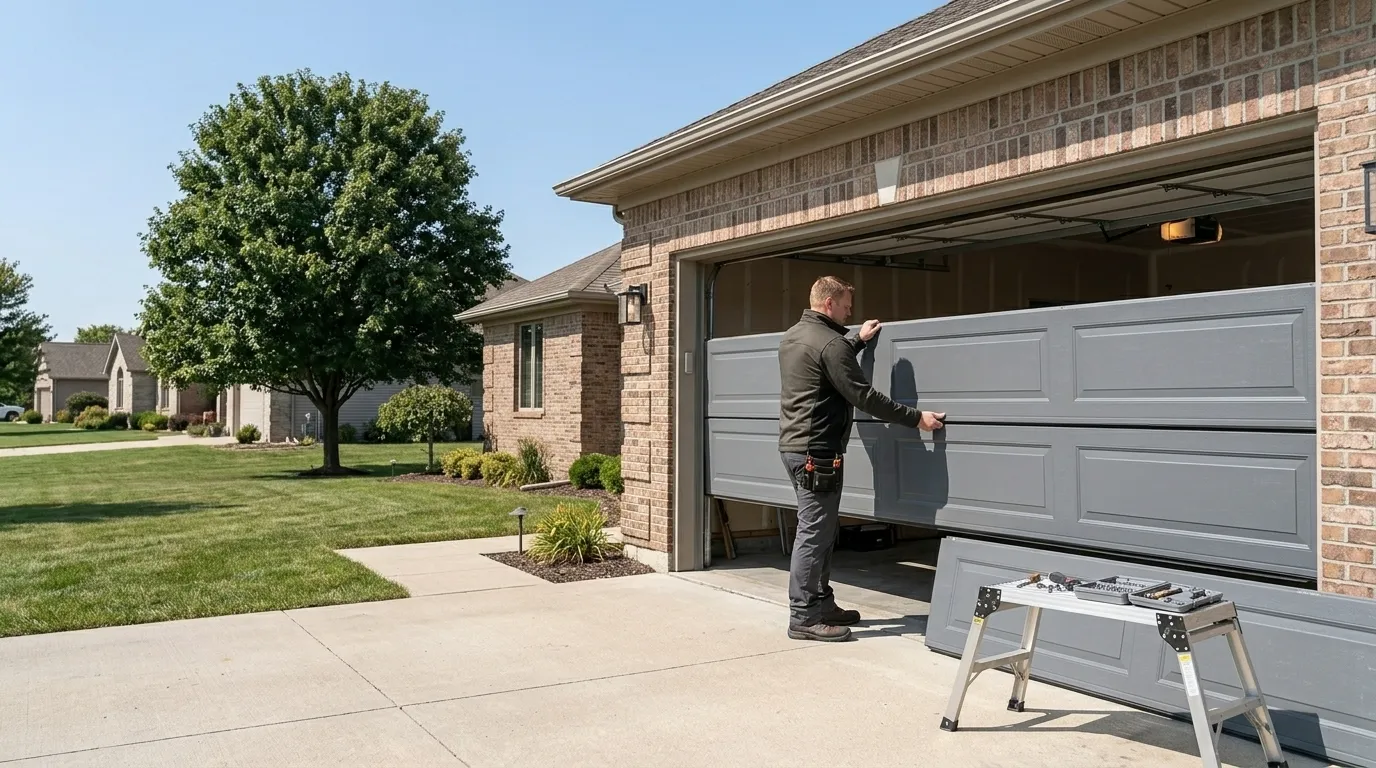
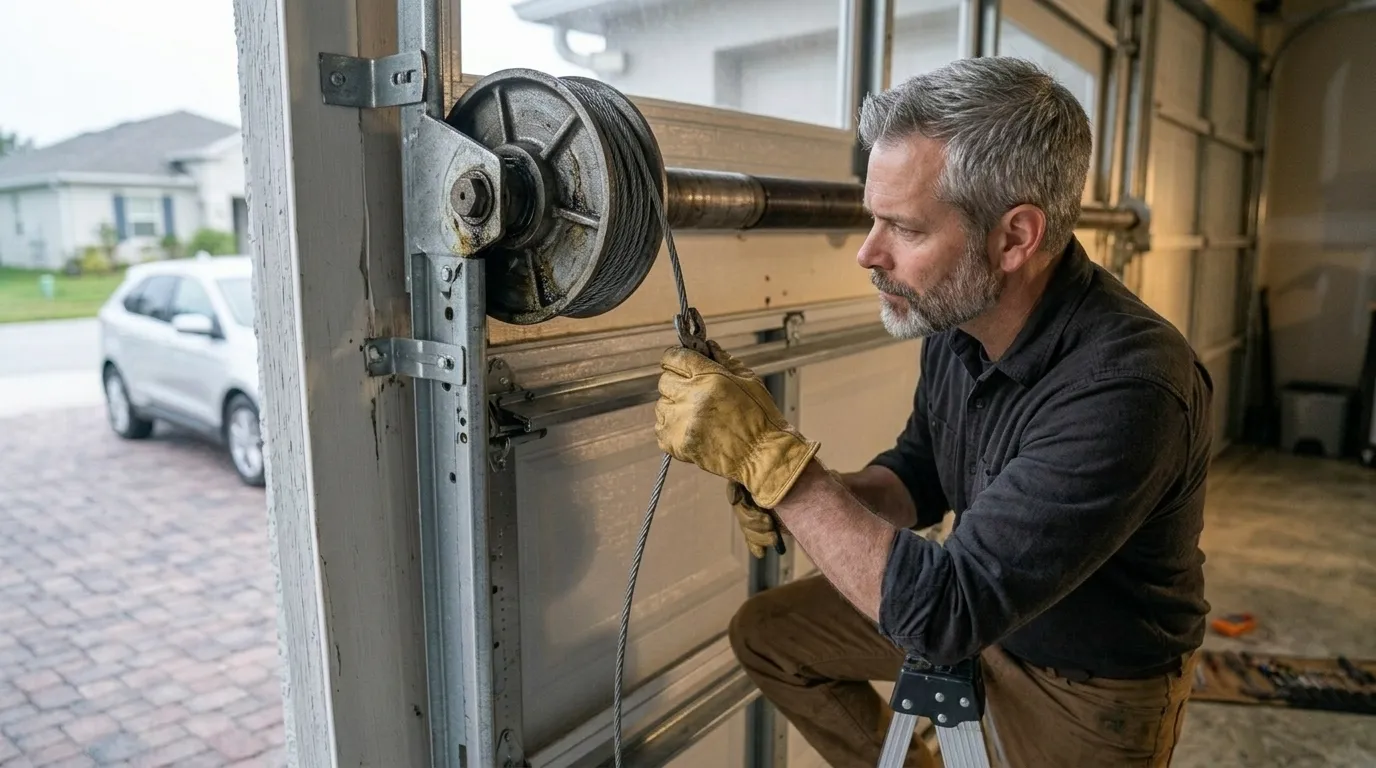
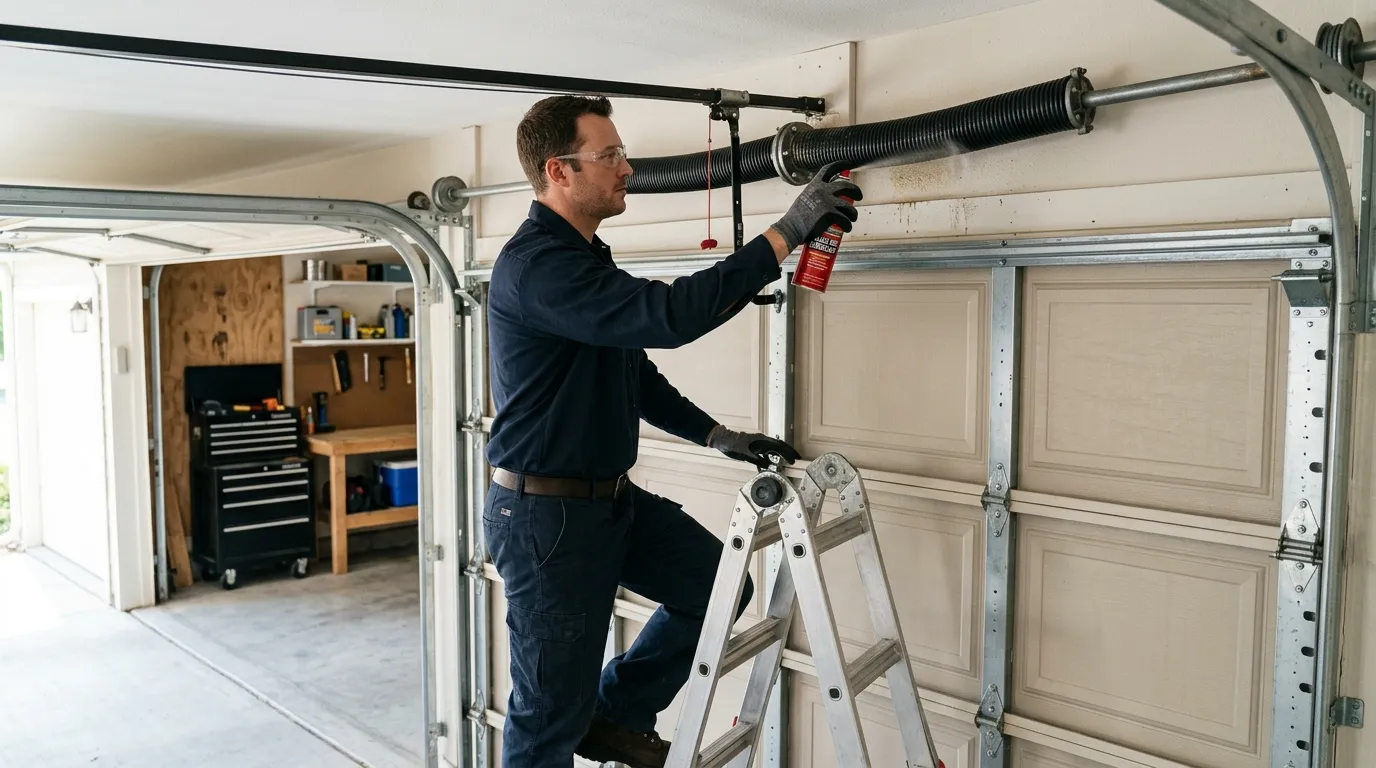
A single non-structural bottom panel on a common door size is within reach for a homeowner comfortable with a drill and a ladder - new hardware kits exist for popular sizes, and you're not touching the spring system to swap one section. Where it gets harder is matching. On an older door from the 1960s or 70s stock common in this area, the exact panel profile is often out of production, and a mismatched rib pattern or slightly different finish is obvious the second the garage door is up in daylight. We'll say plainly: we don't stock every discontinued panel line either. Sometimes the honest answer is that matching one section isn't worth chasing, and replacing the full door is the more sensible move once you're three or four years into a door with no more matching stock anywhere. If your door uses a torsion spring system, leave that part alone regardless of the panel work - that's not a panel job anymore, that's a different kind of risk. Panel swaps on the bottom section, away from the spring and cable hardware, are the reasonable DIY lane. Anything involving the top panel near the header or the spring anchor bracket is where we'd tell you to call instead.