The Cost of This Job
We don't post prices for opener installs here because the job itself varies too much - belt-drive versus chain-drive, a smart opener with camera and Wi-Fi versus a basic unit, whether the existing rail and header bracket can be reused or need replacing. What we can say is that at Lathrop's income level, most owners we work with are choosing to replace rather than patch a failing opener once it's past the ten-year mark, because the cost gap between a board repair and a new mid-range unit is usually smaller than people expect. On a house built in 2005, the door itself is usually still sound - it's the opener hardware that ages out first, especially the sensor eyes and the logic board. If your opener still has the original drive but a newer control board bolted on, that's a sign someone already did a partial fix once. We'll tell you flat out if a repair isn't worth doing twice.
What the Fix Involves
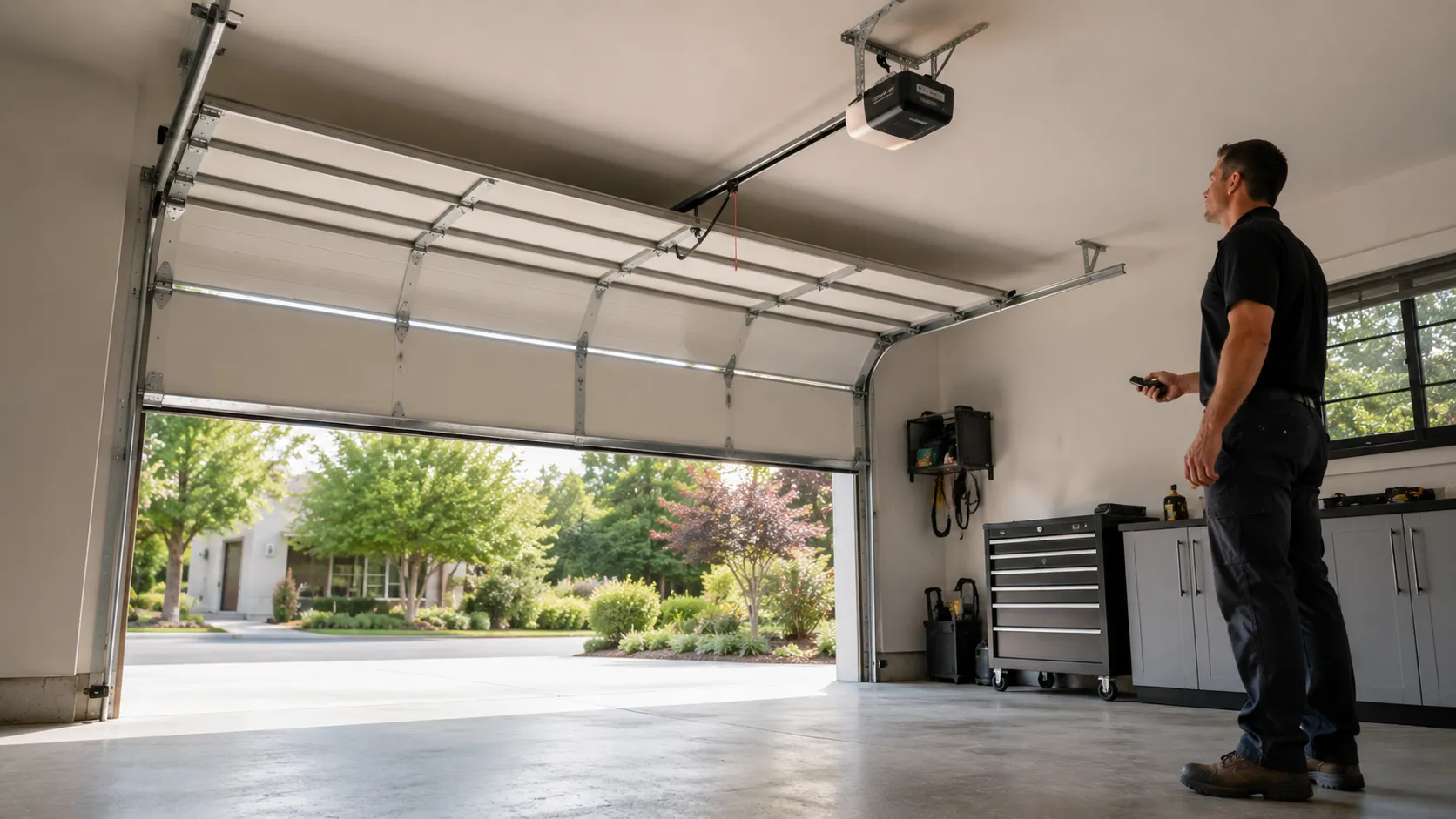
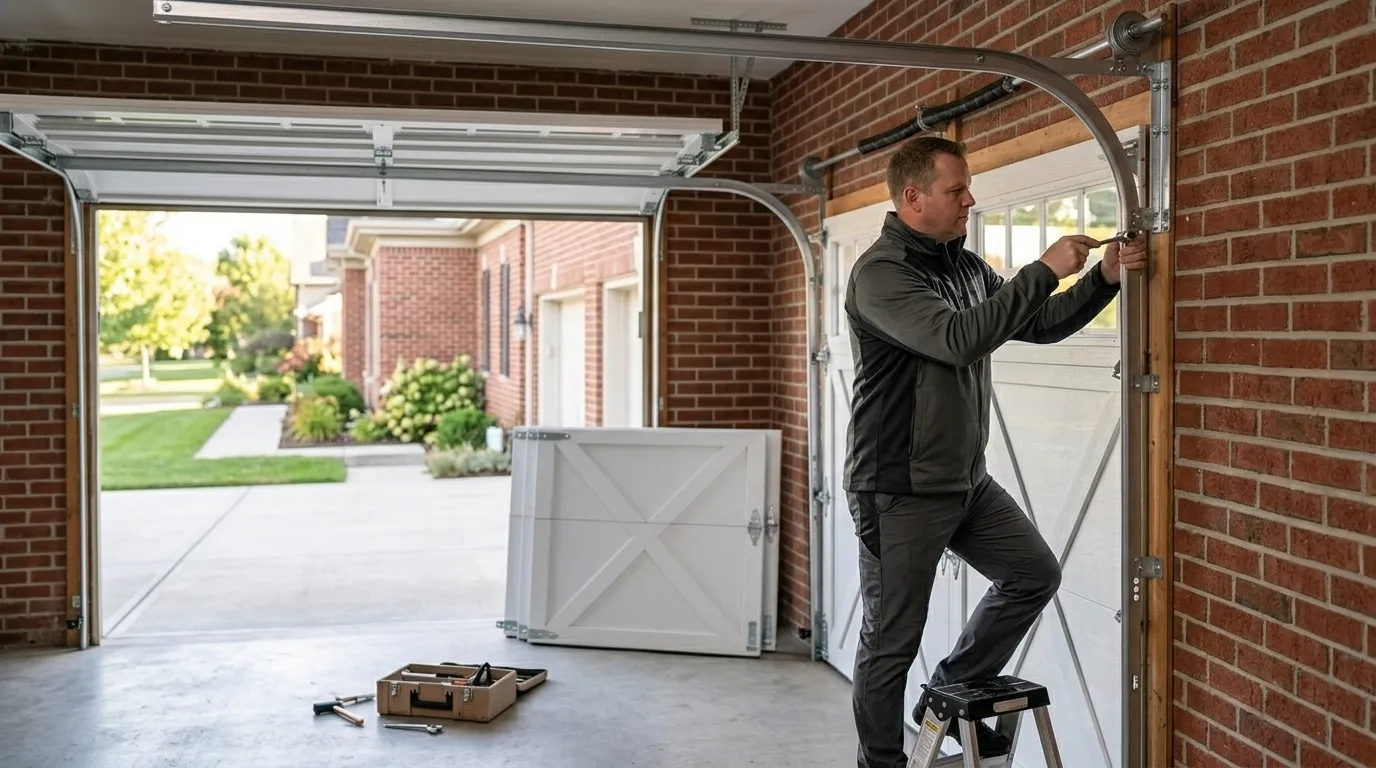
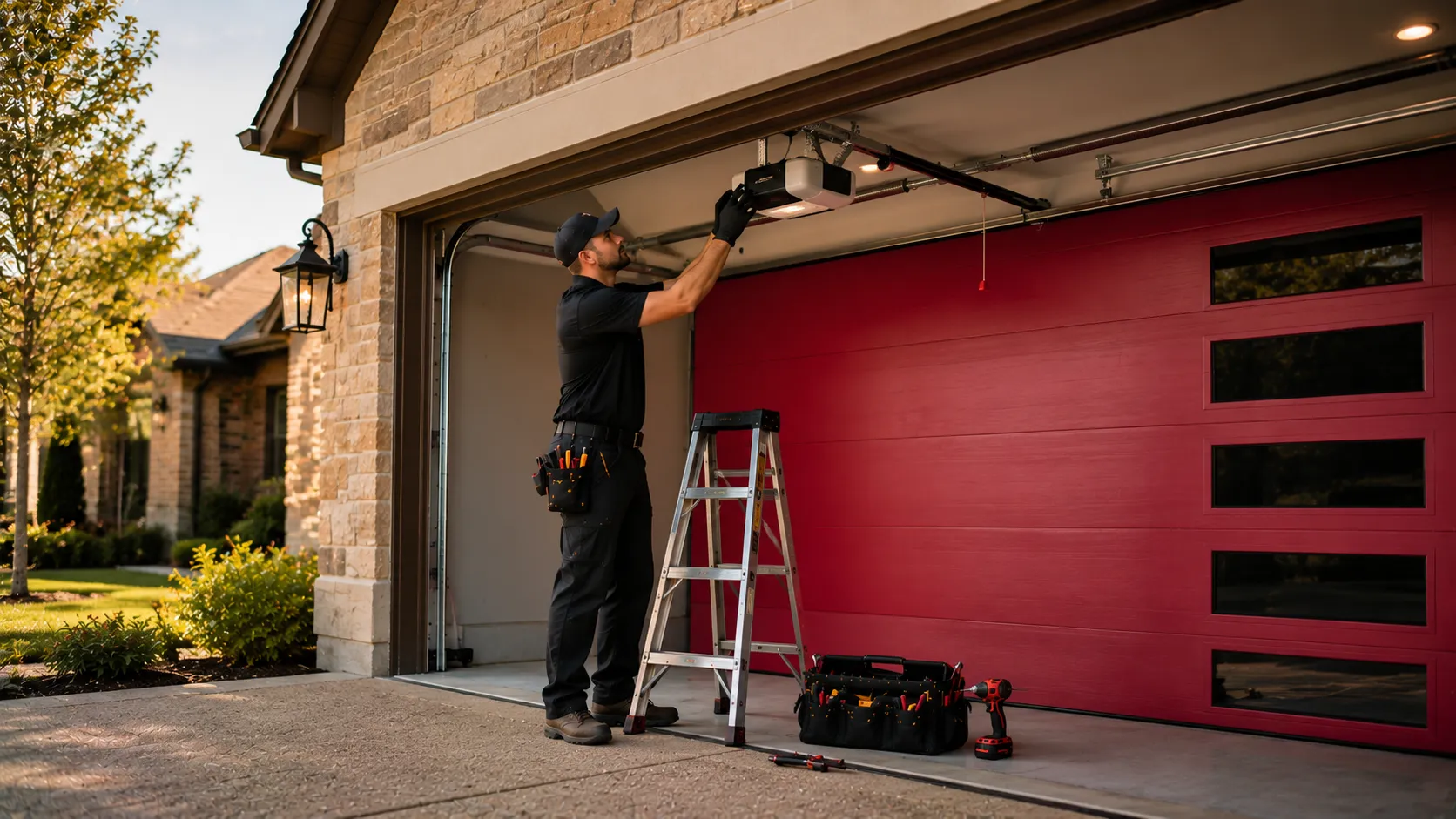
An opener swap on a house from Lathrop's era is usually a cleaner job than it is on the 1970s stock elsewhere in the service area, because the header bracket, rail, and wiring are newer and rarely need rebuilding from scratch. We pull the old motor unit, check the rail for wear, and confirm the door's spring balance before mounting anything - an opener fighting a spring that's lost tension will burn out again regardless of how new it is. From there it's mounting the new unit, running the belt or chain, wiring the wall control and safety sensors, and setting travel limits so the door reverses correctly on contact. In this climate band, heat is the moderate stressor rather than cold or heavy snow load, so we don't factor in the insulation or seal work that colder-climate installs sometimes need - this is a straightforward mechanical and electrical job, not a weatherproofing one.
Time on the Job
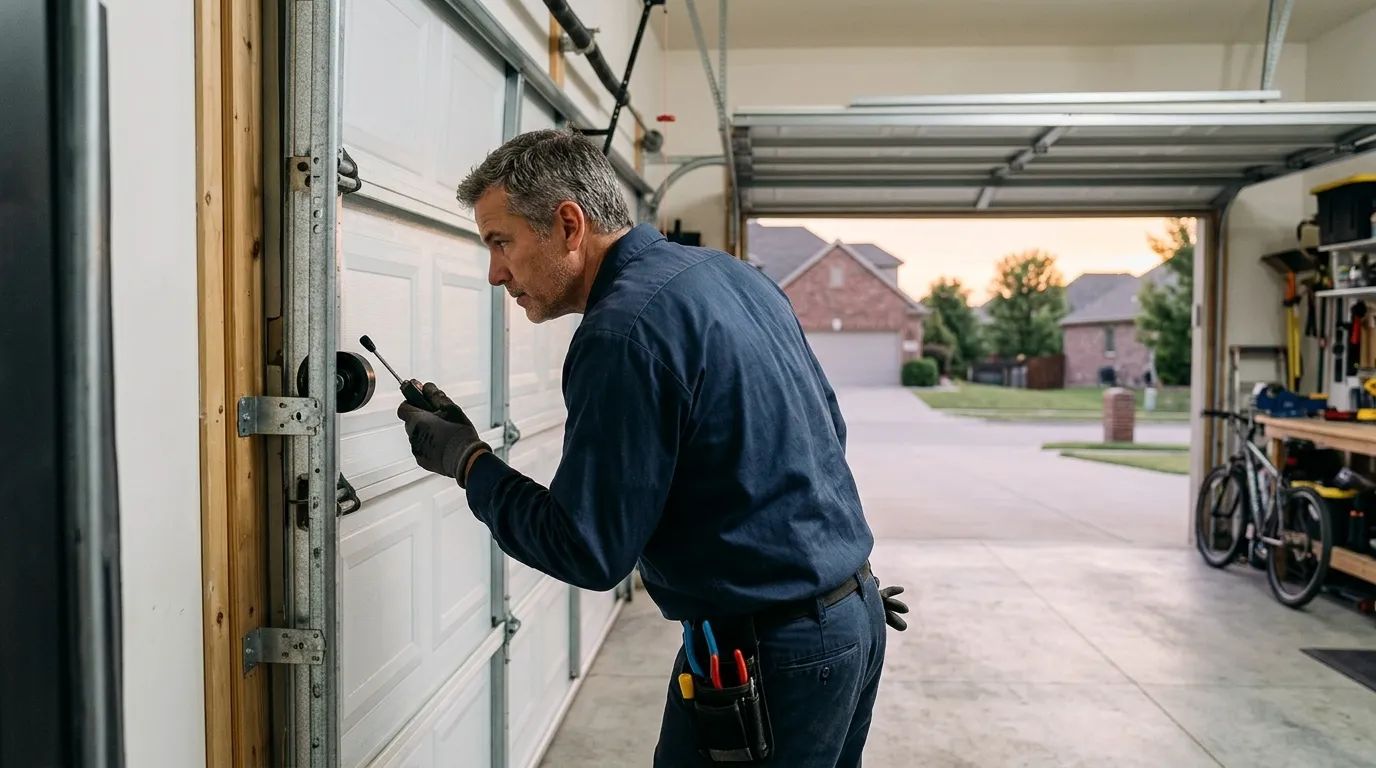
A straight opener swap, where the rail and header bracket are reusable, generally runs under half a day once we're on site. It takes longer if the old unit's rail is bent, the header bracket needs re-anchoring, or the wall wiring was run oddly by whoever installed the original unit - not uncommon on houses built in the early 2000s where builders sometimes used the cheapest opener on the market to close out a spec home. We test the safety reverse and the sensor alignment before we leave, since that's the part that gets skipped in a rushed install and comes back to bite an owner later. We don't rush that check regardless of how the rest of the job went.