The Symptom
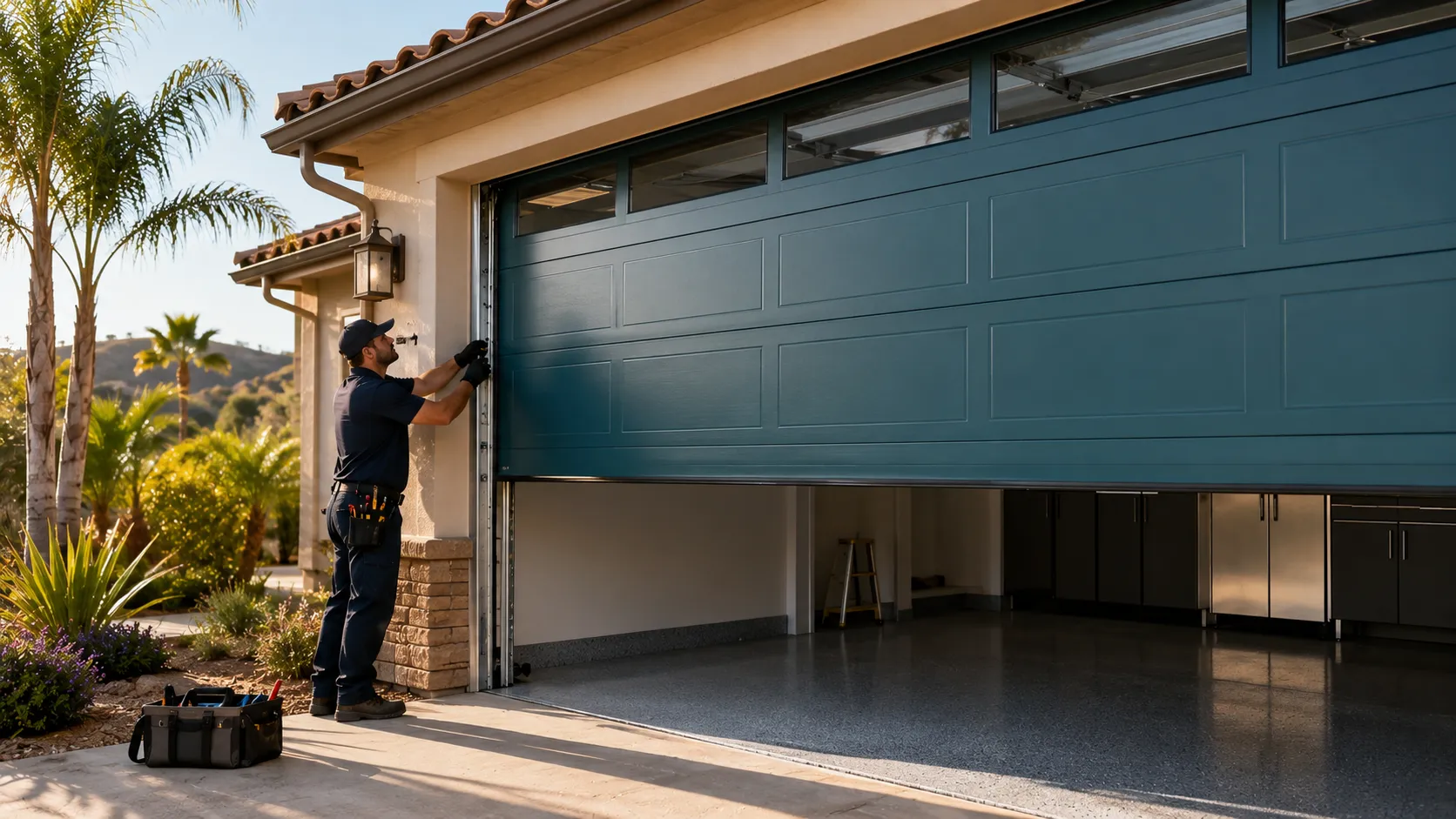
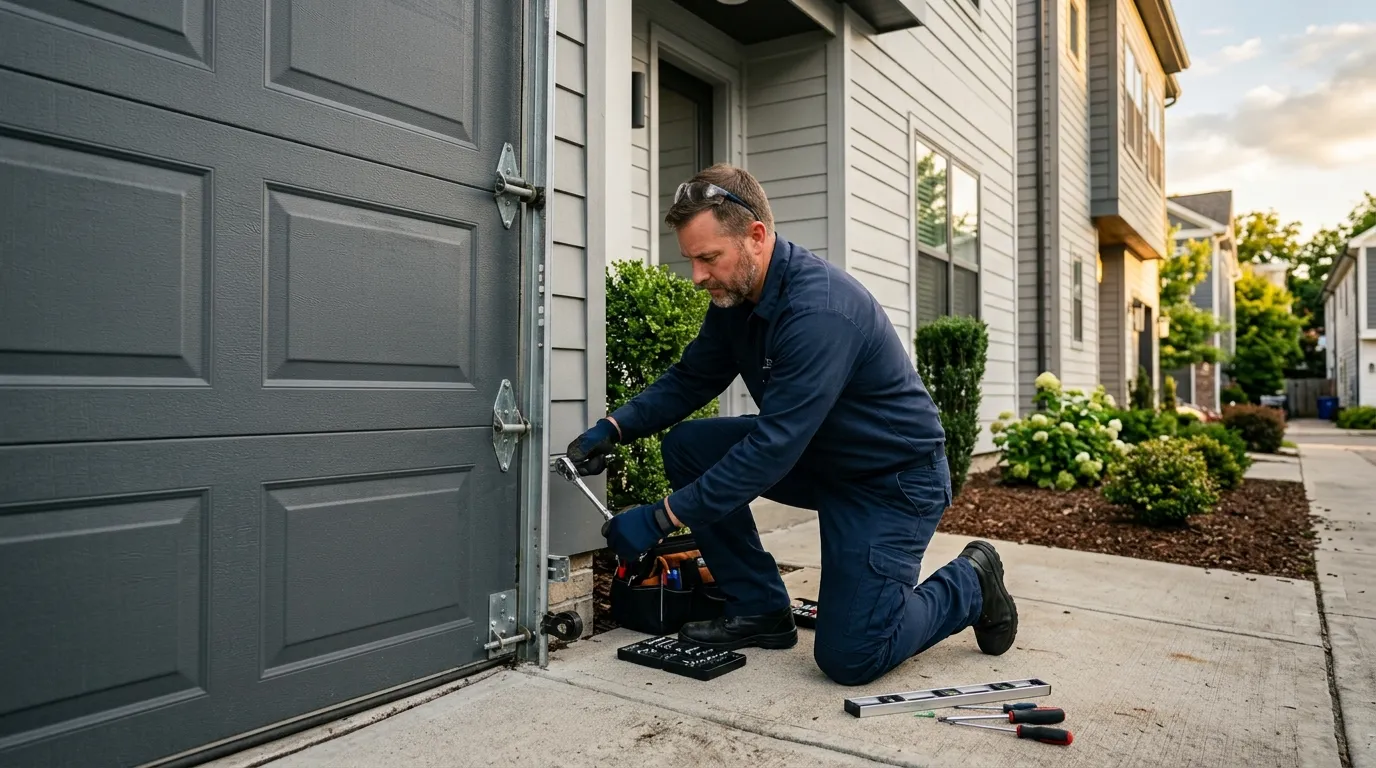
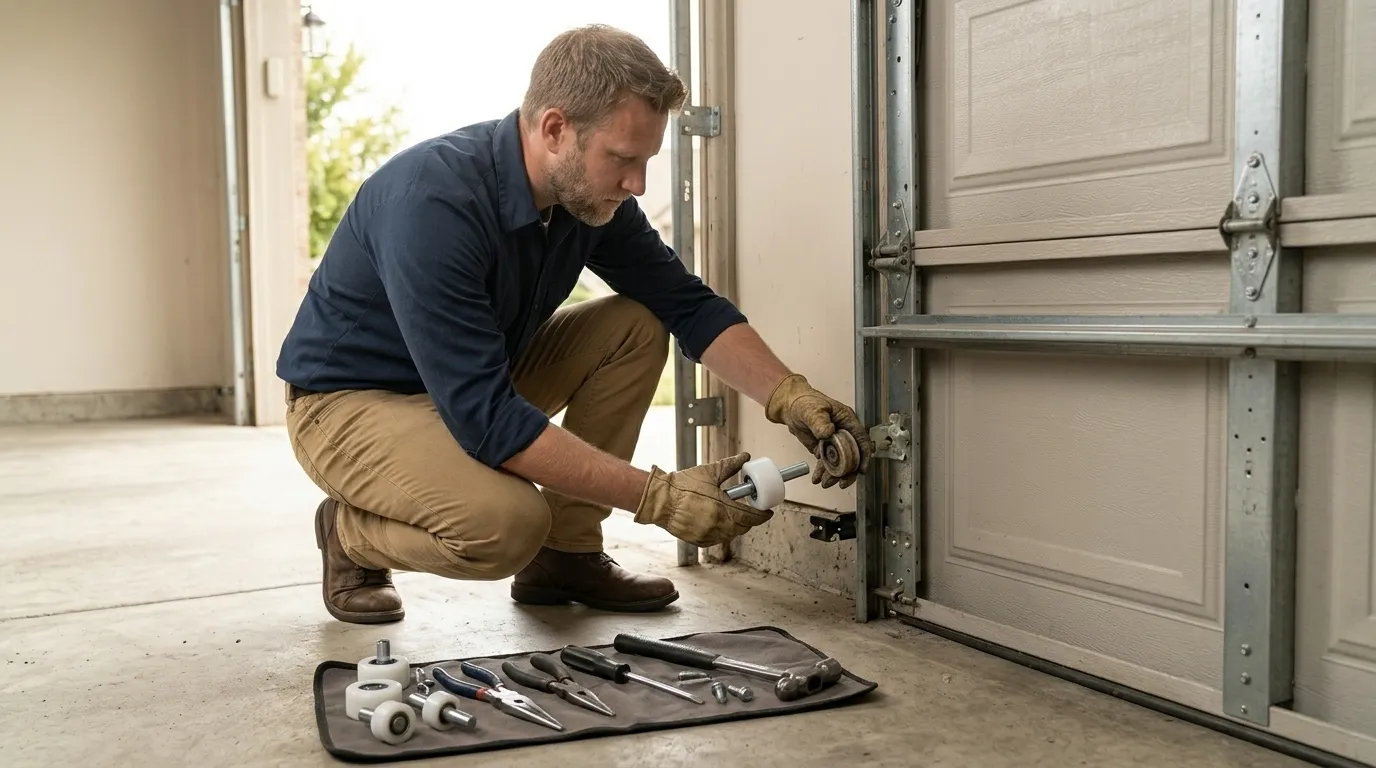
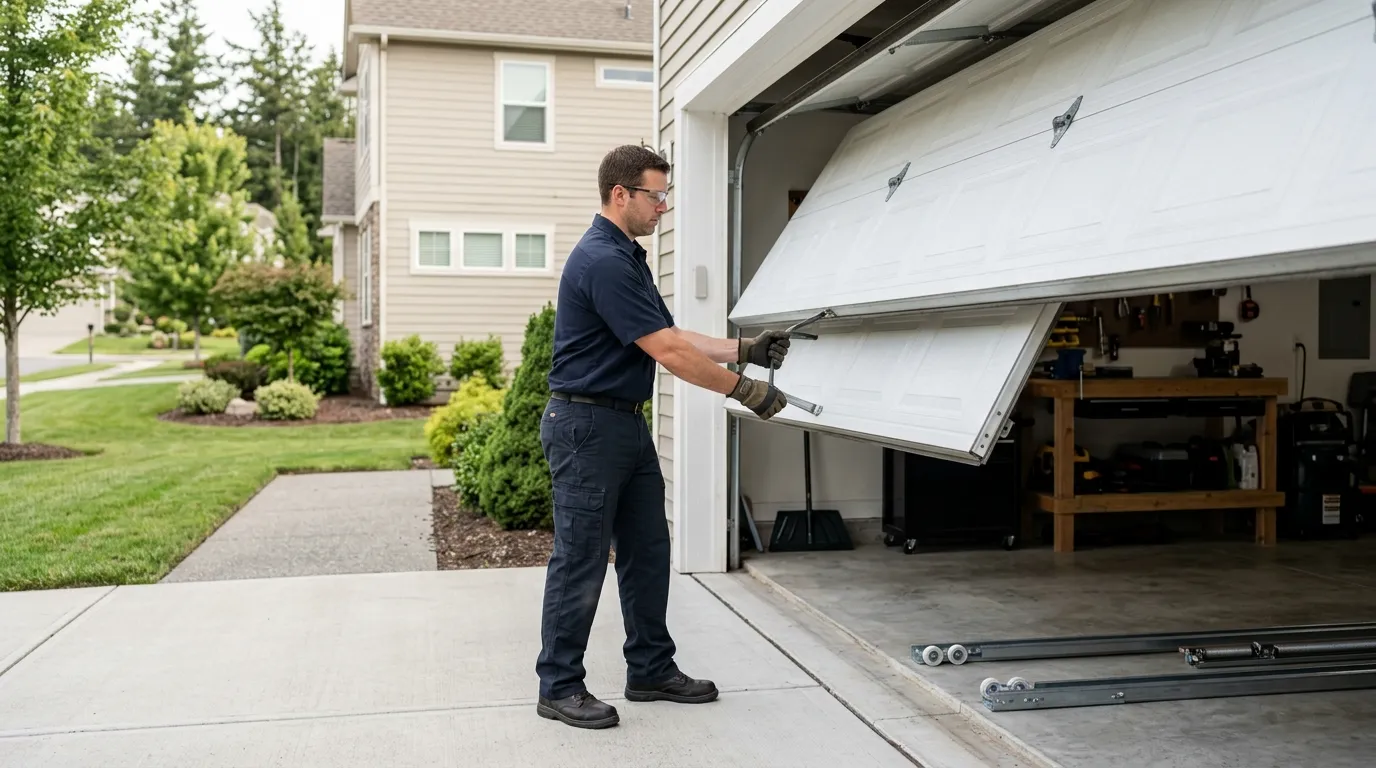
A cable failure looks different depending on which cable goes. If one of the two lift cables snaps, the door usually tips hard to one side as it comes down, sometimes dropping fast on the broken end while the other side holds. You'll hear a bang, then a scrape or a thud. If it's a torsion spring cable that frays and lets go, the door can drop the last foot or two with no warning at all, and it won't lift by hand afterward because the spring tension that was supposed to help you is gone. Either way, the door is not safe to run on the opener. Running a garage door opener against a broken or frayed cable strains the opener motor and can bend the track, turning a $150 cable job into a $400 one. If you notice fraying, a kink, or rust bloom on the cable before it snaps, that's the moment to call, not after.
Why This Fails Locally
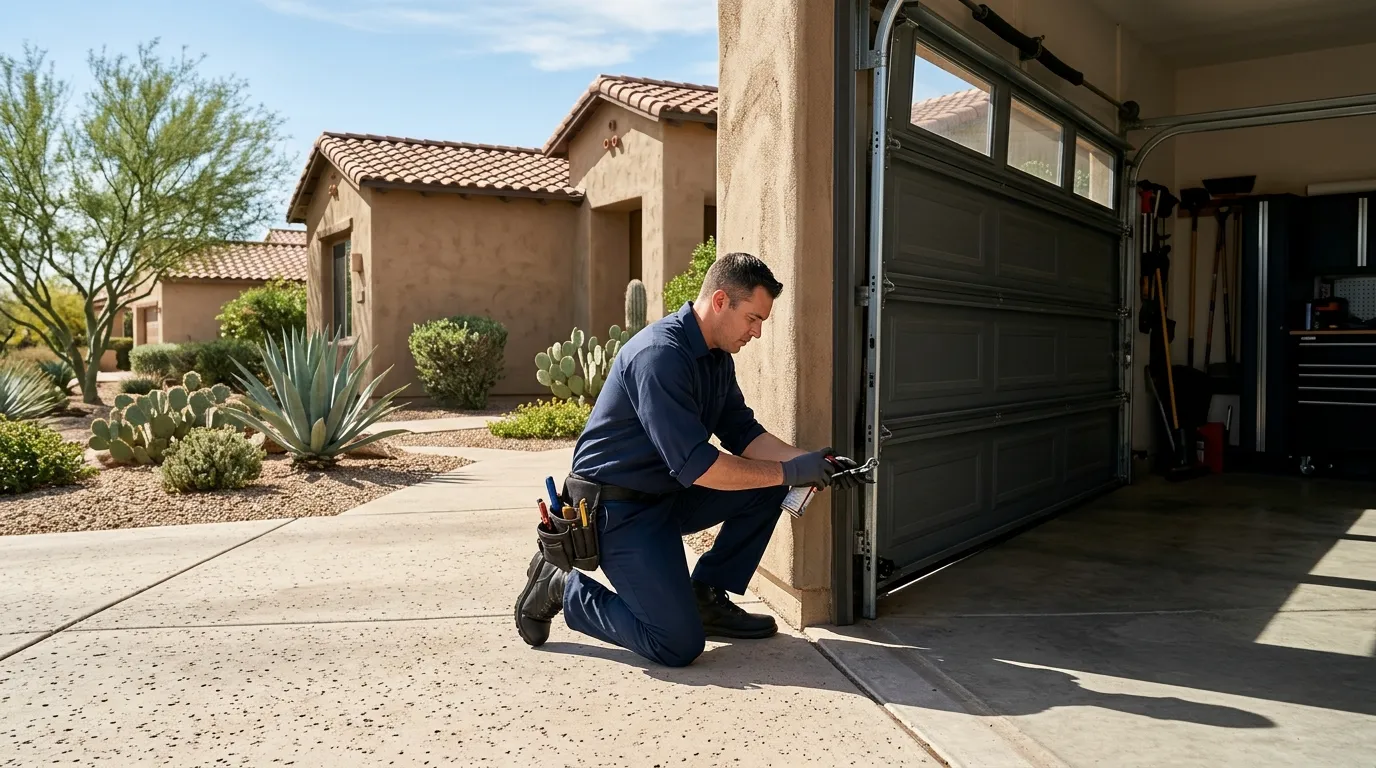
Knightsen's housing sits with a median build year around 1981, a bit later than the 1979 median across the wider service area, but still solidly inside the era where galvanized steel lift cables were standard and torsion springs were sized to lighter, single-layer steel doors. Those cables were built for a 20-to-25-year service life on a door that gets opened once or twice a day. Forty-plus years on, most of them are past that window even if they haven't broken yet. The heat here runs in the moderate band for the region, so we're not dealing with the extreme cable-corrosion cycles you'd see in a coastal salt-air climate, but daily thermal expansion and contraction on original hardware still work cable ends loose at the drum over decades. On a door of this age, if one cable has gone, the other is usually close behind it, and we'll say so rather than replace one and leave the matching cable to fail next month.