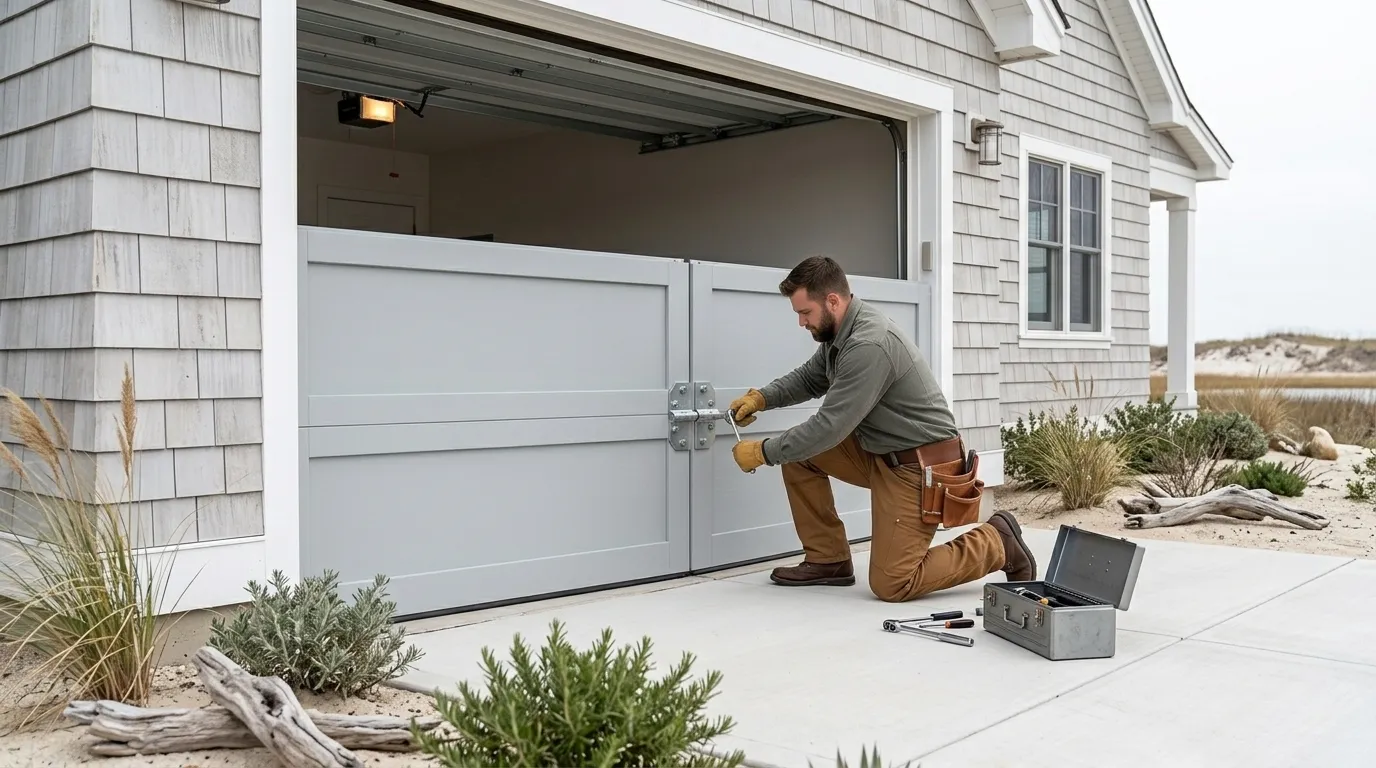
Most houses in Knightsen went up around 1981, which puts them past the extension-spring era that dominated a lot of older Bay Area and Valley construction but still ahead of the insulated steel doors that became common after 2000. That means we're usually looking at early torsion setups, single-layer steel panels, and openers that got swapped out once or twice over the decades but doors that are original. We carry torsion springs sized for that generation of door, standard-drive cables, and rollers that fit the older track profile - the parts that actually fail on a house this age, not a guess at what might. What we don't stock on the truck is anything custom-width or a door built to a spec nobody used locally, so if your opening is oversized or the panel is a discontinued profile, that's a return trip while we order it. Better to say that up front than pretend every part rides in the van.
The Symptom
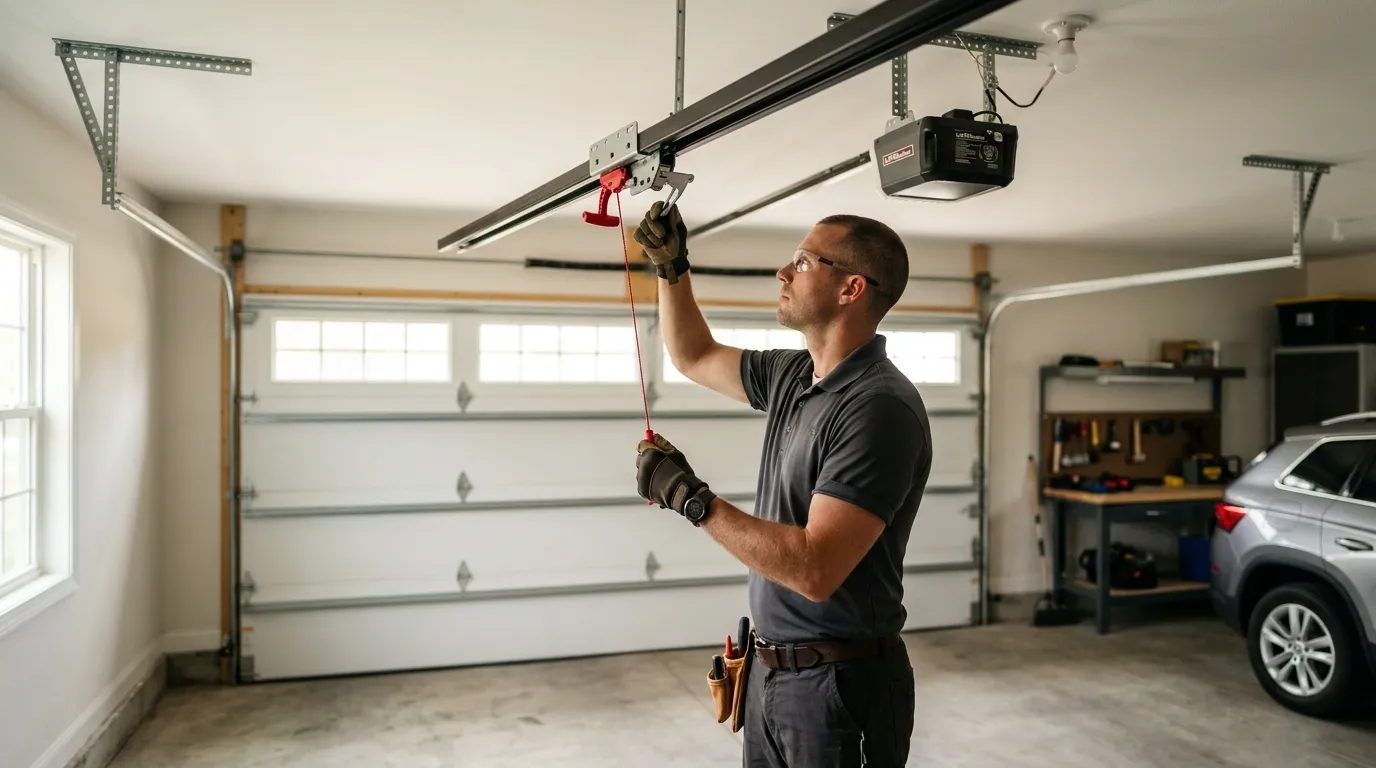
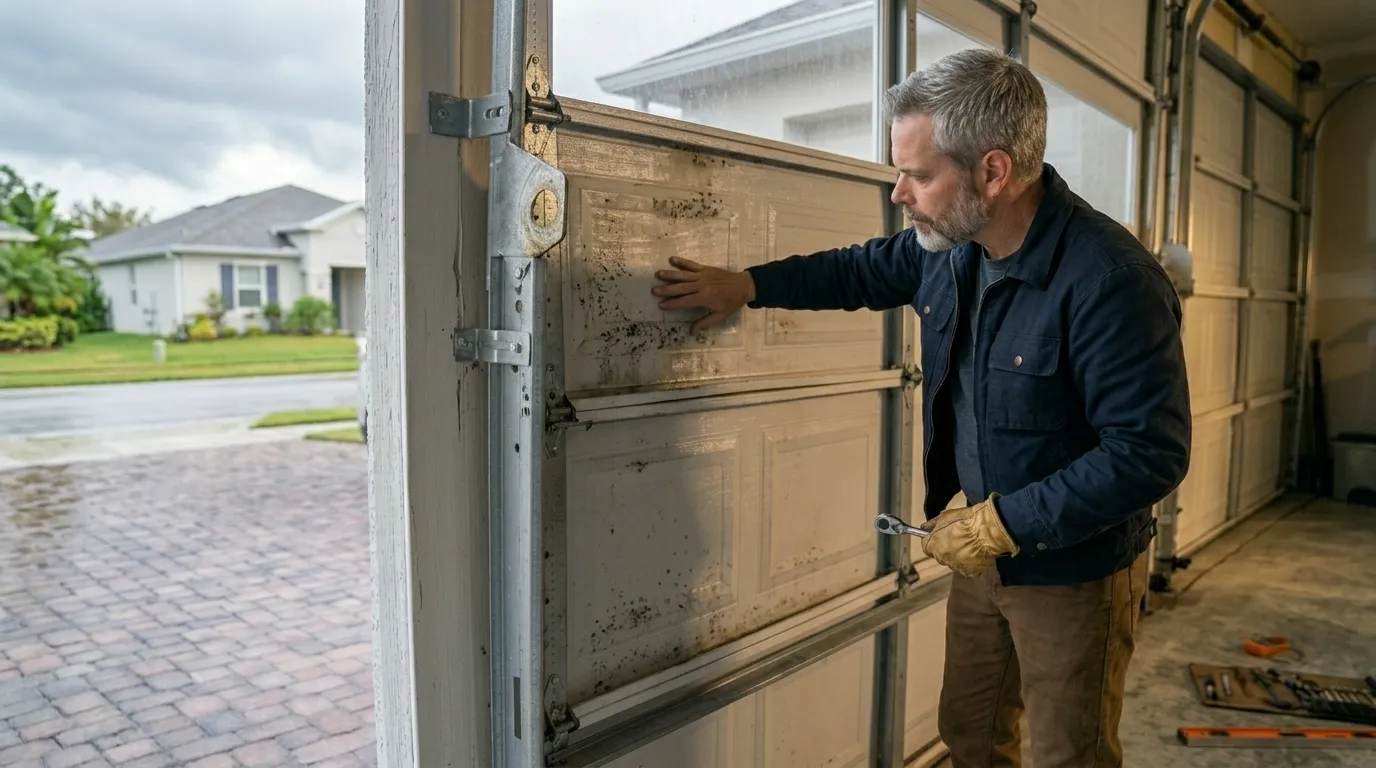
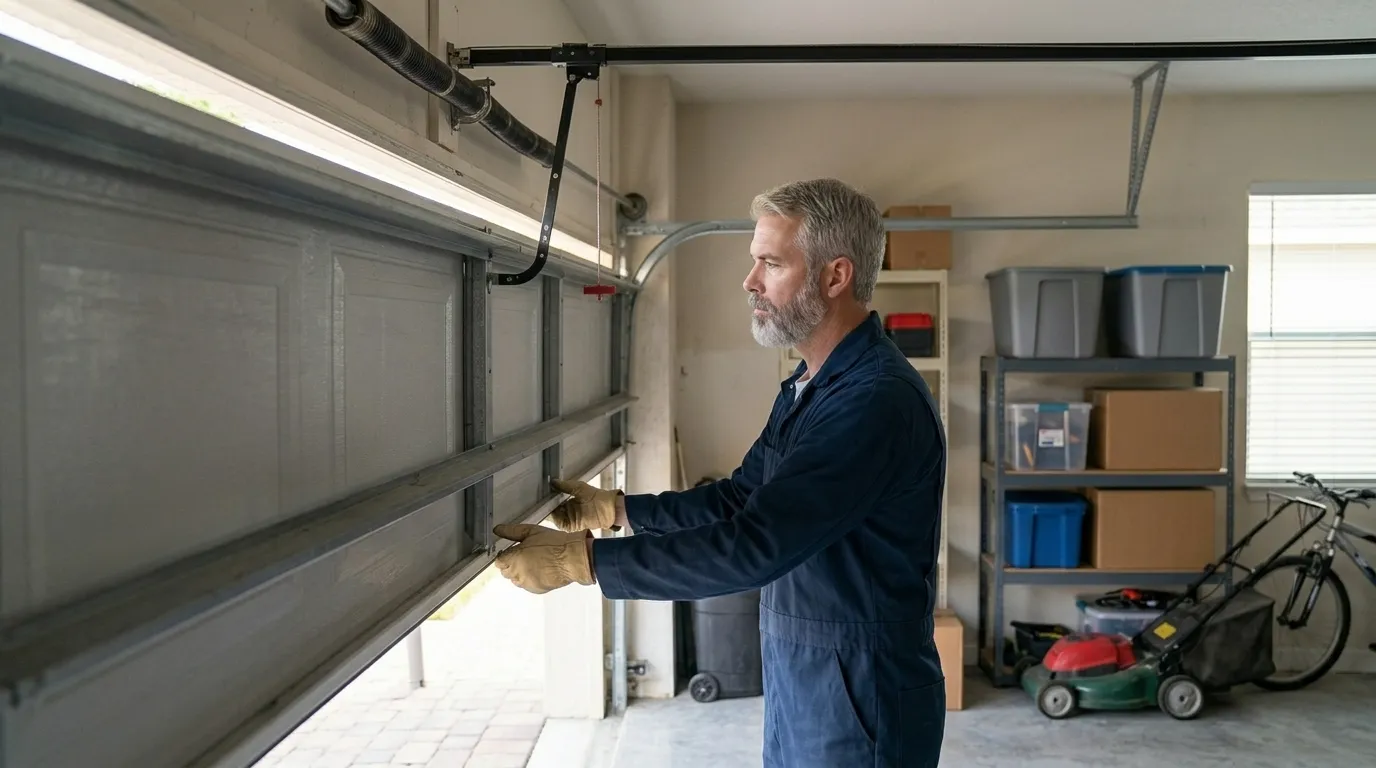
On a door this age, the complaint we hear from Knightsen calls is usually one of two things: the door won't lift past a foot or two and the opener strains against it, or it lifts fine by hand but the opener chain grinds and stalls. Both point to spring fatigue, not the opener itself - a torsion spring rated for a 1981-era door has had forty-plus years of cycles, and steel gets tired long before the paint does. The other pattern is a cable that's frayed at the drum, which on original hardware shows up as a door that racks sideways on the way down instead of settling flat. Neither of these is an opener problem, even though the opener is what the homeowner notices first.
Why This Fails Locally
Knightsen sits about 600 households, smaller than most of the towns we cover out of Tracy, and it's the farthest stop on our route at 20 miles - Ripon, Country Club are all closer at 18 or 19. That distance doesn't change the diagnosis, but it does mean we plan the trip around a real appointment window rather than a drop-in. The housing stock here also runs a bit newer than the median across the service area - 1981 versus a broader median of 1979 - which is a small gap but it matters for spring sizing: a door from this exact window often takes a different wind count than the older stock in neighboring areas, and guessing wrong means a spring that binds or one that's too light for the panel weight.
Booking a Visit
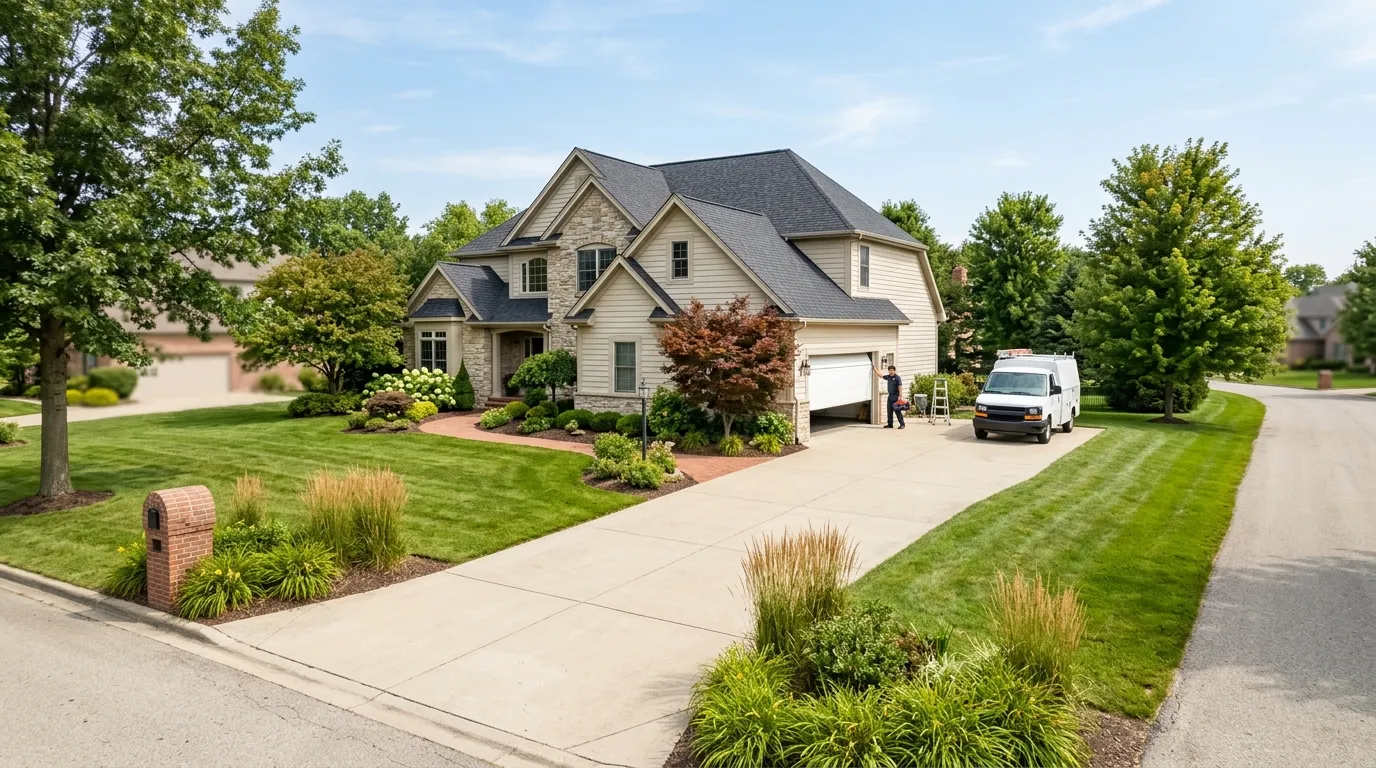
We run out to Knightsen from Tracy, so we book the trip ahead rather than promise a same-hour arrival - with 20 miles on the odometer, that's the honest way to set the appointment. Tell us the door's approximate age and whether it's the spring, the cable, or the opener acting up, and we bring the right stock for a door built around 1981 rather than making a second trip to correct a guess. If the fix turns out to be a full replacement - which happens more on doors this age when the track or the panel itself has warped - we'll say so on site instead of patching something that won't hold.
How it works
From “it’s stuck” to “it’s fixed”
A quick, honest process - no guesswork and no surprises, start to finish.
How far out does Tracy Garage Door Pros travel for Knightsen calls?
About 20 miles from our Tracy base, which is the longest run on our current service area. We still cover it, but we schedule the visit rather than offer a walk-up same-hour arrival, since the drive is part of the plan.
Are Knightsen garage doors likely to need spring replacement?
A lot of them, yes. Most homes here date to around 1981, so the original torsion springs have logged decades of cycles. A spring that's lost tension is the most common reason a door struggles to lift or an opener strains against it.
Do you stock parts for older Knightsen doors on the truck?
We carry torsion springs, cables, and rollers sized for the early-1980s hardware common in Knightsen. Oversized openings or discontinued panel profiles usually mean ordering a part first, which we'll tell you before the visit, not after.
Ready to get your garage door sorted?
Tell us what it’s doing and where you are in Tracy - we’ll take it from there.