The Symptom
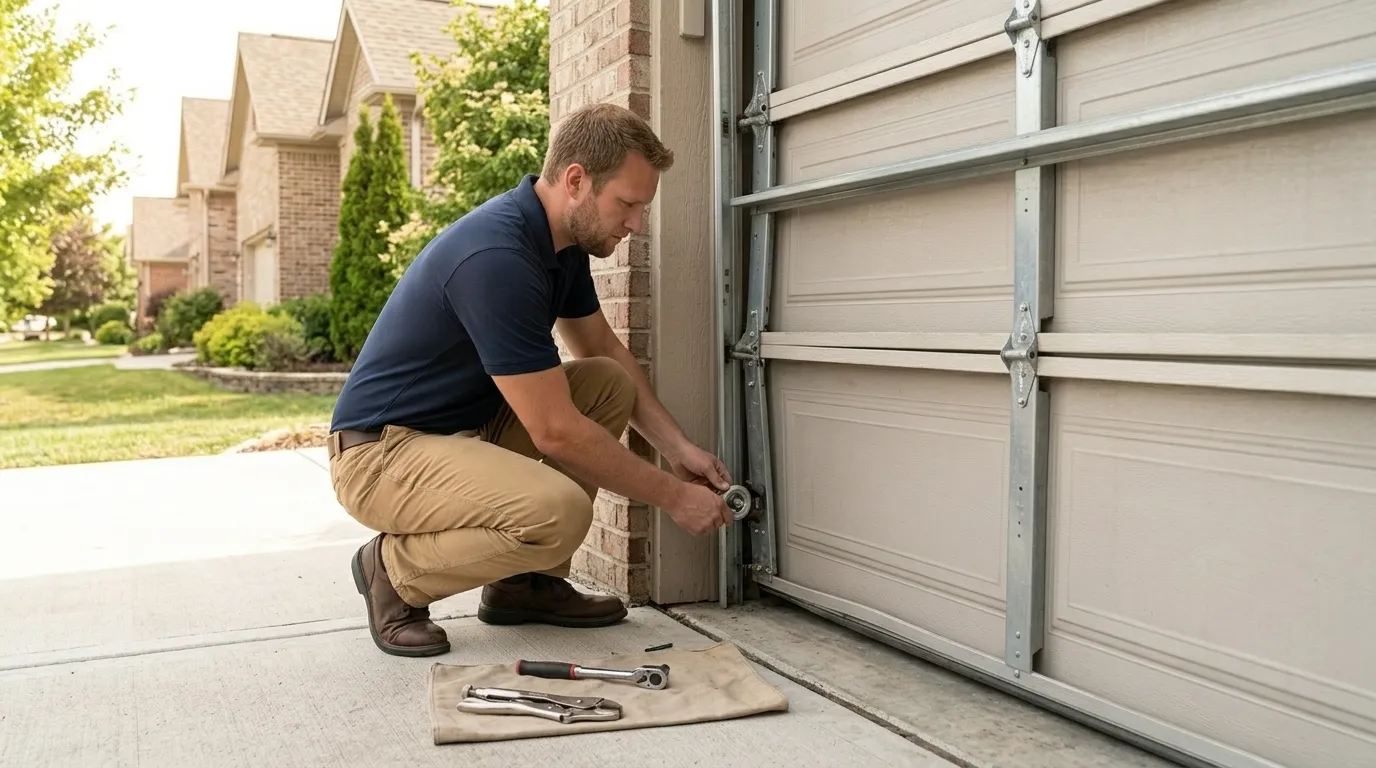
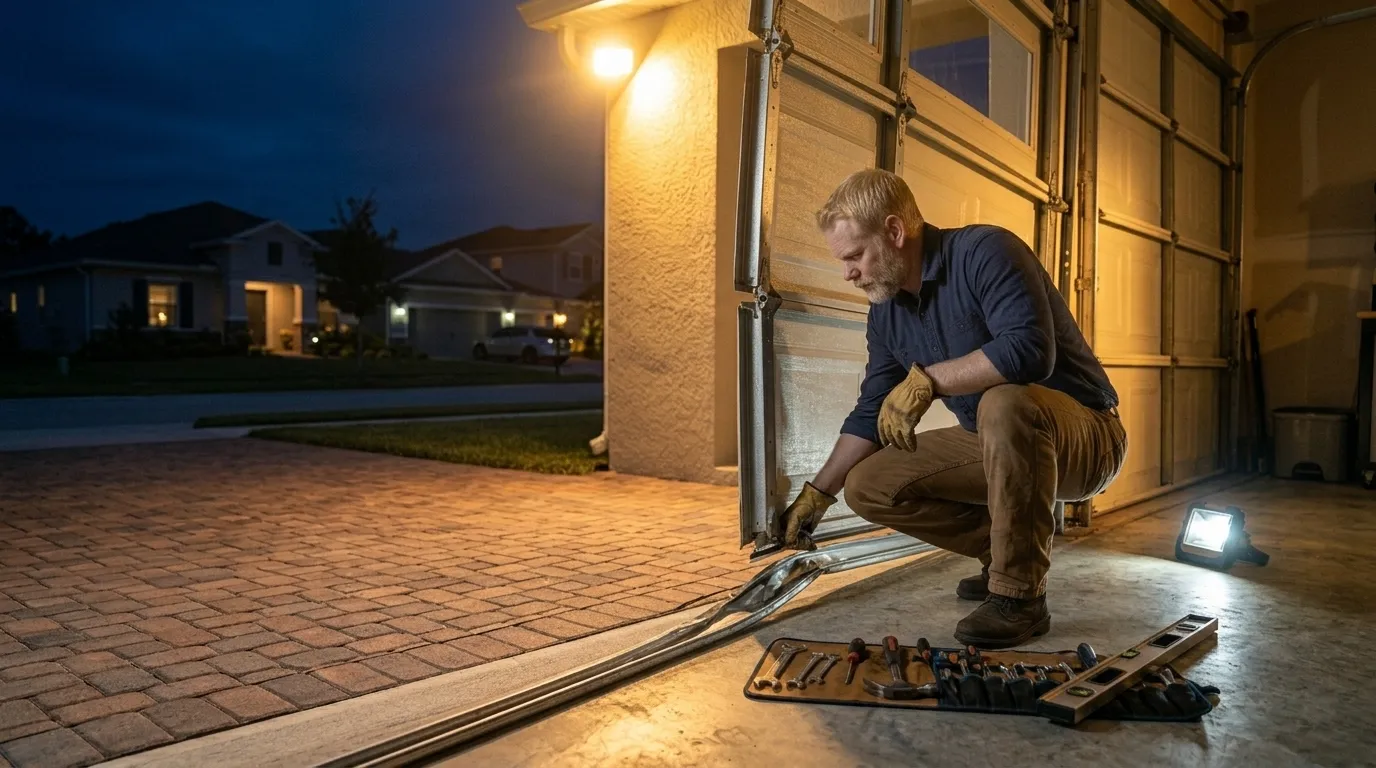
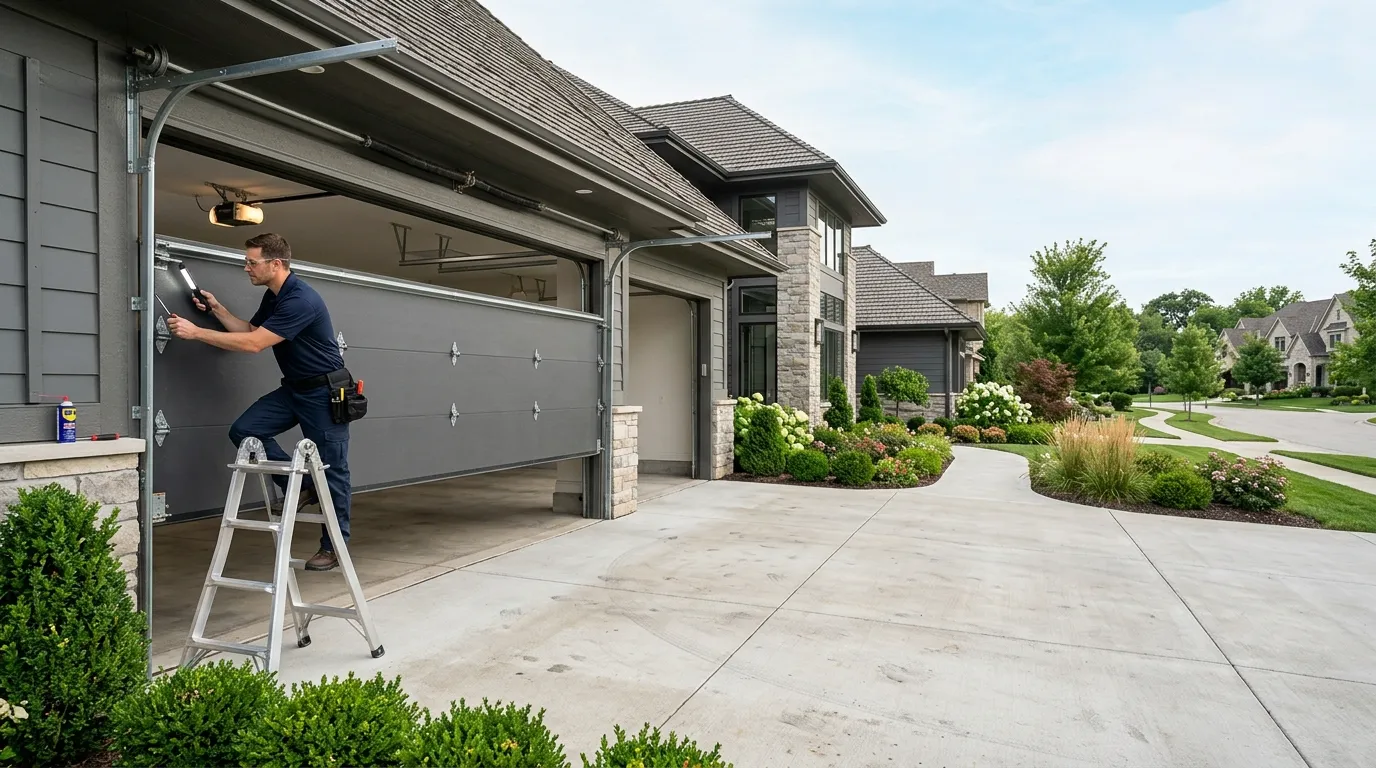
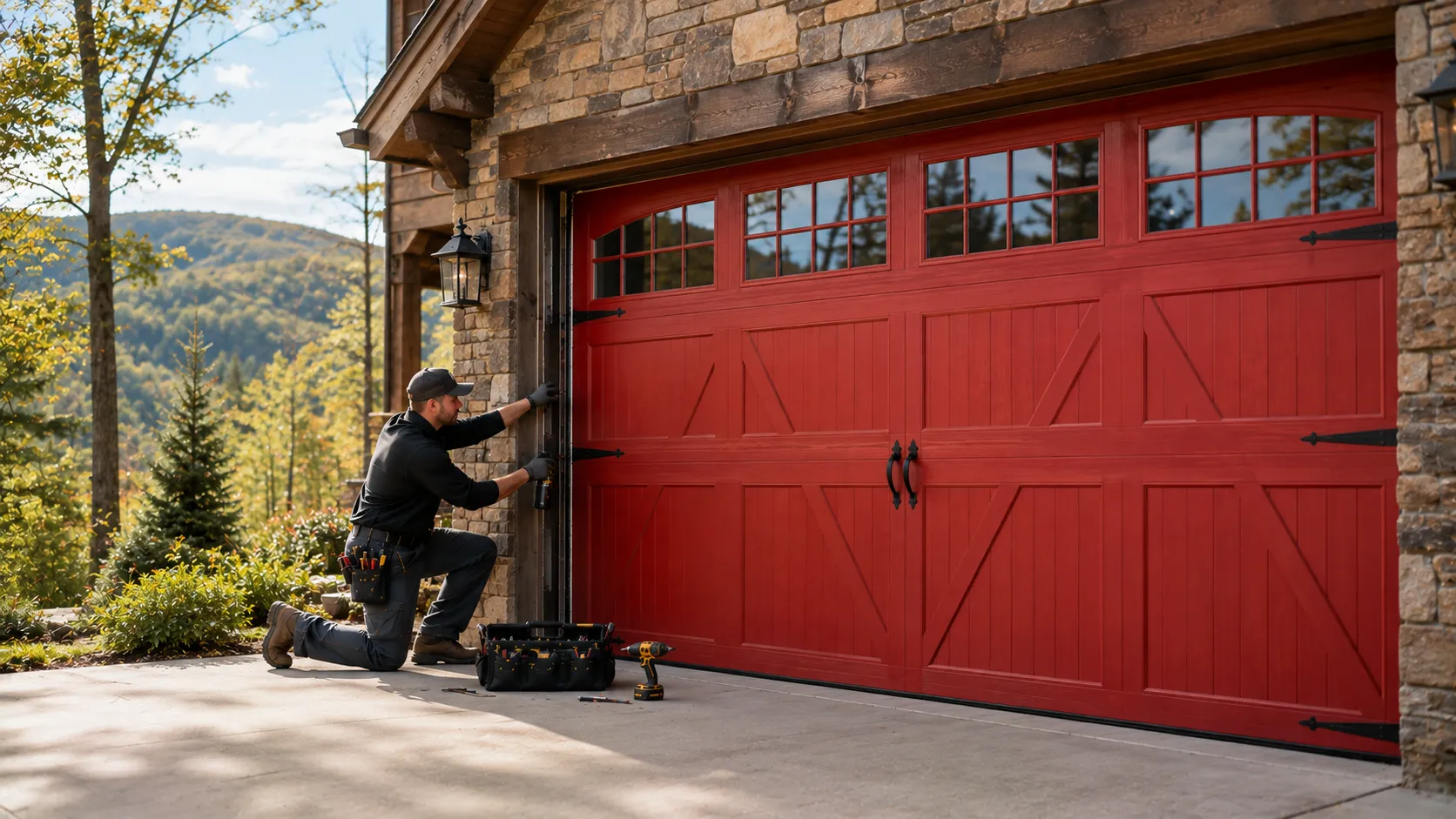
The door won't lift, or it lifts a few inches and drops. Sometimes there's a bang from the garage right before it stops working - that's the spring going. On a 90s-era torsion setup, when the spring breaks, the opener tries to lift the full deadweight of the door alone and either stalls, trips the breaker, or strips the plastic gear inside the unit trying. If the door comes down fast and uneven, one cable has likely let go and the door is now hanging cockeyed on the track, which is not something to force by hand or with the opener - that's how a track gets bent or a panel gets creased.
Why This Fails Locally
Ripon's build year matters here because it sets a ceiling on the hardware age, not the door age. A torsion spring rated for a 1995 install is now roughly three decades old, and torsion springs are rated by cycle count, not years - most give out somewhere between 7 and 12 years of daily use, so a spring from original construction is running well past its intended life almost everywhere in town. With median household income at $120,061 across Ripon, we see more owners replacing the opener with a newer belt-drive unit at the same visit rather than patching the old chain-drive, since the parts and labor cost difference is small next to the inconvenience of a second breakdown. That's a call worth making at the time of repair, not a sales pitch - it's just cheaper to do once.
Time on the Job
We're honest about one thing: Ripon is 18 miles out from Tracy, so we're not sitting five minutes away. We don't quote a response window here because we haven't got a fact to back one up, and guessing at it would be worse than saying nothing. What we can tell you is that once we're on-site, most torsion spring and cable jobs on standard residential doors run inside a couple of hours, opener swaps included. Ripon's roughly 5,504 households are enough that we're out this way regularly, just not stationed here.