The Cost of This Job
We're not going to put a number here we can't back up, and pricing depends on what's actually broken - a logic board swap, a photo-eye replacement, or a spring sized for a heavier insulated panel all land differently. What we can tell you is what drives the cost in a community like this one: the doors are newer, so you're rarely paying for a full teardown of rusted-out hardware the way you might on an older house. You're more often paying for a specific part - an opener board, a sensor, a cable - not a full rebuild.
One honest limitation: if a part is proprietary to the builder-grade opener installed across a lot of these houses, we may need to order it rather than carry it on the truck, and that adds a day or two. We'll tell you that on the phone before we come out, not after we've already opened up the unit.
The Complications
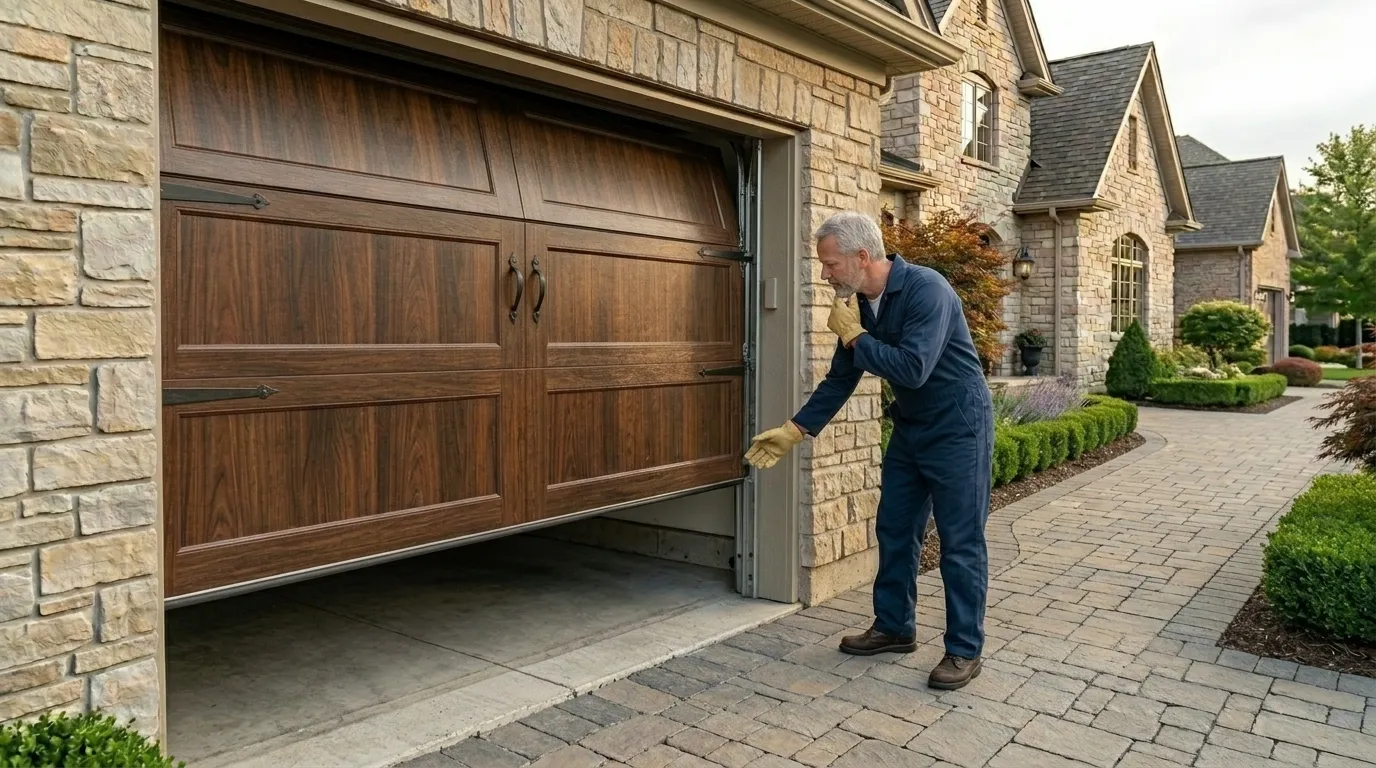
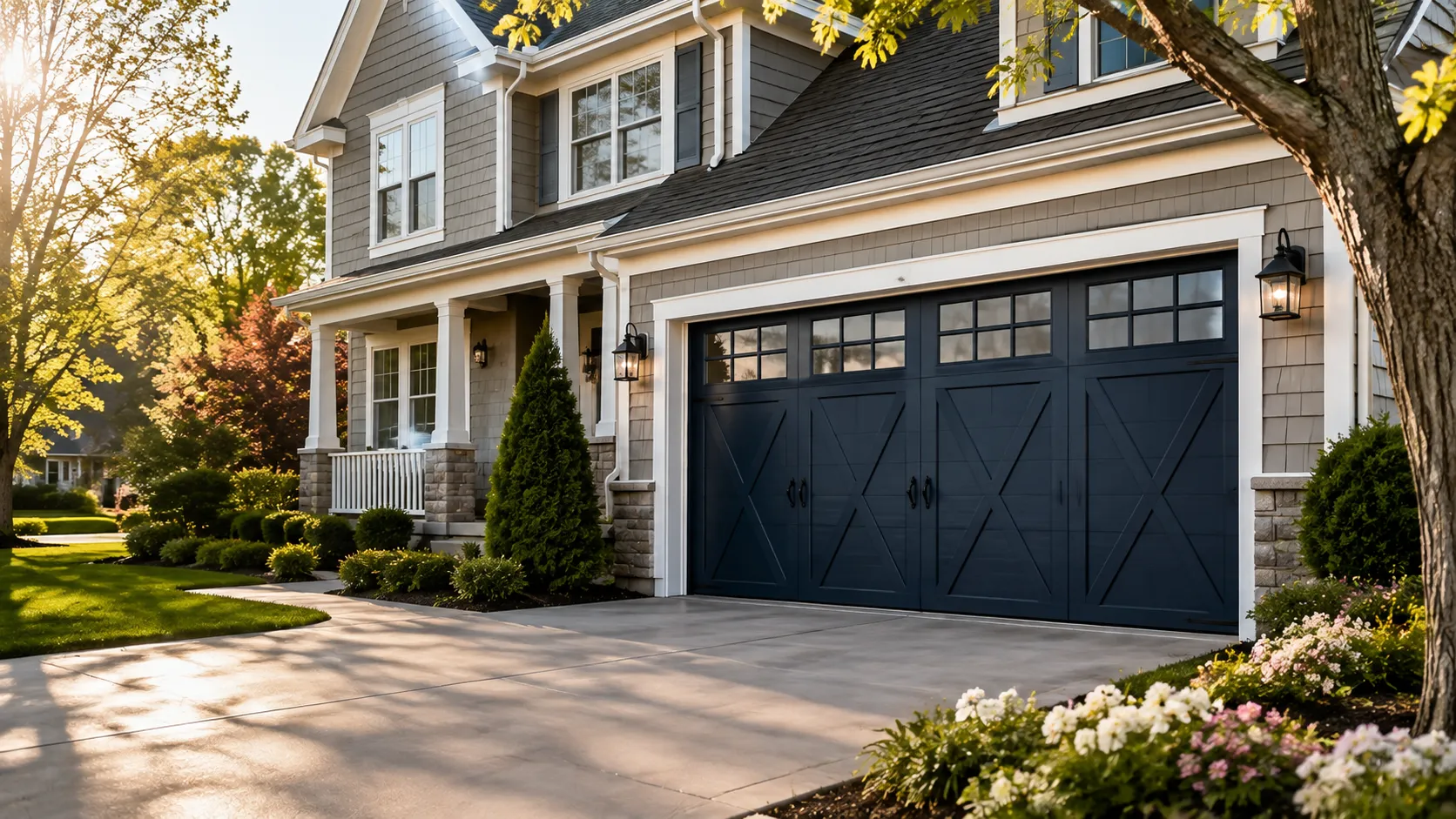
Most of Mountain House went up close to 2010, which puts these doors solidly in the insulated steel sectional era - heavier panels, wider double-door spans on a lot of the newer floor plans, and torsion springs sized to lift that extra weight. That's a different animal from the light single-layer doors you'd find on a much older house, and it changes what actually fails first.
The common complication we run into here isn't a snapped spring - those are usually still within their working life on a house this age. It's the electronics: opener logic boards, photo-eye sensors that drift out of alignment, wall consoles that lose their pairing. Because so many of these houses were built in the same narrow window, the openers are aging together, which means a run of board failures tends to show up across a neighborhood in the same few years rather than being spread out over decades like it would be on older stock.
Why This Fails Locally
The wider service area we cover from Tracy spans houses built anywhere from 1956 to 2010, but Mountain House sits right at the newest end of that range. That narrow build window means the doors, the openers, and the hardware across this community are aging in lockstep - when one opener board starts failing at year twelve or thirteen, a lot of its neighbors are close behind on the same timeline.
It also shows in what people choose to do about it. The service area we cover has a median household income around $106,064; Mountain House itself runs well above that. In practice, that means fewer owners here are stretching a marginal opener for another season - when a board or a sensor starts acting up, a lot of them replace it outright rather than patch it, which is worth knowing before you decide whether a repair is even the right call for your situation.
What the Fix Involves
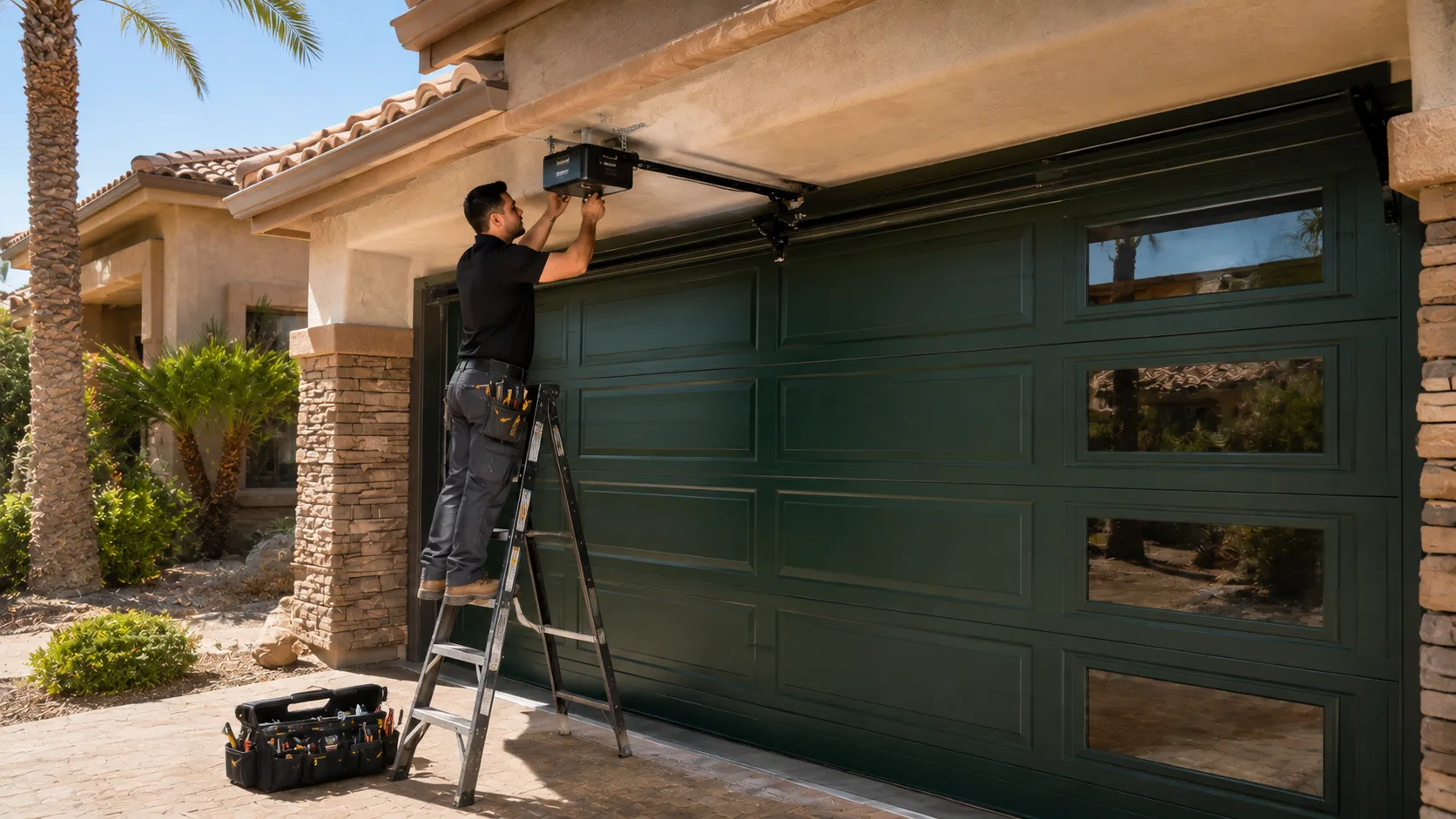
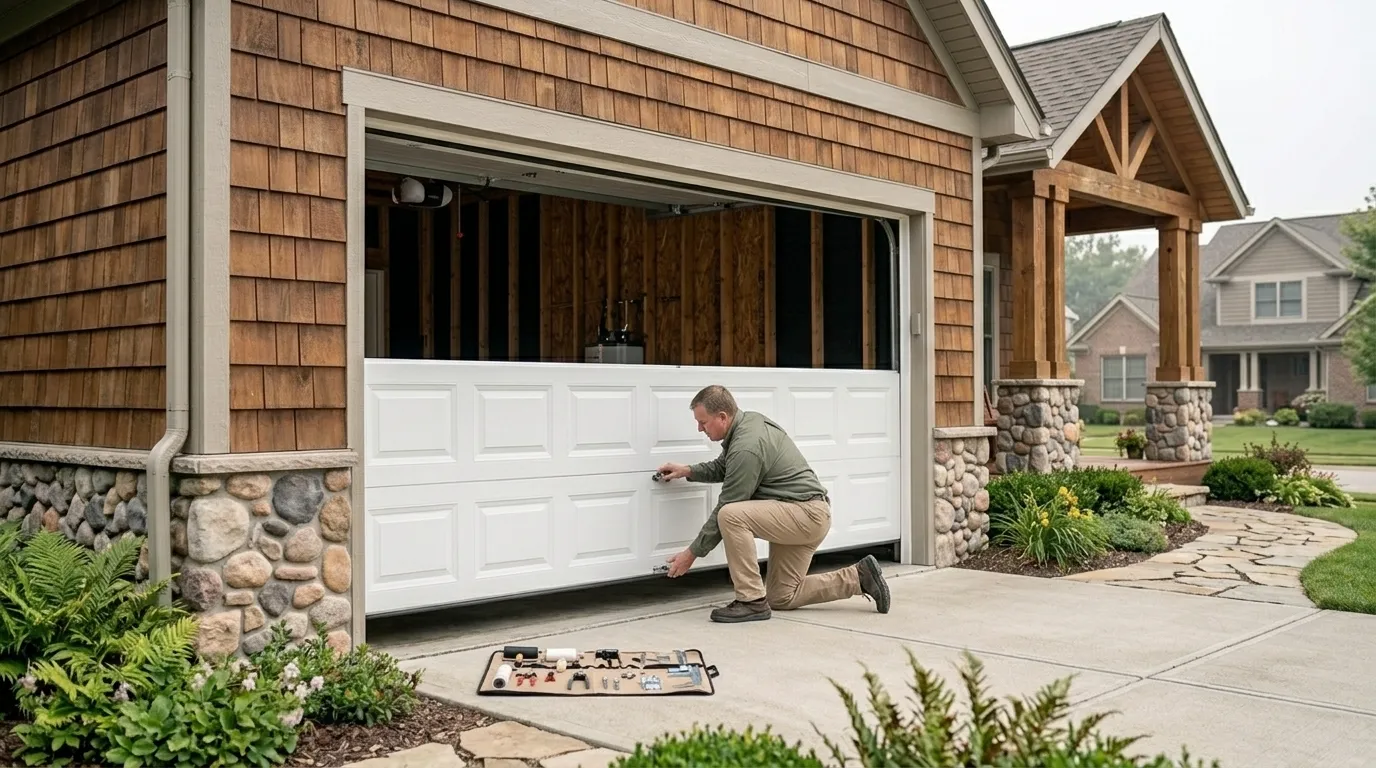
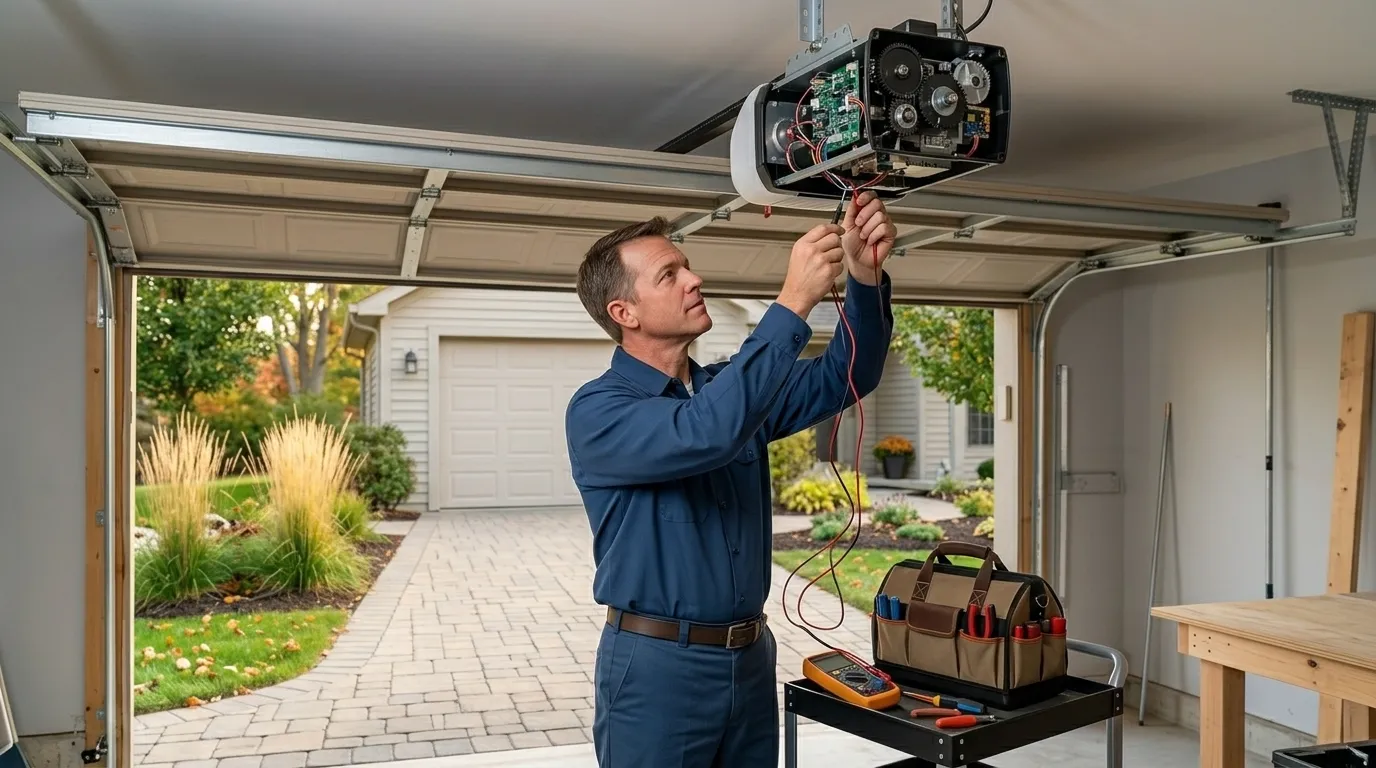
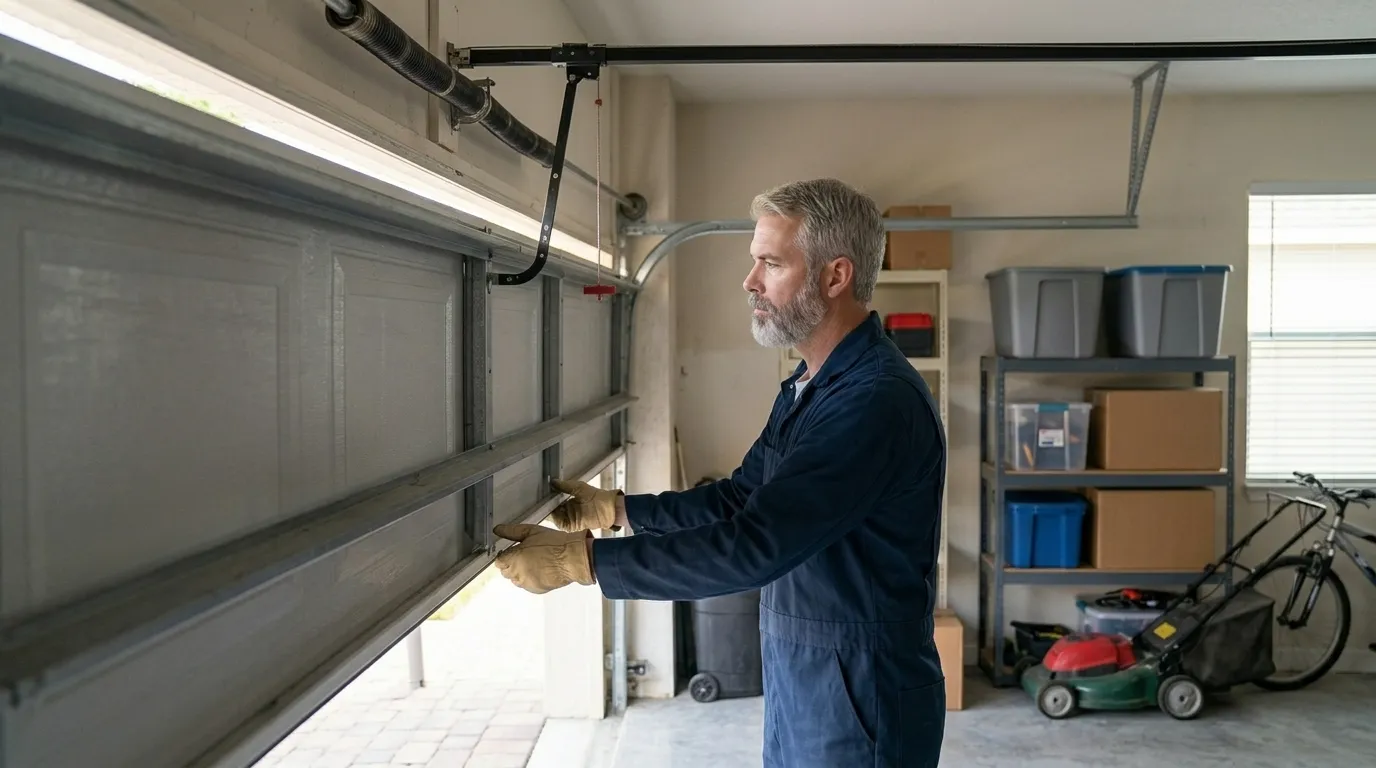
On a house from this era, the fix usually starts at the opener, not the door itself. We check the logic board for a fault code, test the photo-eye sensors for alignment and for the intermittent short that comes from years of sun and heat cycling on the wiring, and check the wall console's connection before we assume the motor is dead.
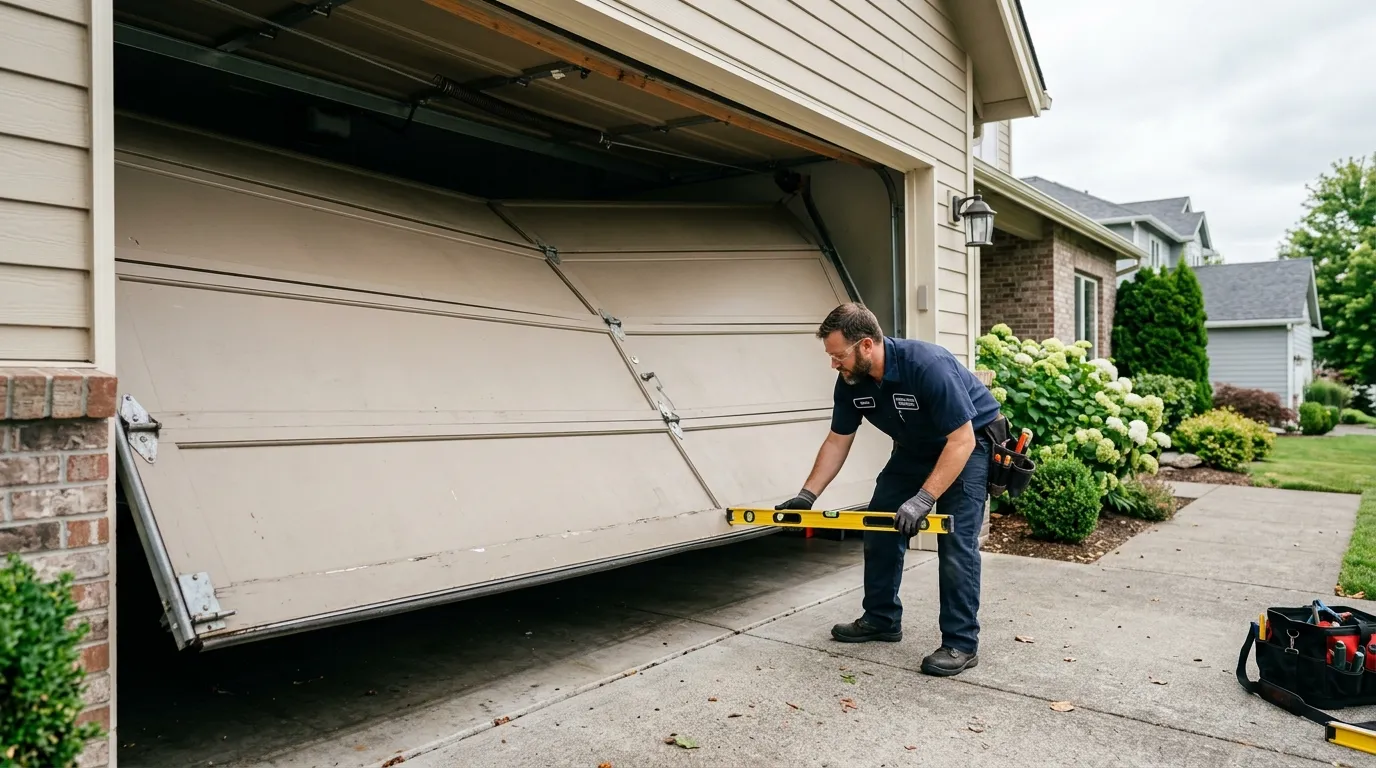
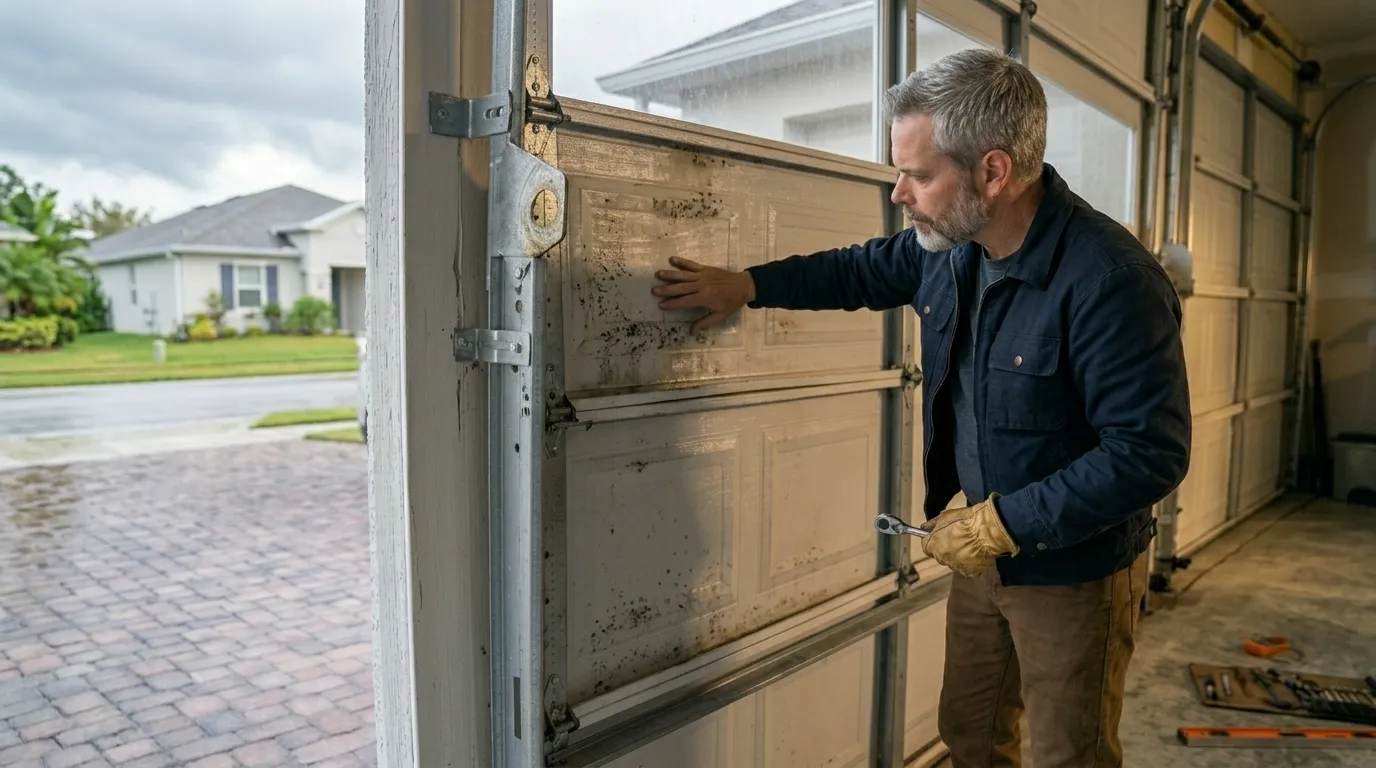
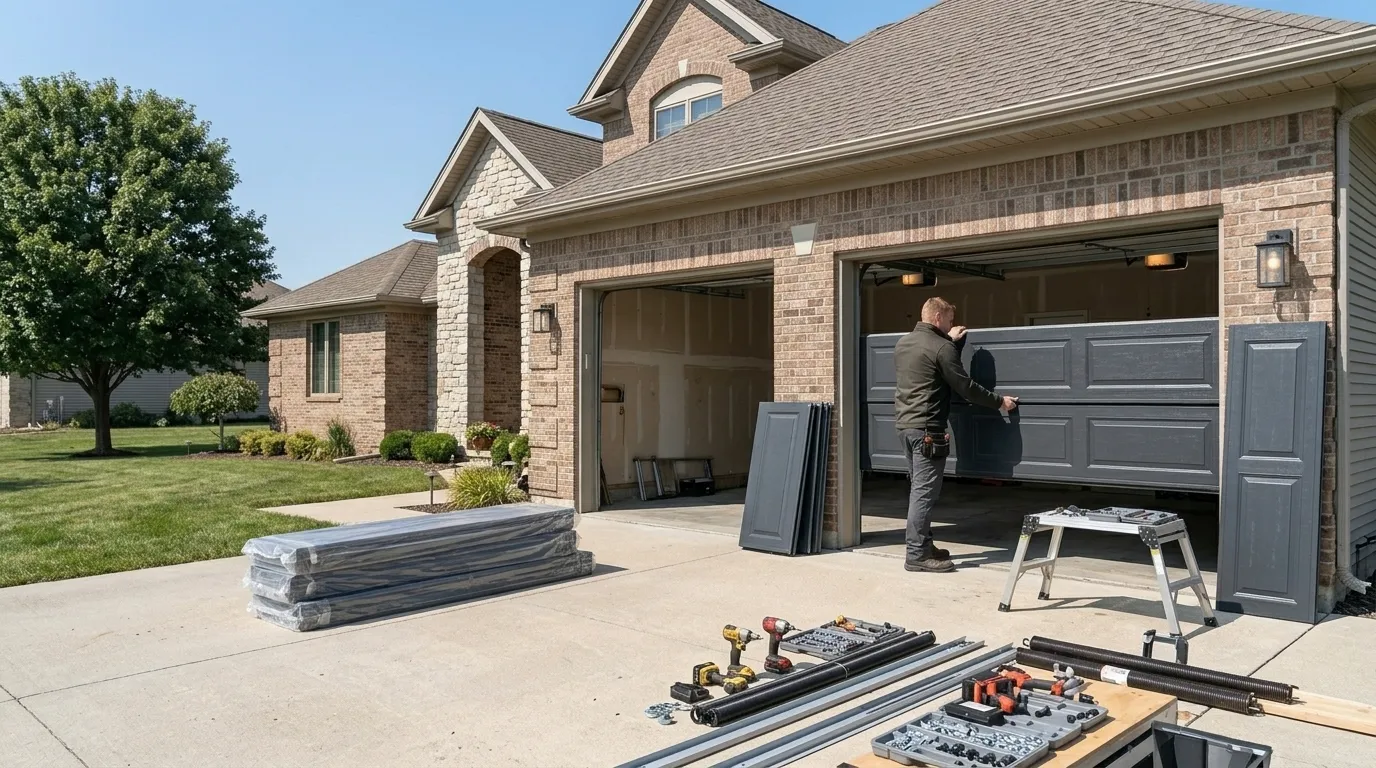
If the problem is mechanical, we're looking at cables and rollers rated for the heavier insulated panel, and springs matched to that panel's actual lift weight - not a generic size pulled off the shelf. Getting the spring size wrong on a door this heavy shows up fast, either as a door that won't lift cleanly or one that slams down. Climate here runs moderate on heat, so we're not chasing the kind of temperature-driven metal fatigue you'd see in a harsher band, but the sun does its work on rubber seals and sensor housings over time, and we check those while we're already in there.