The Cost of This Job
What you pay depends on whether we're swapping a working-but-old opener for a new one on the same mounting points, or dealing with a unit that's failed enough to have damaged the header bracket or stripped the rail. Because this area's houses are recent builds, the second case is less common here than in older neighborhoods - the wood framing and brackets haven't had decades to work loose.
We're not going to print a number here that doesn't match what we'd actually quote you on-site; that's a disservice to both of us. What we can tell you is that the newer construction in Mountain House usually means a cleaner install - solid header framing, standard door weights, no odd retrofits from a prior owner. That keeps the labor side of the job predictable, which is the part within our control.
The Complications
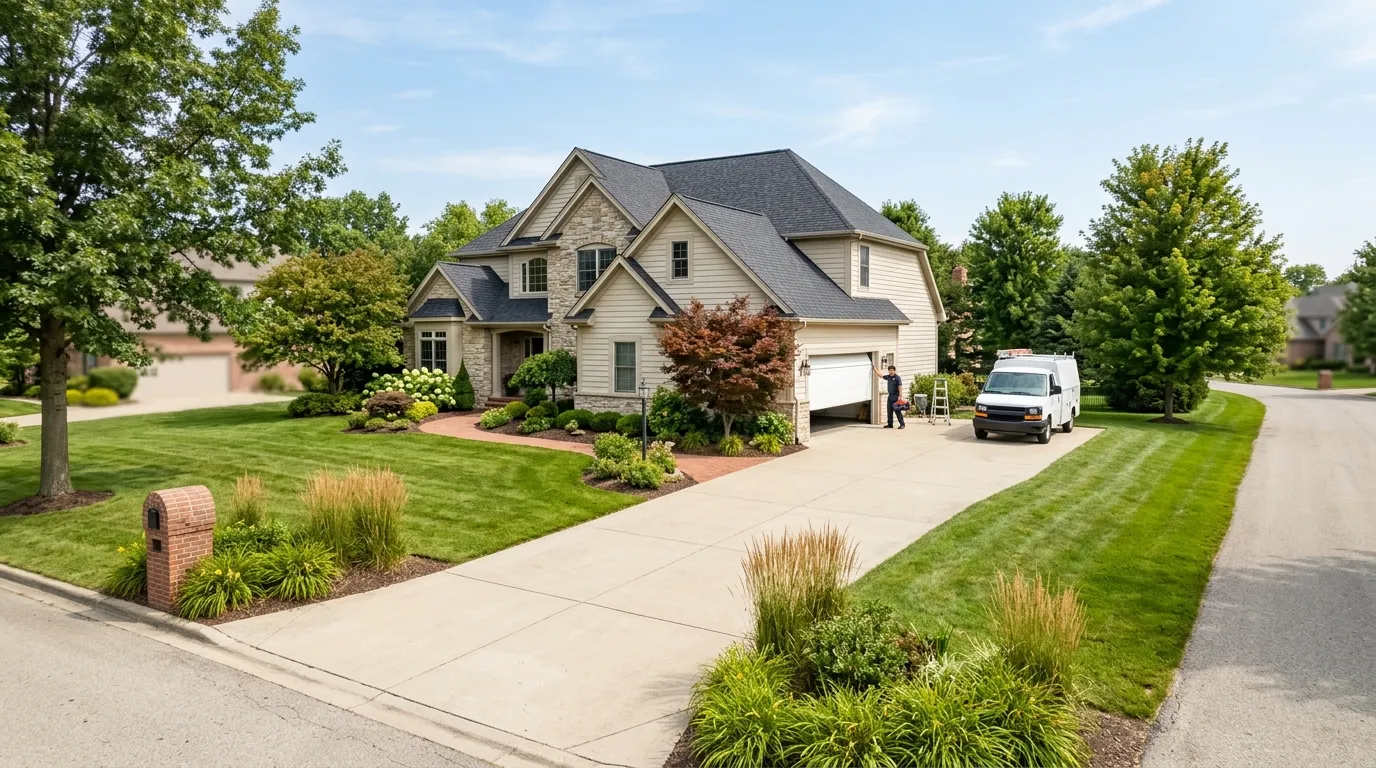
Mountain House's housing stock is genuinely new - much of it built right around 2010 - so you're not dealing with a 1970s door hung on an opener that was swapped out twice since. The complication here is the opposite kind: the original opener is the builder-installed unit, often a mid-grade model chosen to hit a spec sheet rather than a homeowner's actual needs. Ten to fifteen years in, those units start failing at the circuit board and the drive gear, sometimes both close together.
Our regional climate band runs moderate on heat, which is kinder to opener electronics than a hotter zone would be, but garages here still see enough summer heat to shorten the life of logic boards mounted on an unshaded ceiling. If your opener is original to the house, you're likely looking at a board or gear failure rather than anything more colorful, and it's usually not worth chasing the fault part by part once the unit is over a decade old.
Why This Fails Locally
Because most homes here were built within the same decade, a lot of openers are going to hit end-of-life within the same few years of each other - not one house at a time scattered over a generation, the way it plays out in an older suburb. That's the real local pattern: builder-grade units installed on a schedule, aging on a schedule.
The household incomes in this area run well above the wider service area average, and what we see is that once one opener in a neighborhood fails, owners tend to upgrade rather than patch - moving to a unit with a battery backup or a quieter belt drive rather than replacing gear-for-gear. That's a reasonable call if the door itself is still sound, which in a house built this recently, it usually is.
What the Fix Involves
For a straight swap, we pull the old opener, check the header bracket and the rail for wear, then mount the new unit, set travel limits, align the safety sensors, and program the wall control and any remotes. On a newer-build home like the ones out here, the header framing is almost always solid, so the bracket work is quick.
If the old unit failed hard enough to jam the door shut, we start by getting the door itself moving safely - manual release, spring check - before we touch the opener. One limitation worth saying plainly: we don't stock every proprietary remote or keypad model on the truck, so if you want to match a specific existing remote system rather than replace it outright, tell us on the call so we can bring the right part instead of ordering it after we're already there.