The Cost of This Job
We're not going to hand you a number here that isn't grounded, because Mountain House's housing doesn't map onto older neighborhoods where parts wear out the same way every time. What we can tell you is what drives the range: whether the opener is original to a house built around 2010 or has already been swapped once, whether the springs are the factory-standard torsion pair or something upsized for an insulated door, and whether it's a clean repair or the door needs a full spring or cable replacement. Newer builds tend to have less corrosion and fewer of the seized, rusted-shut situations we see on much older stock, which usually keeps labor time down. Income levels in this part of the service area run well above the broader Tracy service area median, and higher-end finish doors with heavier insulated panels do carry a higher parts cost when something on them breaks. We'll give you a real number on site, not a guess over the phone.
The Complications
A neighborhood built mostly around 2010 comes with builder-grade equipment as standard, not upgraded equipment. That means a lot of doors here are running the same opener model the builder installed at closing, often with plastic drive gears and a basic circuit board that was never meant to be the last opener the house ever has. Ten, fifteen years in, those boards start throwing intermittent faults - a door that closes on the third try, a remote that only works from the driveway, not the street. It's not damage, it's just a part reaching the end of its expected life at the same time across a lot of houses that were all built in the same few years. The other complication is heat. This area sits in a moderate heat band, and plastic gears and rubber seals age faster with repeated summer heat cycling than they would somewhere cooler. None of this shows up as a dramatic failure - it shows up as small annoyances that add up until the opener won't run at all.
Why This Fails Locally
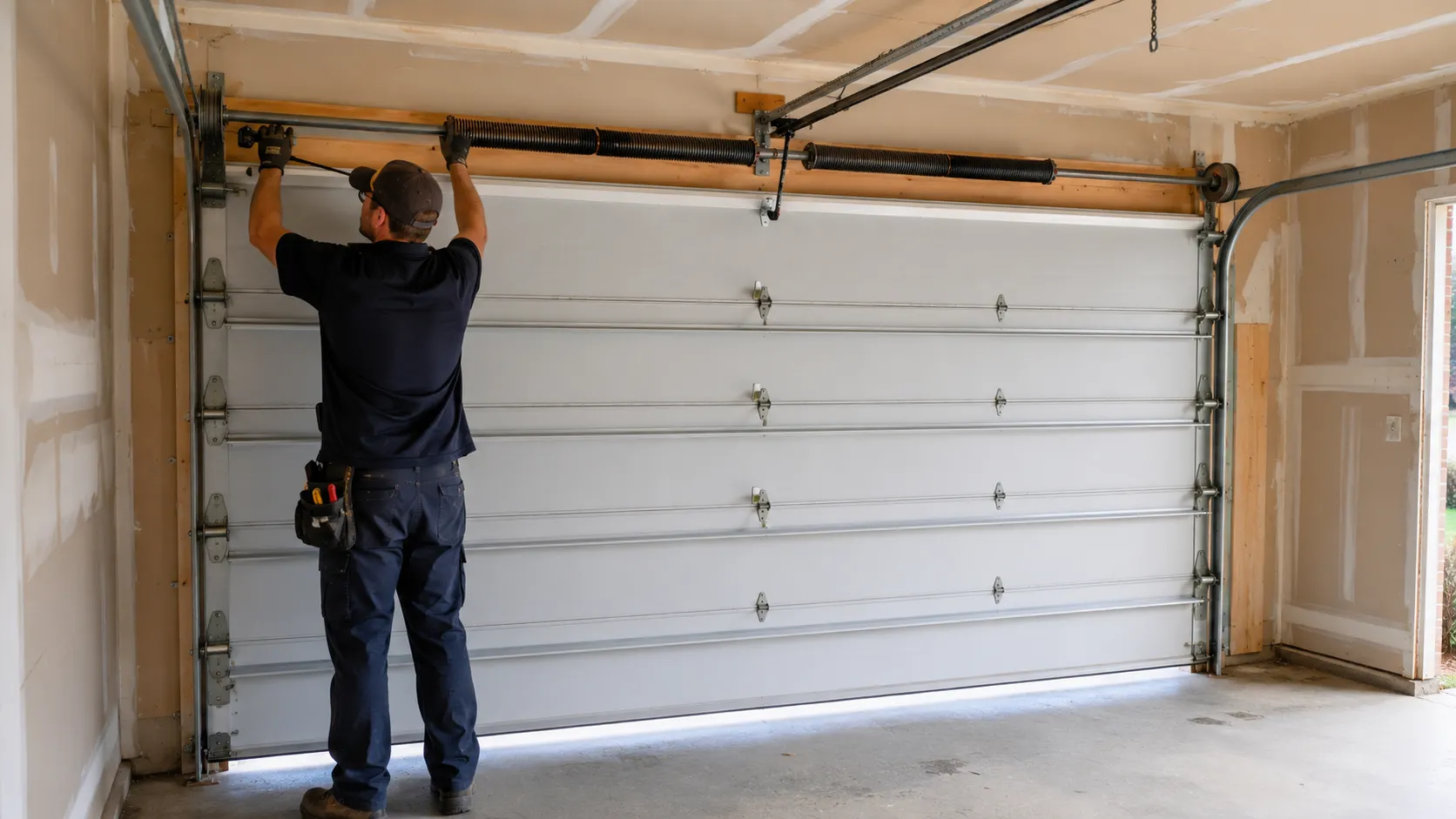
In much of the wider service area, houses were built anywhere from 1956 to 2010, with a lot of stock from the 1960s and '70s, and the common failure there is old torsion hardware, and one-piece doors on side-mount tracks that nobody makes parts for anymore. Mountain House doesn't have that problem. Its housing is concentrated right around that 2010 end of the range, so the doors are standard modern sectional steel, insulated, on center-mount torsion springs that any supplier still stocks. The failure pattern here skews toward electronics and moving parts reaching the end of a normal service life at roughly the same time, because entire streets went up within a few years of each other. When one door's opener board fails, it's a good bet the identical model two doors down is close behind it.
What the Fix Involves
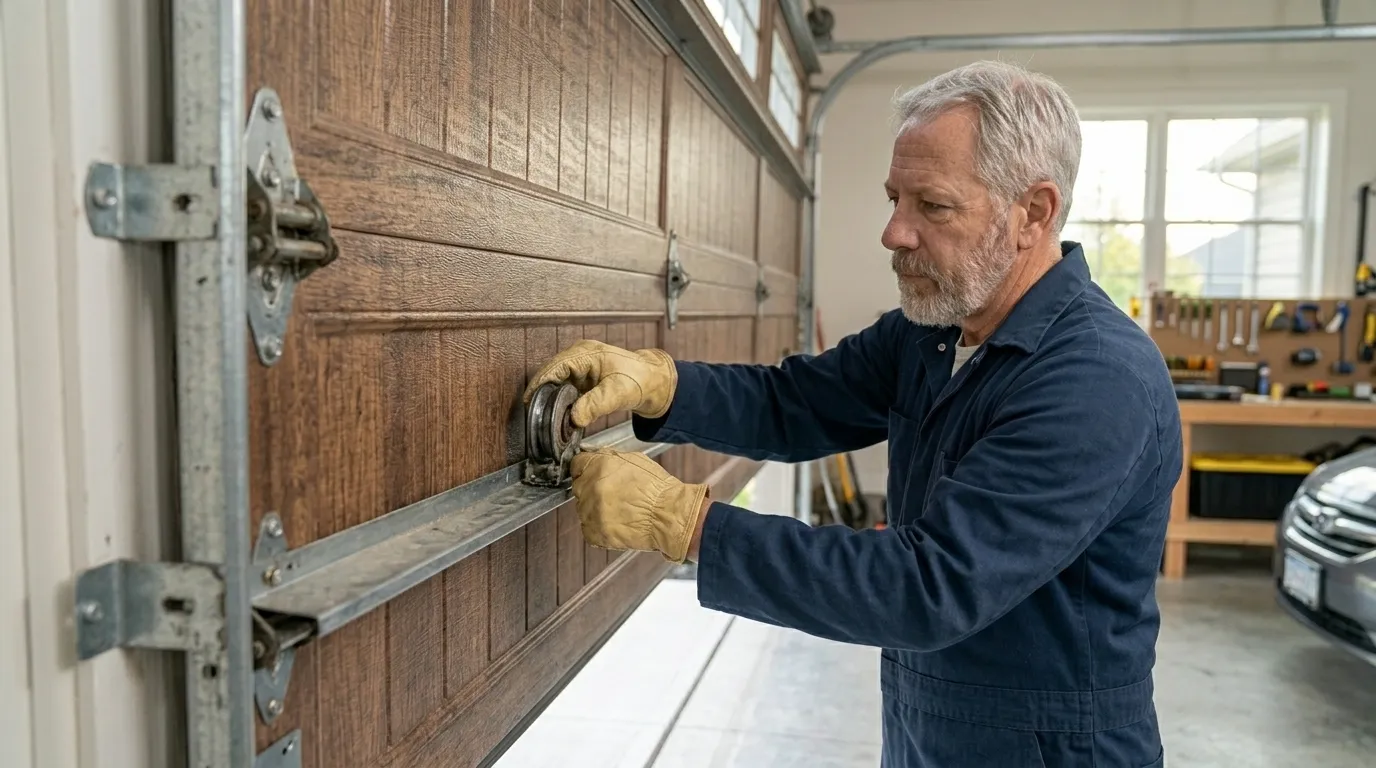
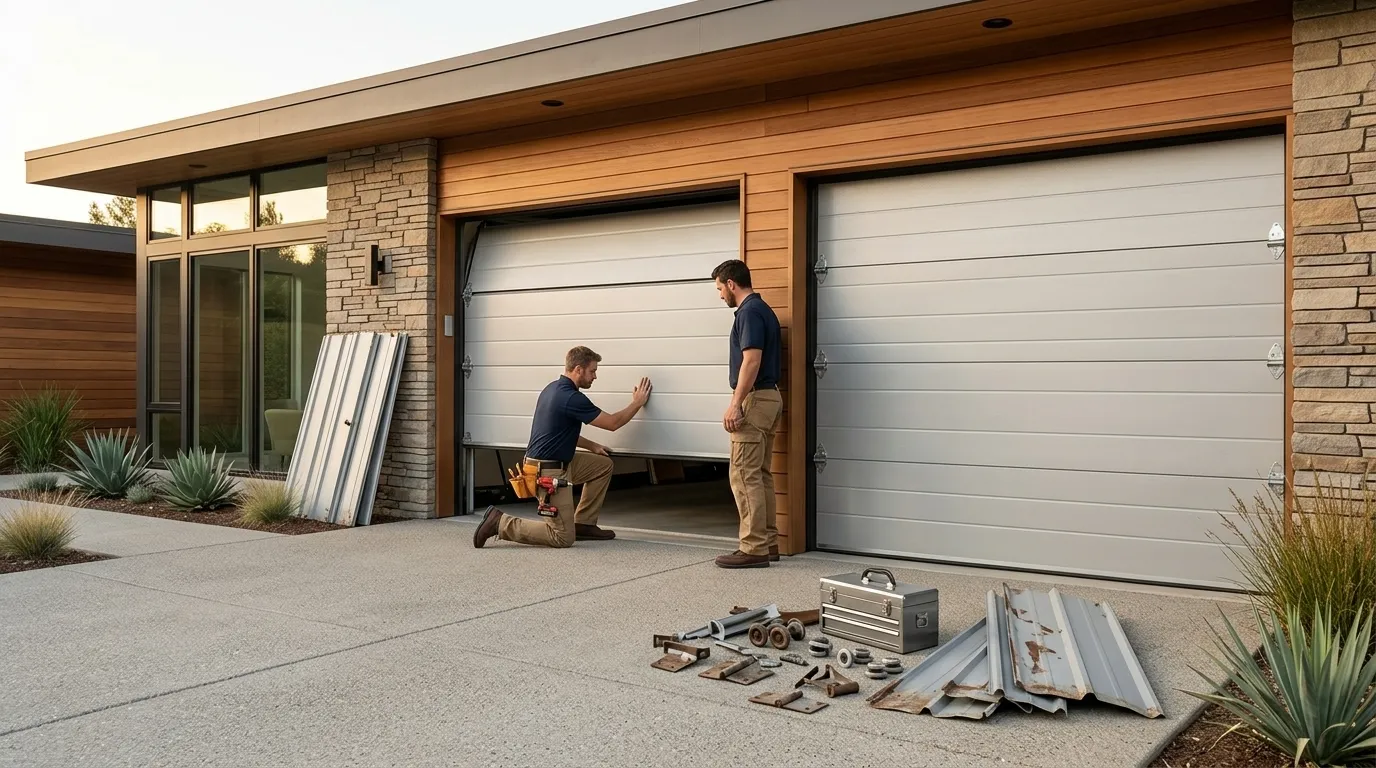
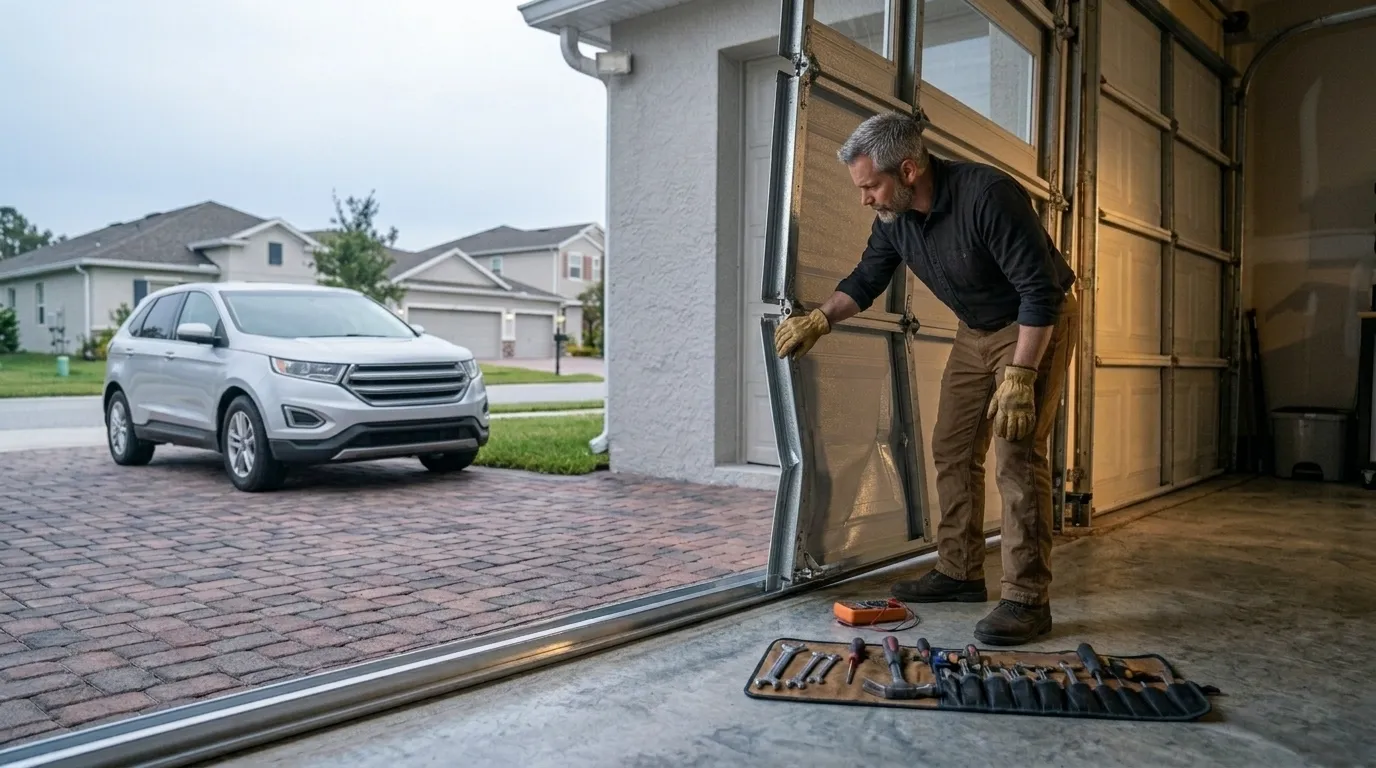
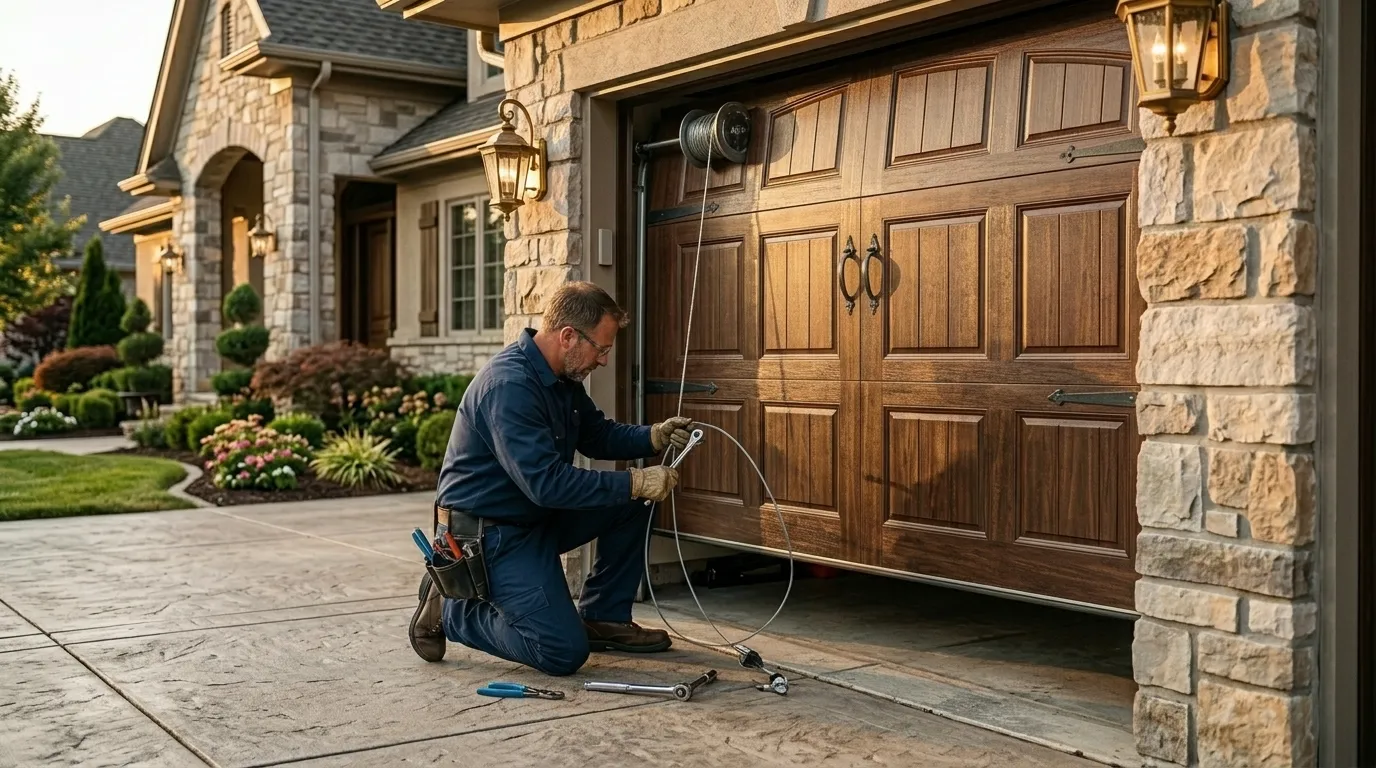
Most calls here end up being one of three things: a torsion spring replacement on a standard sectional door, an opener board or logic control swap, or roller and hinge replacement where the door has started binding in the track. Because the housing stock is uniform and recent, we're usually working with parts that are still in normal production, not hunting down an obsolete side-mount bracket or a discontinued panel size. That keeps the job itself straightforward - it's diagnosis, not scavenging, that takes the time. We check the whole system, not just the failed part, because a board that's failing from age often shares a cause with rollers that are wearing at the same rate. If a repair would cost close to what a new opener runs, we say so before we start, not after.