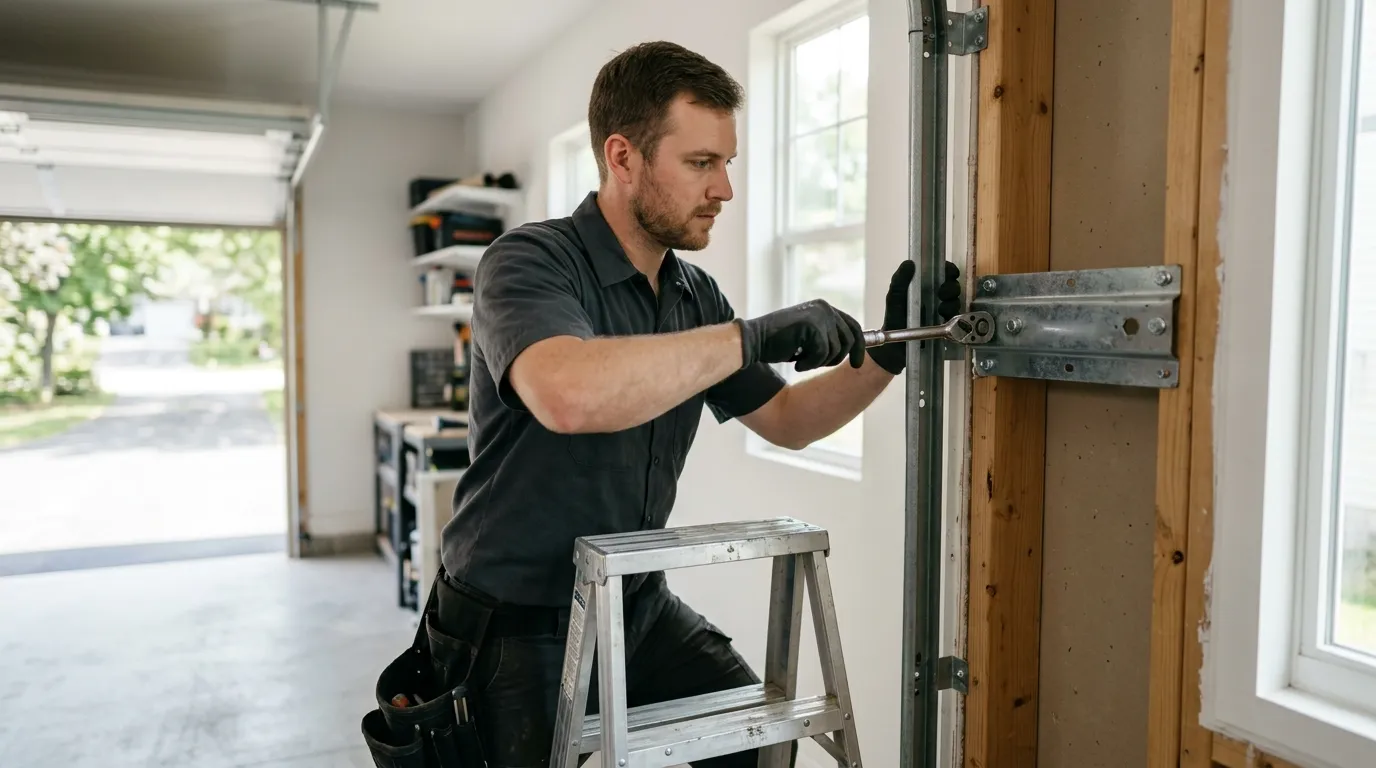
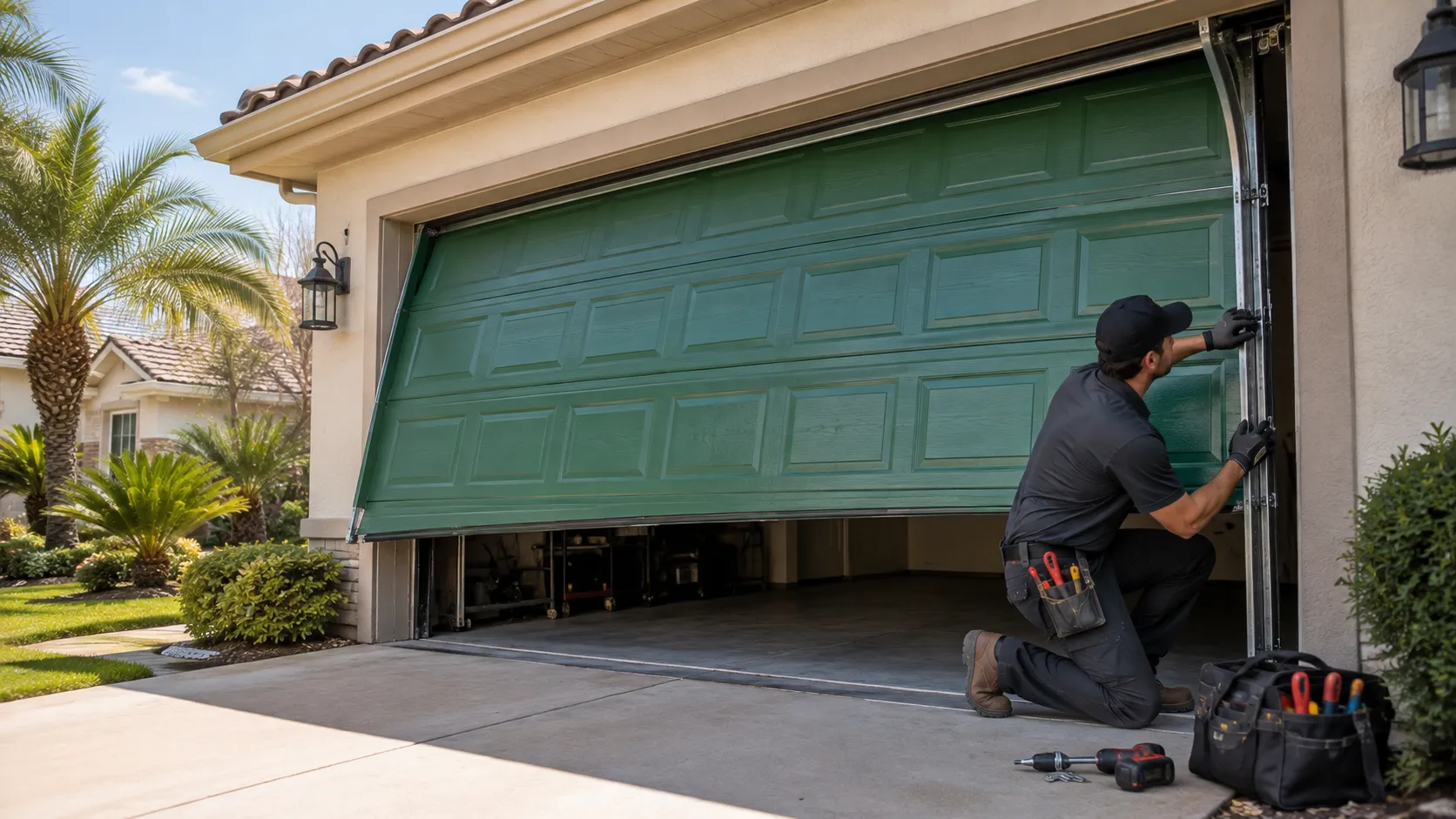
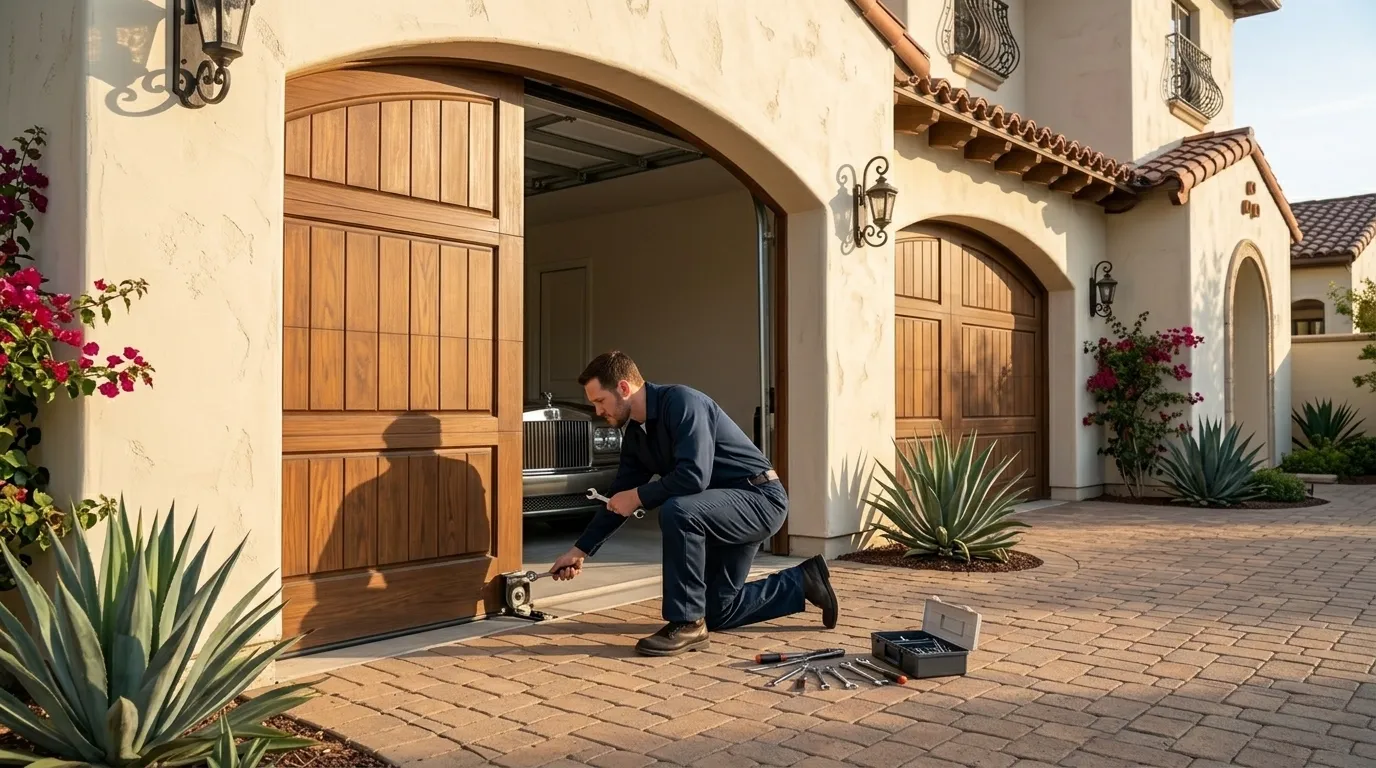
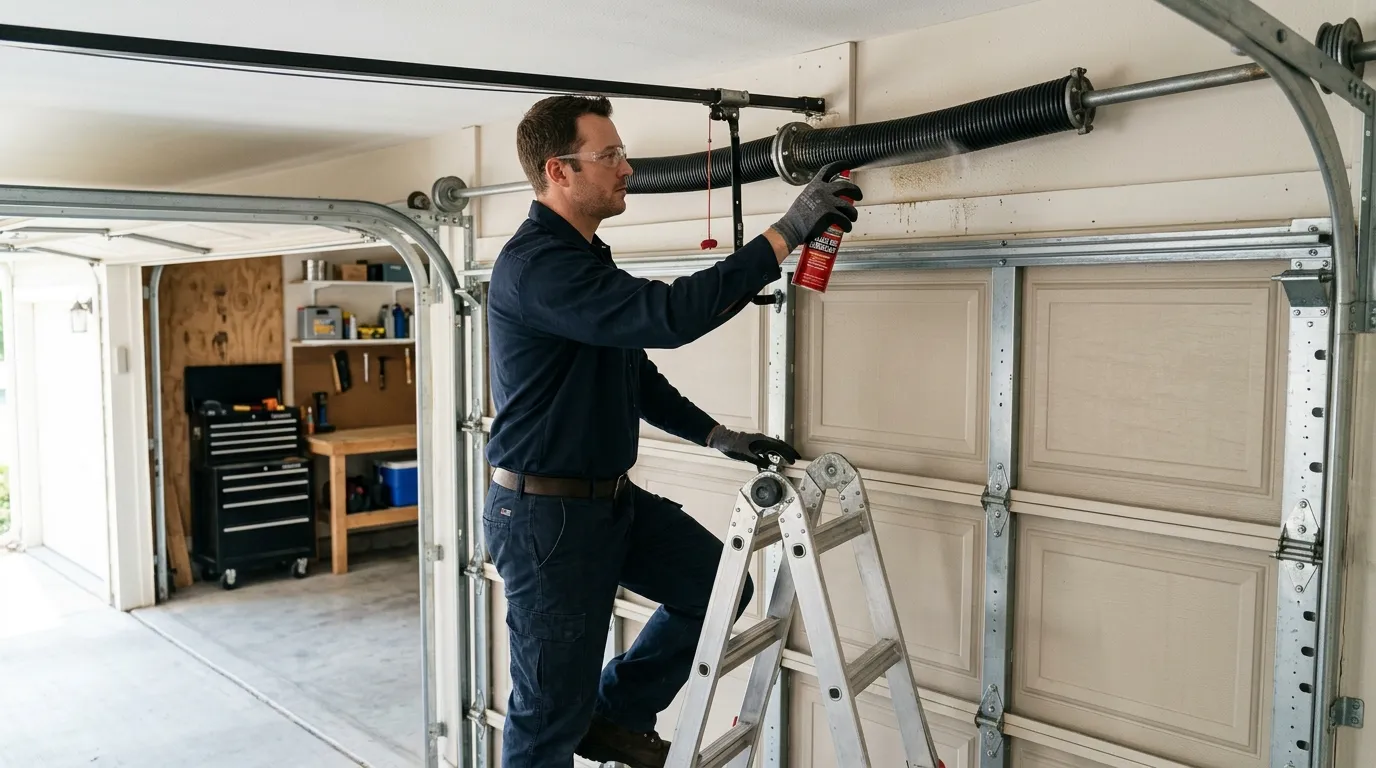
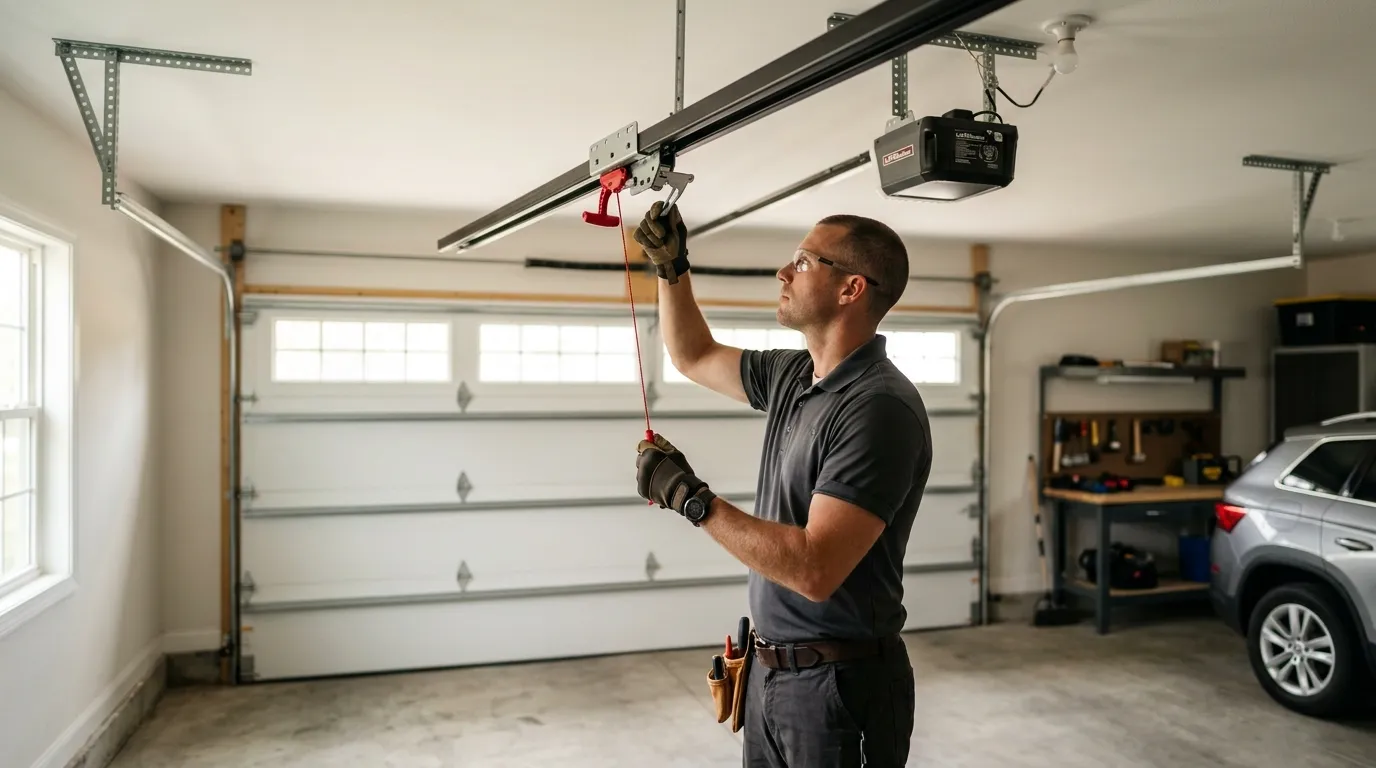
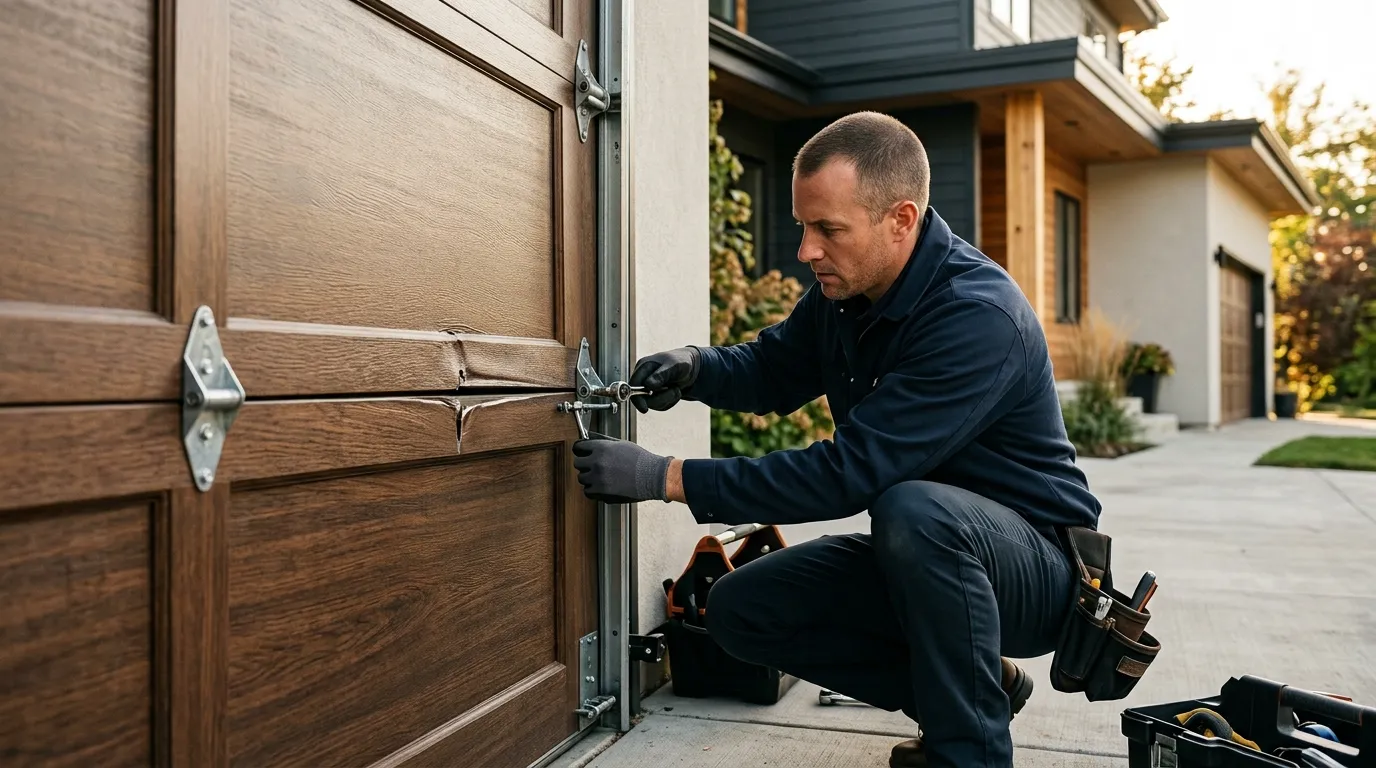
Not every sound is a problem. A dry roller squeak on a track that still runs smooth is a lubrication job, not a repair call. But a lot of the housing in this service area was built between 1956 and 2010, with a median build year of 1979, and most of the ten areas we cover lean heavily toward 1960s and 70s construction. That matters because doors from that era were built with steel torsion springs and hardware nobody's serviced in decades. A soft click at the top of the cycle on one of these older setups is usually the spring settling into worn bearing plates - annoying, not dangerous, and fine to leave for now. A loud bang, a door that drops instead of lowering, or a track that visibly flexes when the door passes through it - that's different, and that's not a wait-and-see noise no matter how old or new the house is. The honest rule: if the sound has been the same for months and the door still opens and closes level, you can leave it. If the sound changed last week, or the door hesitates, don't wait for it to get worse on its own.
The Cost of This Job
Median household income across this area runs $106,064, and what we see in practice is that a lot of homeowners here replaced the door panel itself at some point but never touched the opener gearing or the torsion hardware underneath it. That's the gap that turns a small noise into a bigger bill - a $40 roller swap ignored long enough becomes a spring and drum replacement because the door's been running out of alignment for a year. We won't tell you every noise needs a truck out to look at it; a lot of squeaks really are a five-minute fix with the right grease in the right spot, and we'd rather tell you that on the phone than charge you a visit for it. Where the cost climbs is parts for the older stock - 1960s and 70s track hardware isn't something every supplier keeps on the shelf, so a job on one of those original setups can run longer and cost more than the same repair on a door built in the 2000s. That's not us padding a bill. That's the parts situation on housing this age, and it's worth knowing before you call.
How Local Conditions Play In
Tracy sits in a moderate heat climate band, not the kind of desert swing that cracks tracks or warps panels overnight, so most of the noises we hear here aren't weather emergencies. What moderate heat does over years, though, is dry out lubrication faster than a mild coastal climate would, and on hardware original to a house built in the 60s or 70s, that shows up as a dry, grinding roller sound before it shows up as anything else. It's a slow problem, not a sudden one, which is exactly why it gets ignored - the door still works, it's just noisier every month. We don't get called out here for storm damage the way some regions do. What we get called for is wear that built up quietly over a decade because nobody heard the early warning for what it was. If your door has gotten steadily louder over a year rather than overnight, that's the pattern to pay attention to, not a one-time event.
The Situation
We work this door out of Tracy and the surrounding towns - Mountain House six miles out, Lathrop at nine, French Camp at fourteen, Byron and Discovery Bay both around fifteen, and Ripon, Country Club, Kennedy, and Westley further out toward eighteen to twenty miles. Across that territory there are roughly 23,168 owner-occupied houses out of about 31,889 households total, and a good share of them are sitting on hardware old enough to be the actual source of the noise rather than a symptom of something else. If you're not sure whether what you're hearing is a five-minute fix or the start of a bigger job, describing it over the phone gets us most of the way there - grinding versus banging versus a rhythmic thump tells us different things. We can't diagnose a spring failure from a text description alone, and we won't pretend to. But we can usually tell you whether it's safe to wait a week or something to get looked at now.
How it works
From “it’s stuck” to “it’s fixed”
A quick, honest process - no guesswork and no surprises, start to finish.
My door makes a loud bang once in a while but still works fine. Is that urgent?
A single bang, especially from the spring area, often means a torsion spring is close to failing even though the door still opens. On housing this age it's common. Don't operate it manually to test it - a spring under tension can let go with real force. That one's worth a same-week look, not an emergency call, but not a shrug either.
Why does my door get louder every summer?
Moderate heat here dries out lubrication gradually rather than all at once, so hardware that was quiet in spring can sound rough by late summer. It's usually a maintenance issue, not damage. If it's been building slowly over months, that's the pattern - not a sign of sudden failure.
Is it worth fixing an original 1970s door or should I replace it?
Depends on what's failing. If it's rollers or lubrication, fixing it is the cheaper call every time. If the spring, drum, and track are all original and worn together, replacement can cost less over time than repeated repairs on hardware that's hard to source parts for. We'll tell you which situation you're in before we quote anything.
Ready to get your garage door sorted?
Tell us what it’s doing and where you are in Tracy - we’ll take it from there.