The Cost of This Job
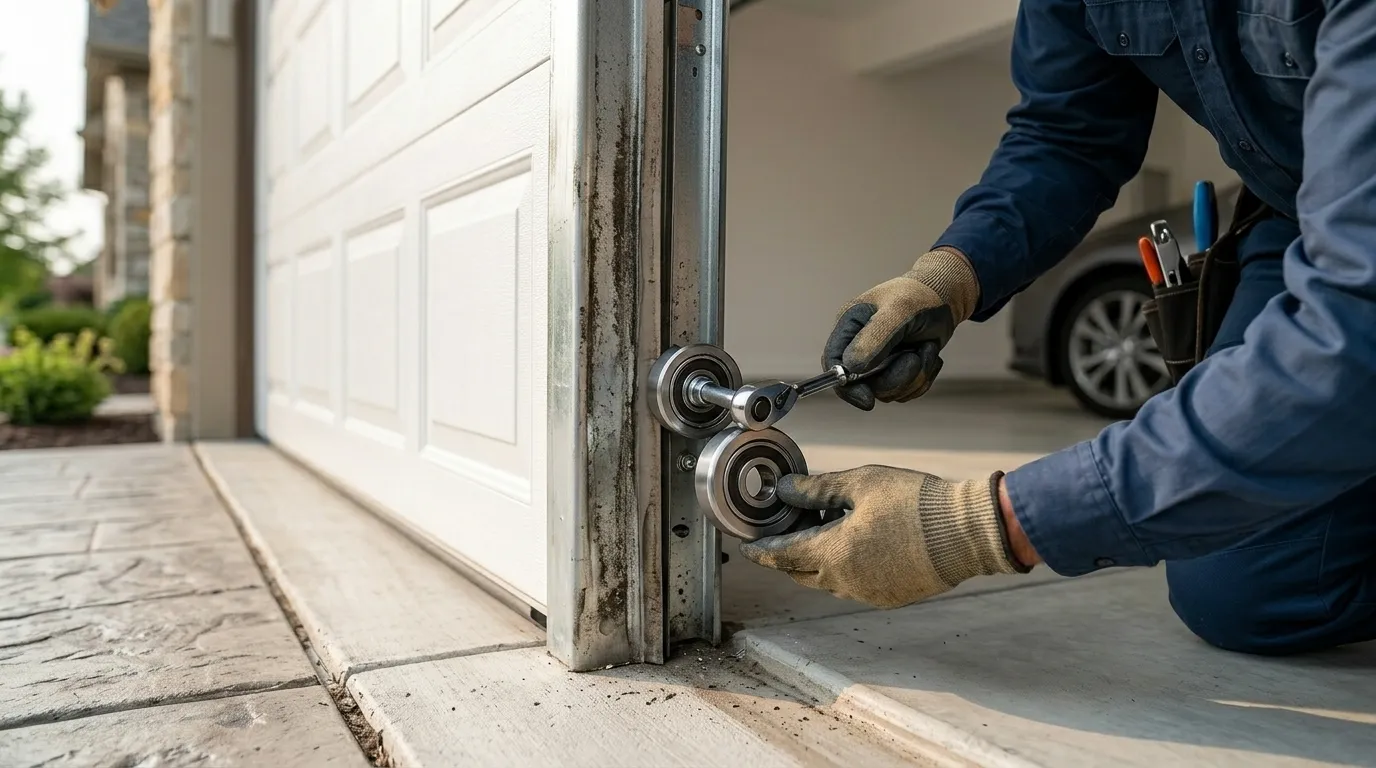
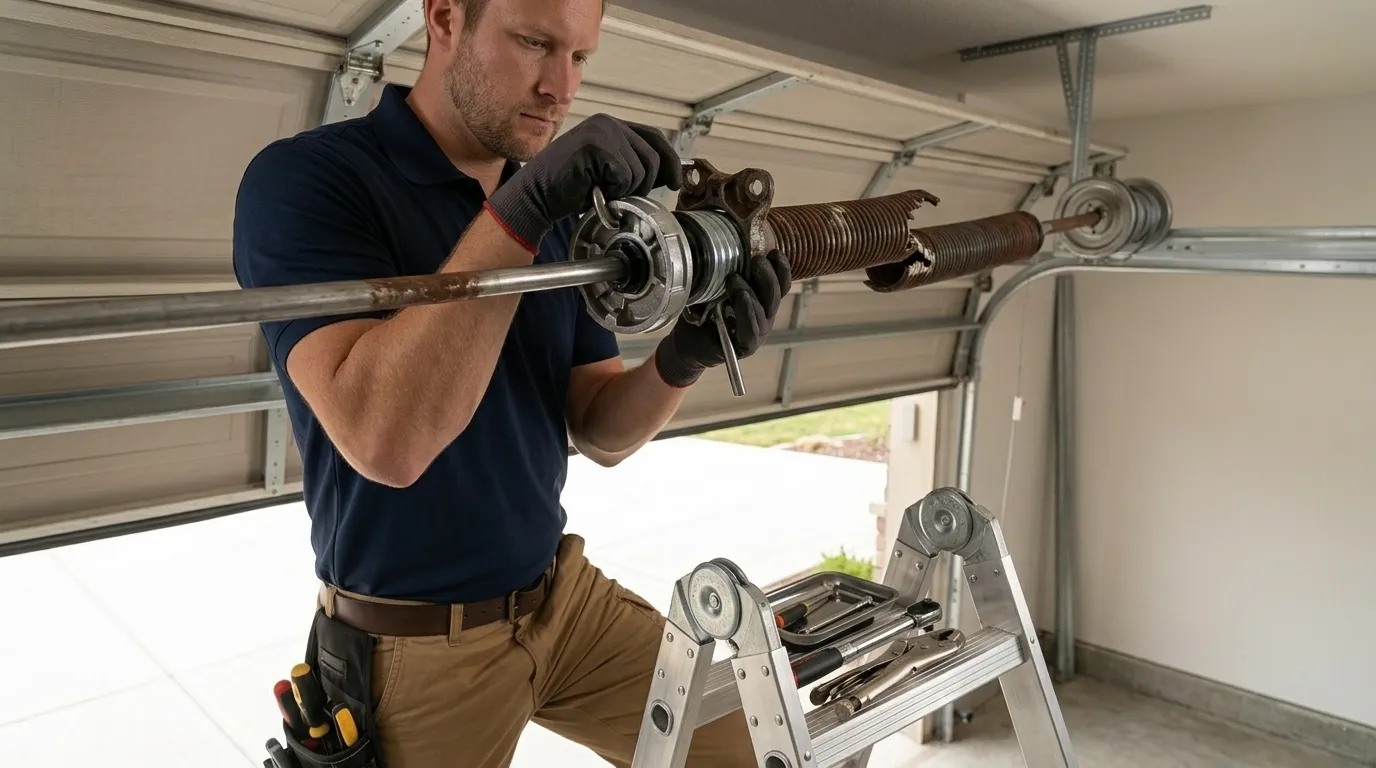
We don't have a price list to hand you here, so we won't pretend to. What we can tell you is how the decision usually plays out. Median household income across this service area sits around $106,064, and with 23,168 owner-occupied houses out of 31,889 households, most of the calls we get are from people who own the place and plan to be in it a while - which changes the math on repair versus replace. A spring, a set of rollers, a cable - that's a parts-and-labor job on a door that's otherwise sound, and it's a fraction of a full replacement.
Where it stops making sense is when the door itself is warped, the track is bent past a clean re-set, or the panels are rusted through at the bottom - at that point you're paying labor twice, once to patch and again in a year or two to replace anyway. We'll tell you straight which side of that line your door is on before we quote anything, not after.
How Local Conditions Play In
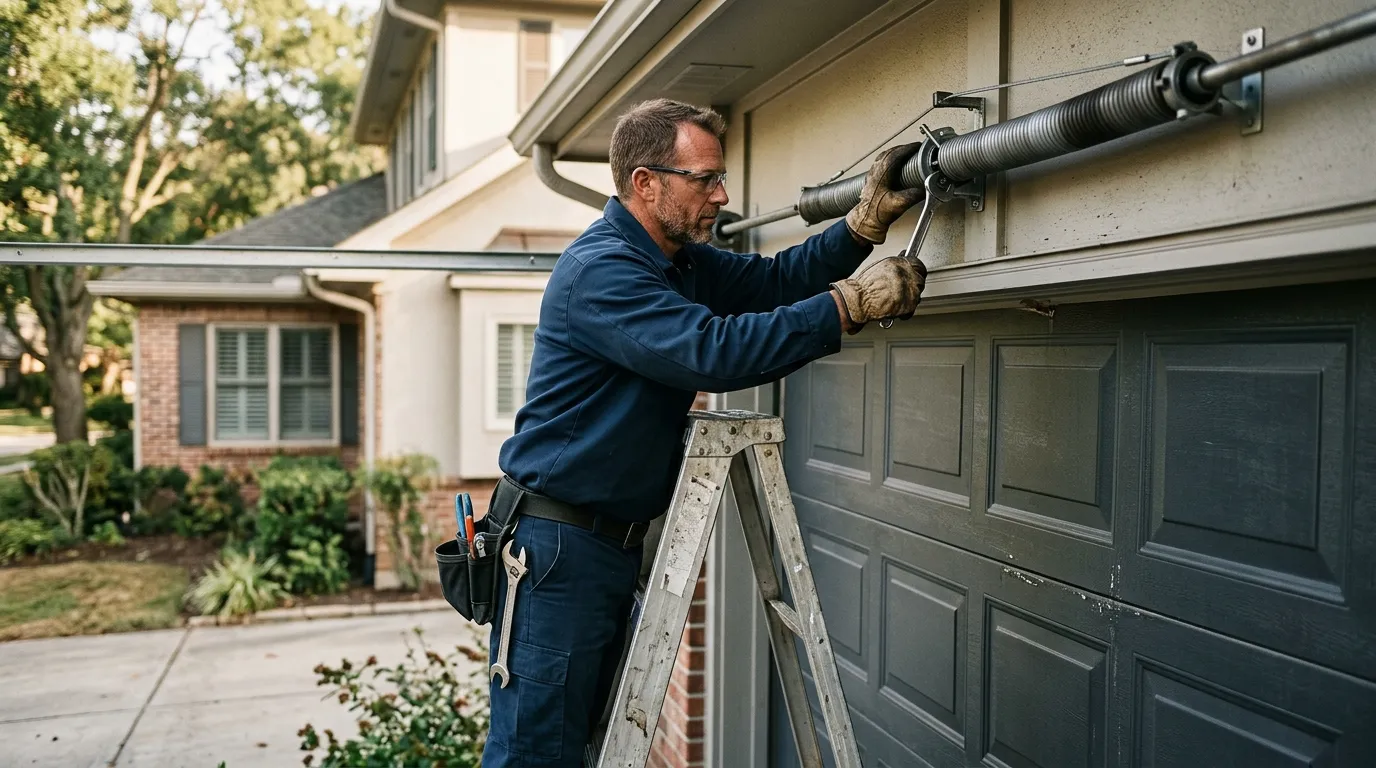
Tracy sits in a moderate heat band, not the extreme swings you'd get further into the valley, but enough that a garage on the west or south side of a house takes real summer sun and holds heat well past sunset. That matters for torsion springs more than most people expect - steel expands and contracts with the daily heat cycle, and a spring that's already near the end of its rated cycles will fatigue faster under that kind of repeat stress than one in a cooler, shadier bay.
On a lot of the 1960s and 70s builds in this area, the garage door is also doing double duty as a thermal buffer for an attached laundry room or a converted storage space, which means the door gets opened and closed more often in the hot months than the original hardware was necessarily sized for. It's not a dramatic effect, day to day, but it's part of why an older torsion spring here can go from fine to snapped with very little warning.