Why This Fails Locally
The median year built here runs around 1978, which lines up with the broader stretch of 1960s-70s stock that shows up across this side of the county. That matters because doors and openers from that era weren't built to today's spring and cable spec. A lot of these houses still have their original torsion setup, or a first-generation replacement from the 80s or 90s that was never upgraded again. The steel gauge is thinner, the rollers are usually the old steel kind instead of nylon, and the drums on the torsion shaft are sized for a lighter door than what most owners eventually swap in.
Heat here runs moderate rather than extreme, so we're not chasing the kind of thermal expansion failures you'd get somewhere hotter - but forty-plus years of daily cycling on original hardware wears springs and bearings down regardless of climate. The failure isn't dramatic. It's fatigue. A spring rated for a certain number of cycles just runs out, usually without warning, on a door that's been fine for years and then suddenly isn't.
Stocked Parts
Because the housing stock here skews to that late-1970s window, the parts that actually get used on a Byron call are the ones sized for that generation of door: standard torsion springs in the wind and length that matches a 1970s-80s single or double door, steel rollers or nylon replacements, and the lighter-gauge track that was standard before doors got heavier with insulation.
What we don't carry on the truck is anything obscure or discontinued - a one-off hardware pattern from a door nobody made past a certain decade, or a proprietary opener part from a defunct brand. If a house here has one of those, that's a special-order part and an honest wait, not a same-day fix. We'll tell you that up front instead of pretending otherwise.
What the Fix Involves
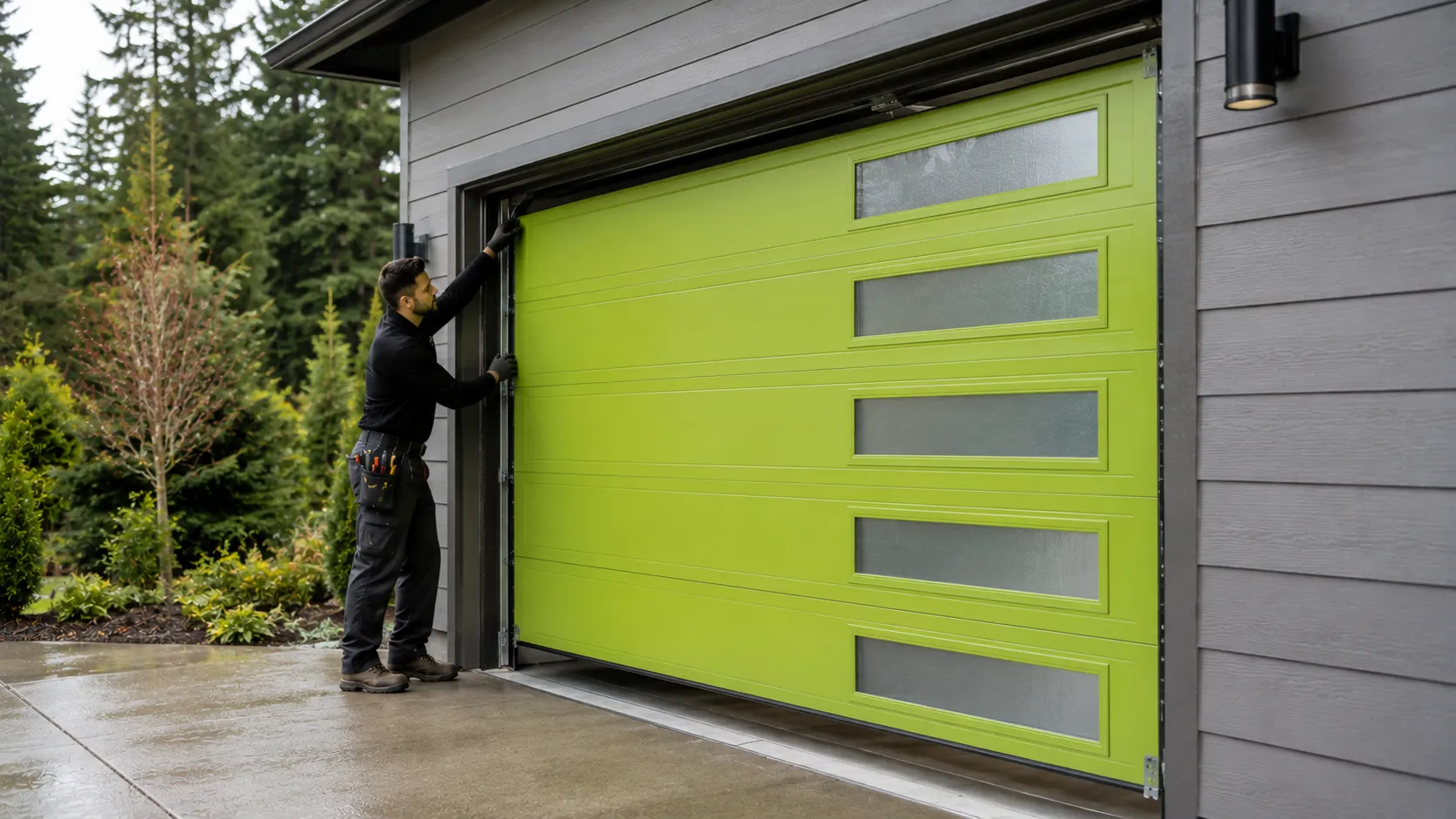
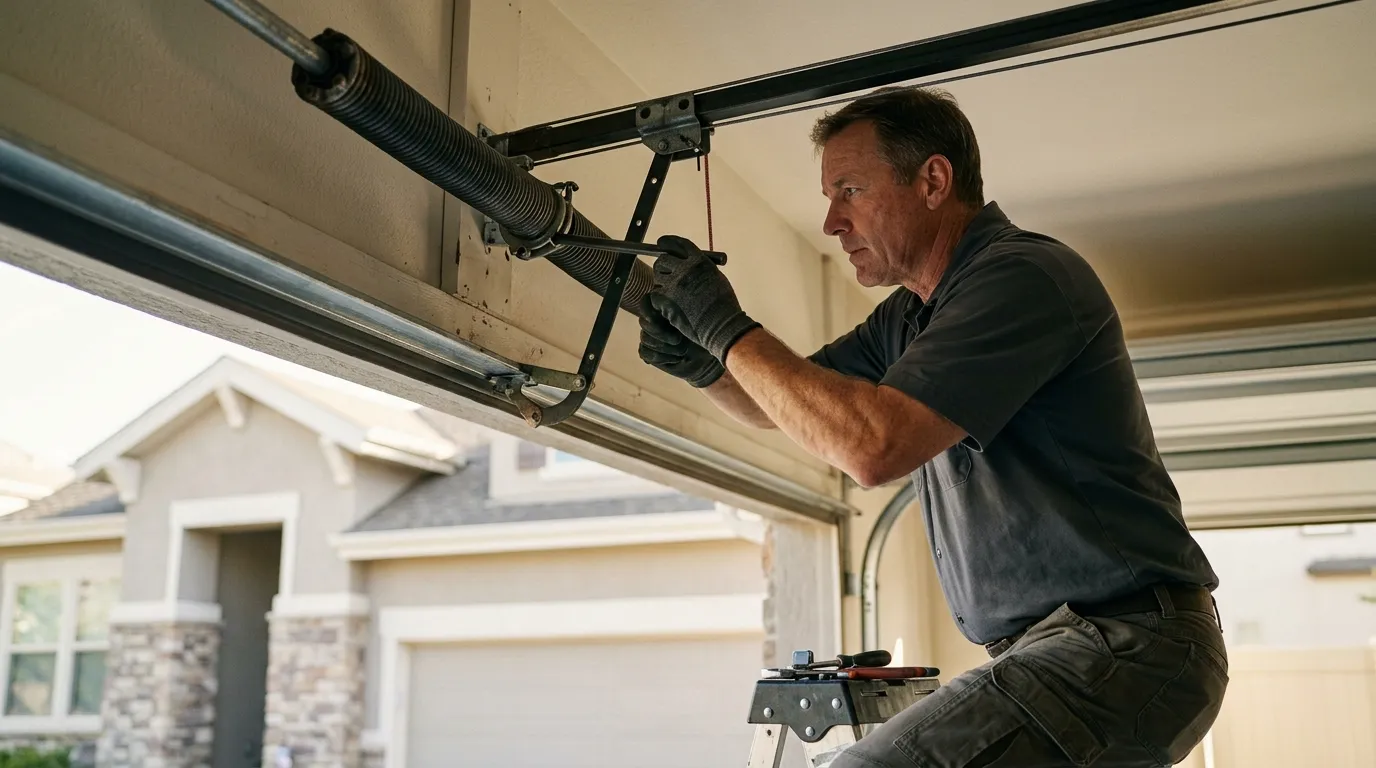
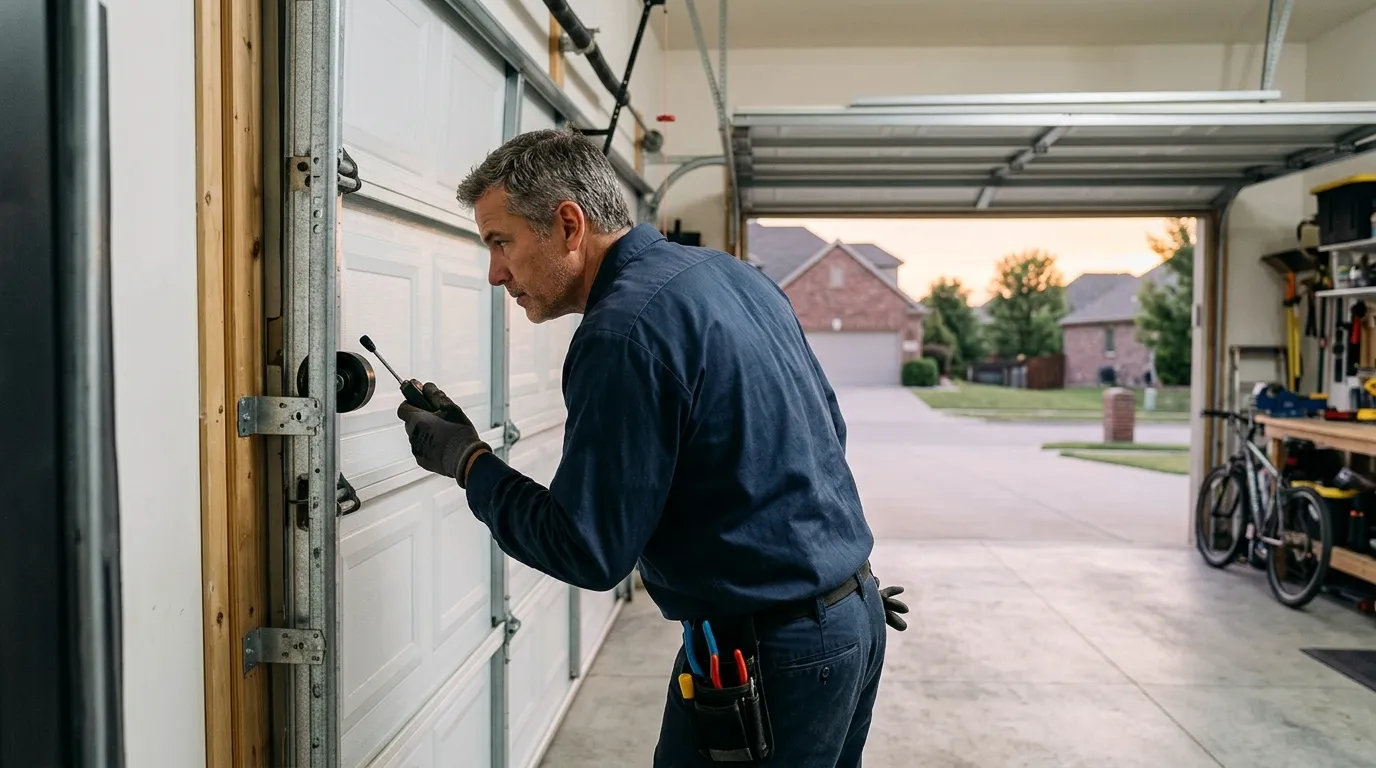
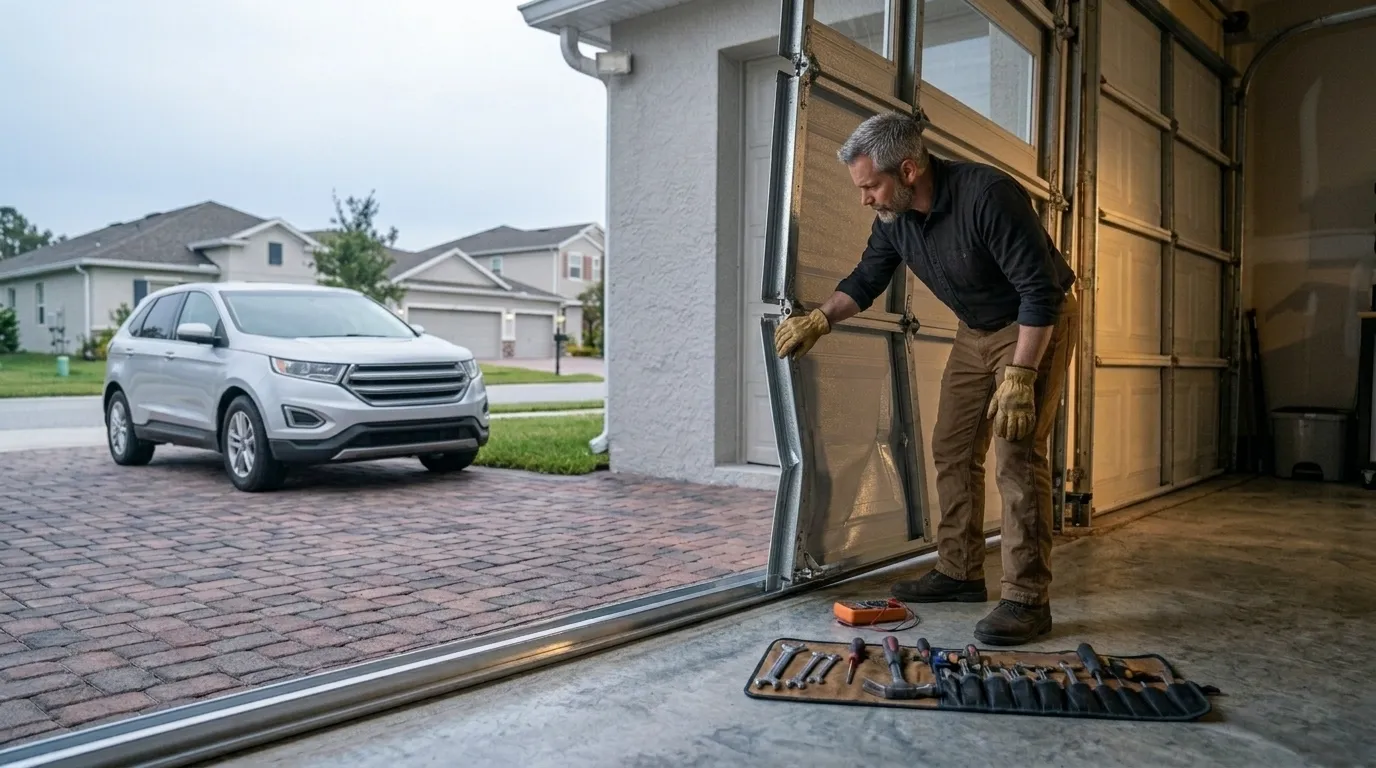
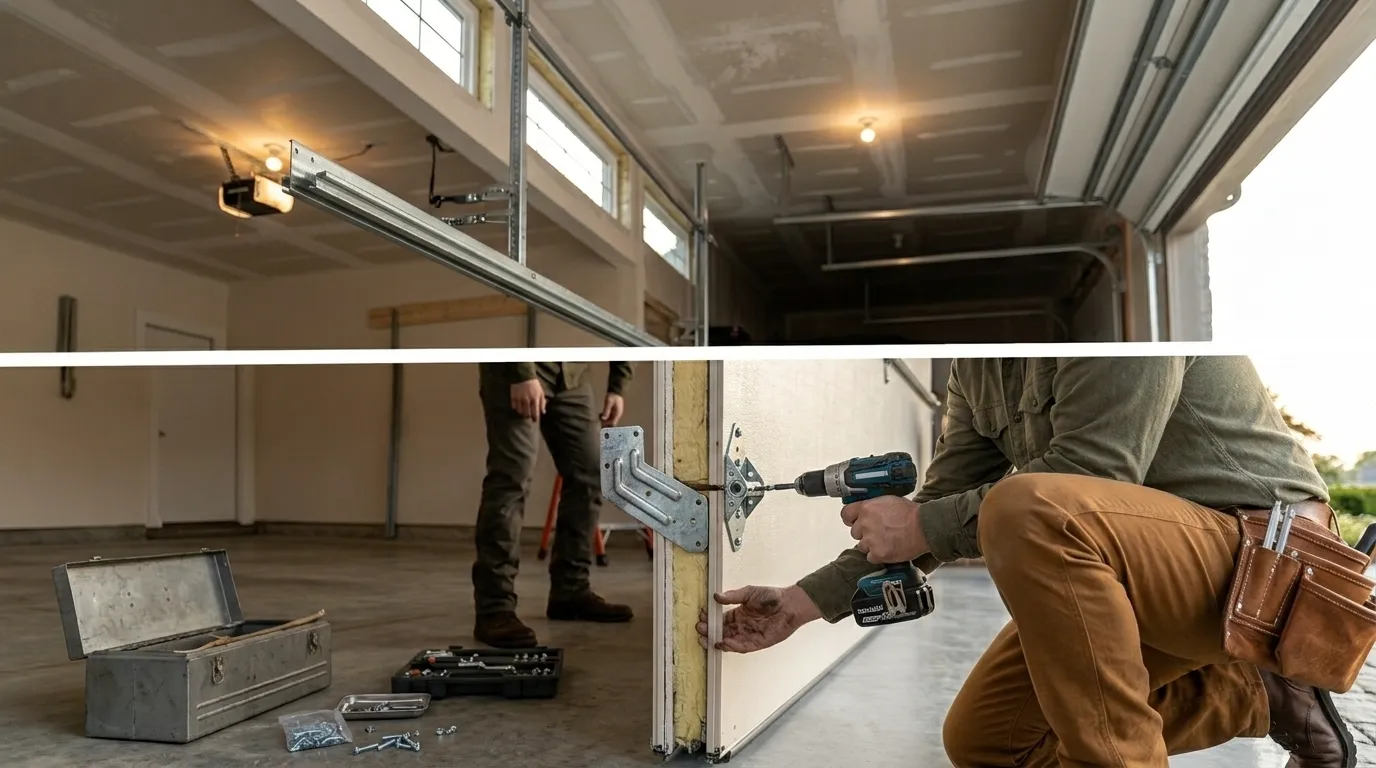
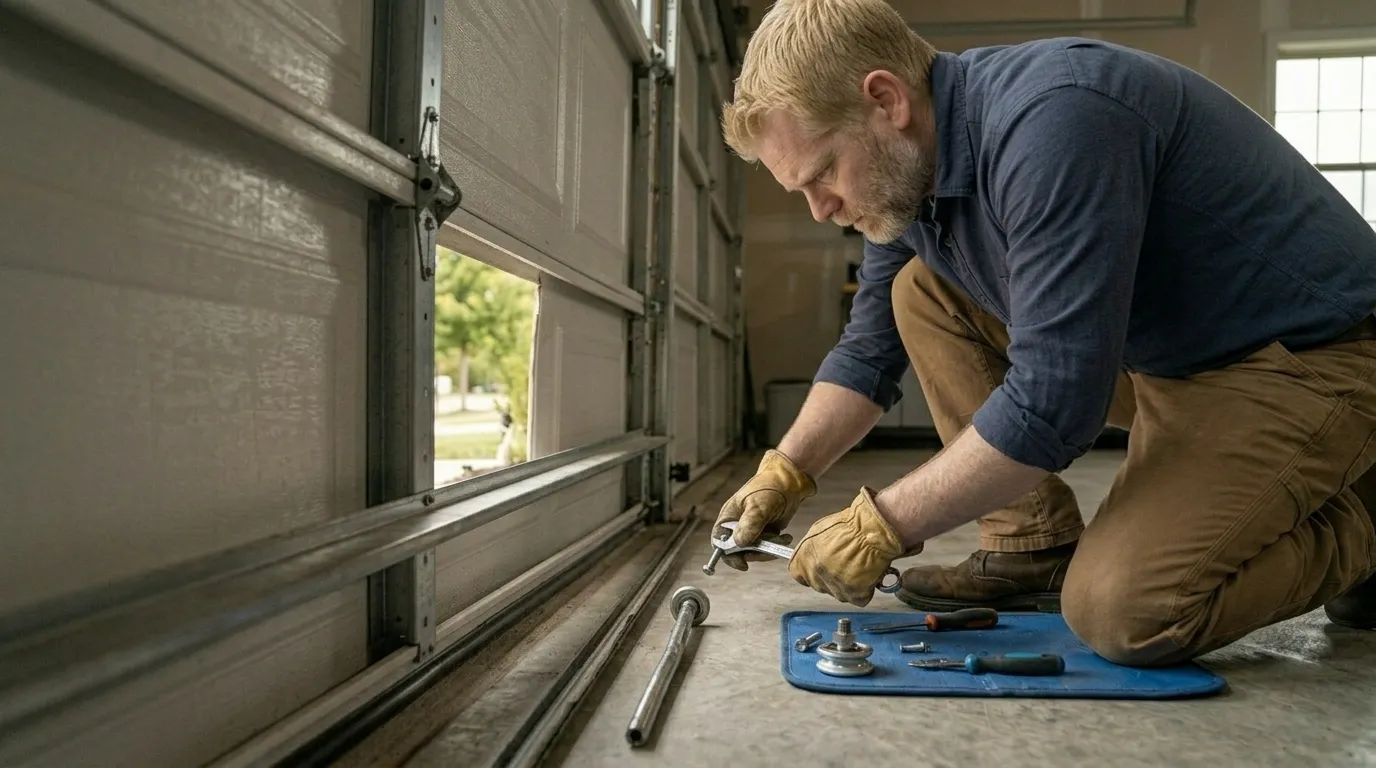
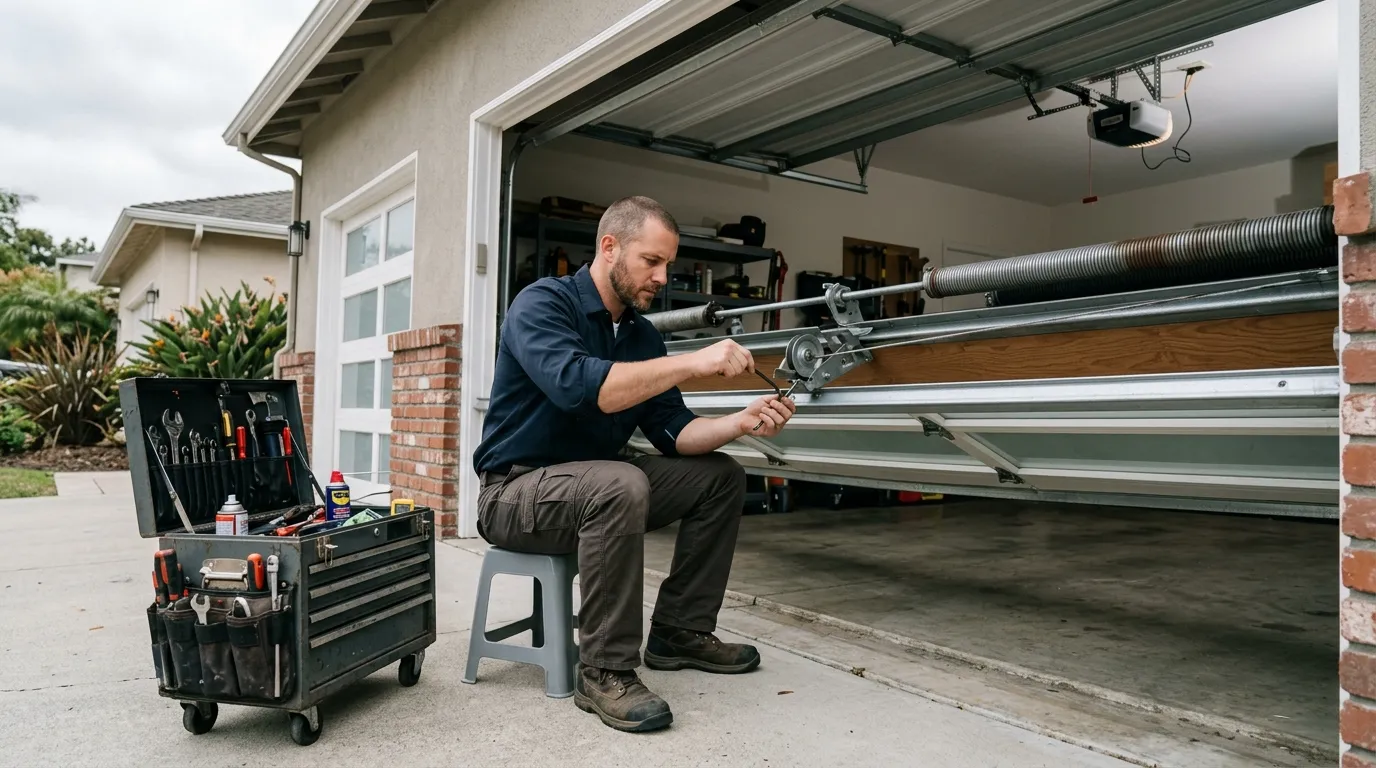
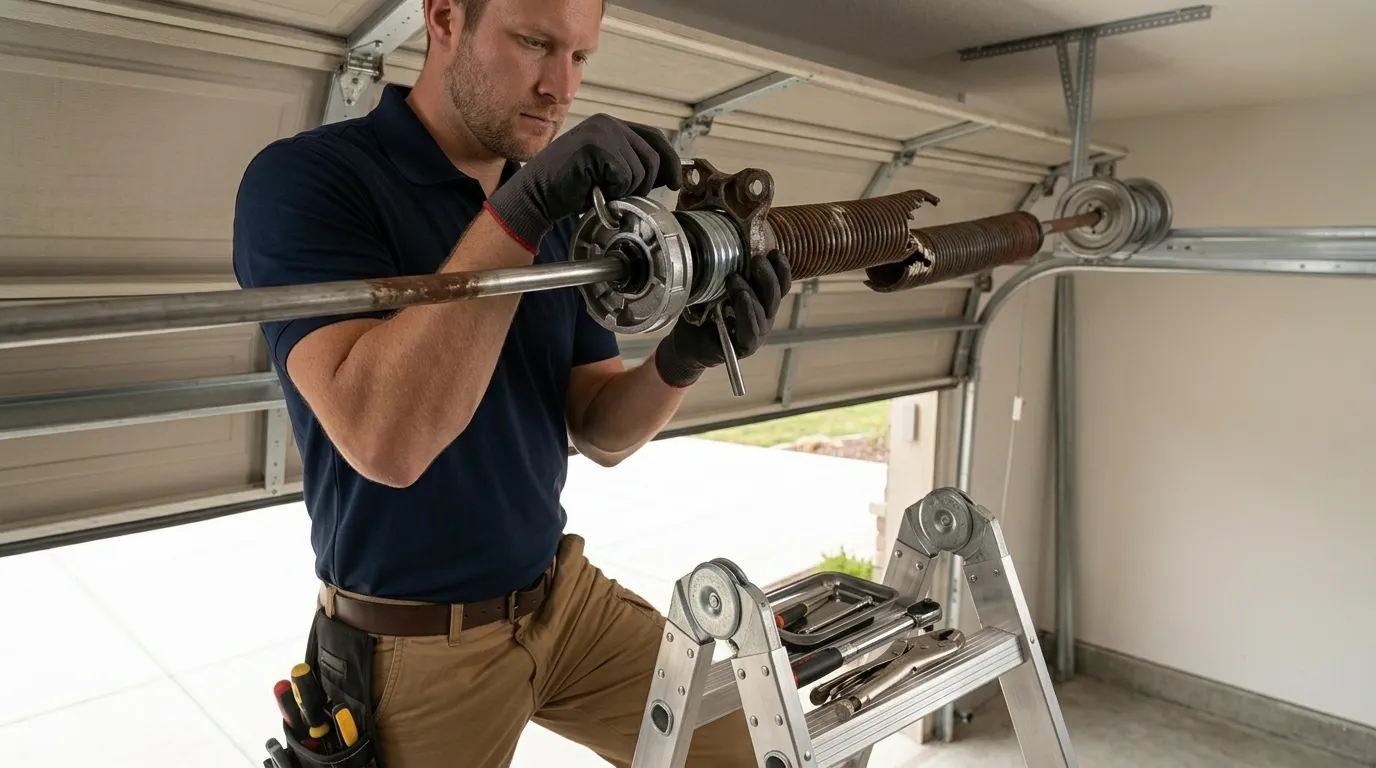
On a typical Byron call, we're looking at torsion spring replacement sized to the door's actual weight, not a guess - original 1970s-80s doors are often lighter than what's installed today, so matching the spring wind correctly matters more here than on a newer door. If cables or rollers are original, we replace those in the same visit rather than leaving worn parts next to new ones.
We also check the opener, if there is one, since a unit installed alongside a 1980s or 90s door is well past the point where replacement parts are easy to source. Sometimes the honest answer is that fixing the opener costs more than swapping it, and we'll say so rather than billing for a repair that won't hold.